OUR SAY ON THE OCEANWAY

OUR SAY ON THE OCEANWAY

The vast majority of Gold Coasters support the Oceanway. They know the wonderful benefits that the beachfront path brings. The missing links are long overdue.

Read More

MAKING COUNCIL ELECTIONS FAIRER

After elections, governments talk about electoral system reform yet we seldom see comprehensive, effective action to improve fairness, transparency, convenience and efficiency.

Prior to the March 2020 local government elections in Queensland, the State Government introduced several legislative improvements – a ban on donations from property developers, a requirement for disclosure of donations $500 or more, real-time electronic disclosure of donations and expenditure, and some changes to mitigate against undue influence of council administrations by elected representatives - but they didn’t go far enough. Those few amendments made little difference and worse, they actually reduced fairness and transparency by sending the activities they intended to discourage, underground.

Nevertheless, in the 2020 council elections which proceeded in the midst and mayhem of the arrival of Covid-19, several good things resulted:

  • We saw how polling booths can be managed better;

  • The system for postal voting was made easier; and

  • There was growing impetus to expedite introduction of electronic voting (but this seems to have since waned).

In the wake of that election, I made a list of 11 Council Election Reforms to help make future council elections fairer and genuinely representative. They were discrete, but interrelated, and intended to be considered as a package.

In 2023, some sensible spending caps were introduced for mayoral and divisional candidates, however, the potential to conceal expenditure and in-kind ‘volunteer’ support is limitless which, in reality, renders the caps pointless.

Following the recent election in 2024, I refined the 2020 list and converted it to this infographic. The most important reform remains the same - to limit elected representatives to two consecutive terms. However, the changes mostly relate to improving the official source for information about candidates, and caring less about the wasteful proliferation of signage in the hope that such displays of banners and corflutes drop away when people can quickly, easily read about candidates on their mobile devices.

While the two-party political dominance continues there’s little incentive for governments in power to improve the system which favours them, but if anyone wants to campaign for change, here are a few simple-to-introduce starting suggestions…

MINOR CHANGES…MAJOR IMPACTS

A city plan that ignores citizens?

Community groups from Rainbow Bay to Runaway Bay feel disempowered. It has become abundantly evident that Gold Coast Council’s efforts to supercharge development potential and speed up approval processes through the 2016 City Plan, effectively enabled developer interests to determine community and environmental issues.

In that same year, 2016, the Queensland Planning Act (The Act) also came into force mandating some subtle but significant changes to deregulate the Queensland planning system. It required councils reviewing local planning schemes to flip prescriptive constraints into performance criteria, and to speed up development assessment processes.

Since then, the Gold Coast mayor and councillors have commonly relied on State Government directives to deflect responsibility for controversial planning decisions.

Hierarchy of assessment benchmarks

A look at successive versions of Gold Coast City Plan shows updates made to align with The Act. Between Version 3 (May 2016) and Version 4 (Jul 2017), a switch was made to the implementation clause which sets the hierarchy of assessment criteria/benchmarks. You need to read the versions side by side (shown here) to see and appreciate the significance of this change. Specifically, 1(b) says the strategic framework prevails over all other components to the extent of the inconsistency for impact assessment (only).

Why is this seemingly subtle change significant?

Conventionally, planning schemes are made to cascade like a waterfall from high-level, broad strategic goals down to narrower, specific provisions. Assessment usually begins at the bottom and works up. If a proposal, or an aspect of a proposal, does not fully satisfy standard low-order code provisions, the assessor looks up to the next level for guidance. They need to evaluate if non-compliance is justifiable. If they can be satisfied that departure from the standard is still consistent with higher order objectives, it may be approved, with or without conditions. What this 2016 switch in the hierarchy of assessment did is intercept orthodox process.

A full explanation would require diagrams and lengthy discussion. For the present purpose it’s enough to understand the following.

Categories of development under the Act are:

  • Prohibited Development (no DA accepted)

  • Impact Assessment

  • Code Assessment, and

  • Accepted Development (no DA required)

According to City Plan Part 1.4 Hierarchy of assessment benchmarks it is only with Impact Assessment that assessors can look to the strategic framework for guidance if a proposal does not comply with relevant zone and development codes.

For Code Assessment, only the relevant codes can be applied. The scope of matters that can be considered cannot be widened, even if a proposal fails to comply with one, some or all of the code provisions.

Along with these settings, the masterstroke for speeding up development approvals was to configure the tables of assessment in Part 5 so that most applications are Code Assessable.

Opportunities and threats of code assessment

Critically, Code Assessment avoids requirements for public notice, and precludes third party objection and appeal rights. It also takes away the necessity and ability for proposals to be considered with regard to the strategic framework and State Planning Policies (SPPs).

Theoretically, and by inherent assertion, since zone and development codes were made to align with, encapsulate and particularise higher level components, Code Assessable applications are well within the bounds of and consistent with with the strategic framework and SPPs. If an application satisfies the codified performance outcomes, most land use and development matters can be accepted to accord with reasonable community expectations. However, in practice, codes have become treated like checklists. Matters that govern neighbourhood impacts seem to be taken with a grain of salt. The council grants excessive and routine relaxation of code provisions, letting developers get away with whatever they wish to do, without any assessment of community opinion or impact.

Some development approvals, assessed against the Highrise Accommodation Design Code, have been ludicrous. Take for example, the 757sqm site at 2 Charles Avenue Broadbeach for which the council approved a 54 storey glass-faced tower with zero boundary setbacks and density of 1 bedroom/3.9sqm. Fortunately, in this instance, the developers baulked at this proposal and opted to proceed with a 28 storey building, despite holding an approved DA for a building twice as tall.

Code Assessment is breeding buildings with bulky podiums, inadequate landscaping, ugly and unsafe vehicle entryways, unreasonable overshadowing and overlooking of neighbouring properties. And there is nothing affected neighbours can do about it. This is an absurd position for citizens of a democratic state to find themselves in. The fact that it is happening to one of the most naturally beautiful and amenable places to live on Earth, is scandalous.

Minor change loophole

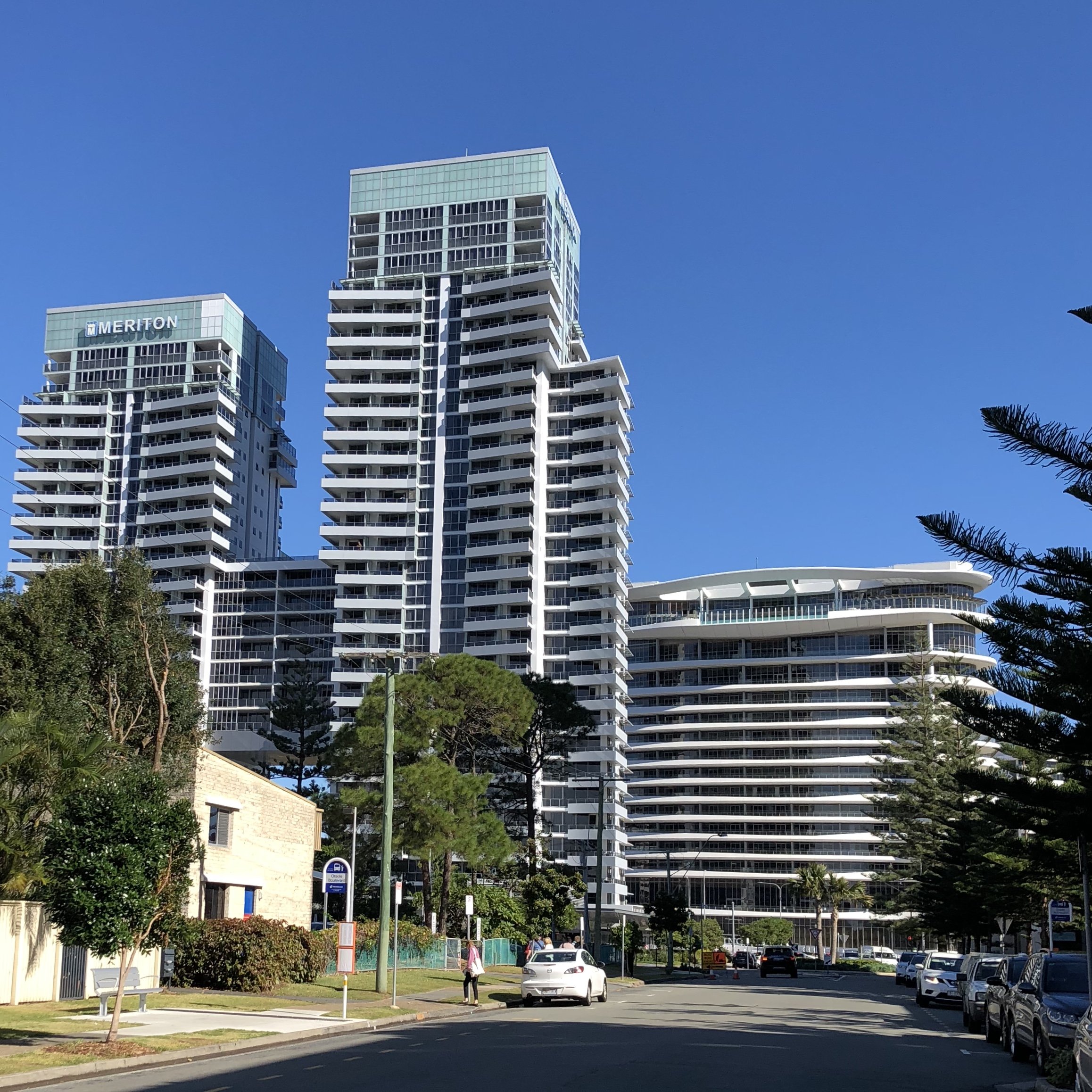
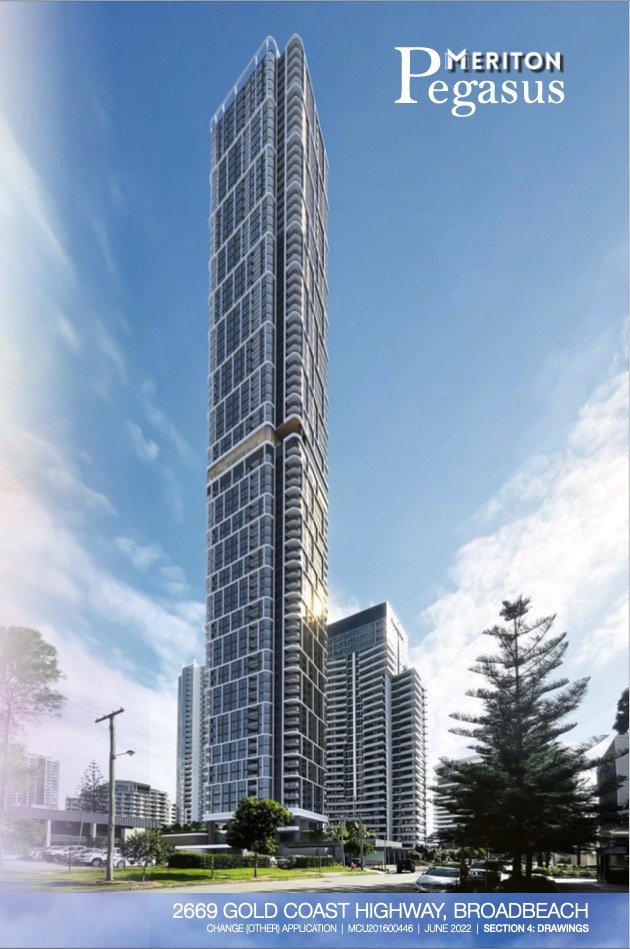
But wait, there’s more! Code Assessment enables the council to approve, without public notice, subsequent ‘minor change’ applications. In the unlimited height area (HX) from Broadbeach to Main Beach there’s a constant stream of minor change applications, where developers are coming back for more. In Broadbeach recently, approval was granted for a minor change from 64 to 79 storeys for a third tower in the Pegasus garden of the Meriton Suites. Surrounding residents learnt about this in the newspaper, if they read it. There was no obligation for the applicant or council to provide any public notice whatsoever of this substantial change.

In areas where height limits apply, a trend has also emerged whereby developers gain approval through Code Assessment, then return with Minor Change applications to exceed the height limit which would have initially triggered Impact Assessment, public notification and the right for neighbours to object and appeal. In Rainbow Bay, new residential towers (Flow, Awaken, Esprit, Rockpool, Holm and Komune) have all been granted uplifts ranging from 1.0-10.5m in this way. Do we really want our laws to enable this kind of development duplicity?

Cumulative impacts

And yet another, less obvious outcome of the switch in the hierarchy of assessment benchmarks is that code assessability strikes out any consideration of cumulative impacts of development. Because each application must be considered on its individual merits, no analysis of incremental, sustained and combined impacts is undertaken.

This came to light recently when Better Broadbeach Association requested information from the council to assist with preparing a Green Space Strategy for the suburb. We reasonably requested 3D digital imagery to help us imagine the future with existing and approved building volumes. The City Planning Branch provided a database of 195 DAs that have been approved in Broadbeach from 2011-2022, but to convert this into a visual representation showing existing and approved towers would be an arduous task. Some cities have such information easily and publicly available, but our council’s spatial analyst indicated they don’t have the resources to create and maintain a live 3D model of the city.

A cynic might wonder if the planning authorities prefer to not know how the future looks. As they pump out approvals for developments that exceed the City Plan settings without concern about the cumulative impact on the shape of the city, are they comfortable with the delusion that everything will be OK?

Bringing back balance

Community Alliance members and others have been campaigning for years to bring back some degree of balance and fairness to the situation. Initially, we called for faithful adherence to the design code, but that fell on deaf ears. Next, we argued for introduction of additional Impact Assessment triggers – density, site cover, setbacks, or a 10% margin of excess. I wrote an essay titled ‘Trojan Horses, Red Herrings and Green Wedges’, calling for reintroduction of mandatory landscaped open space at ground level as a way to at least get some greenery and spacing between buildings.

Since approvals by Code Assessment routinely exceed acceptable outcomes, it’s rational to conclude that the planning assessment process is flawed and excessive proposals should be impact assessable. Yet I have never heard anyone suggest that all development should be made impact assessable. There’s a definite sense in this city that Gold Coasters typically embrace change and eschew unnecessary red tape. Few would begrudge the benefits of certainty, expediency and cost savings that Code Assessment gives to developers, but it’s not delivering outcomes that resemble what the City Plan’s strategic framework and code objectives espouse.

The council is unlikely to ever acknowledge that misimplementation of Code Assessment is causing adverse impacts on third parties across many parts of the city. Nor has it been willing to open up community conversations about introducing any type of impact assessment trigger. Through the protracted process of City Plan Amendments 2 & 3, recommendations to stipulate minimum separation distance between towers, minimum frontage length and 10% deep planting have been supported. Yet even these small concessions remain pending endorsement by the State Planning Minister.

Gold Coast citizens want to have more of a say in how their city should evolve. They can see workable solutions to urban planning problems associated with Code Assessment. They know there’s more than one way to bake a cake; and they want the Mayor and Planning Minister to come to the party!

BLANDING THE GOLD COAST

Here’s a sad tale that demonstrates the systemic ‘blanding’ of the Gold Coast through erasure of things that create local distinctiveness, and renewal with generic forms that look like everything else, and nothing much.

Facebook post, Cr Taylor, 7 February 2023

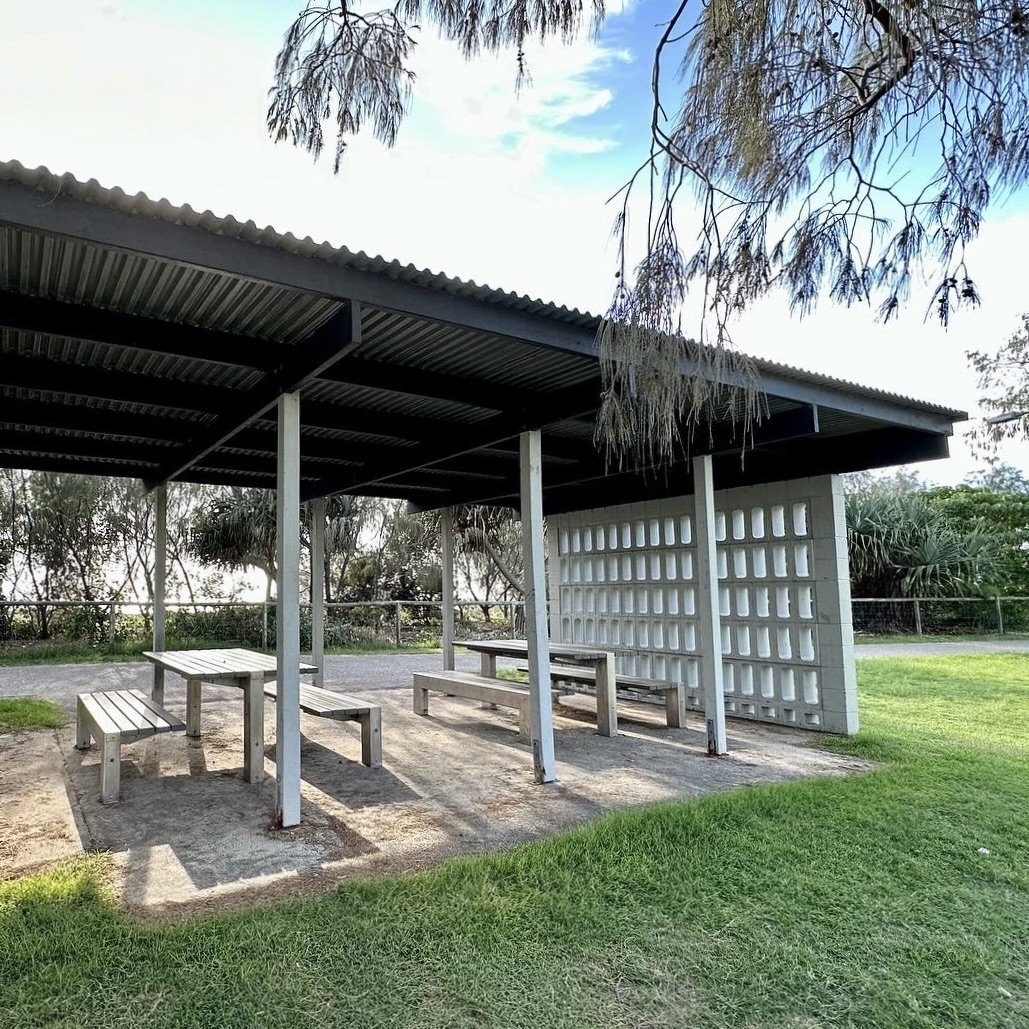
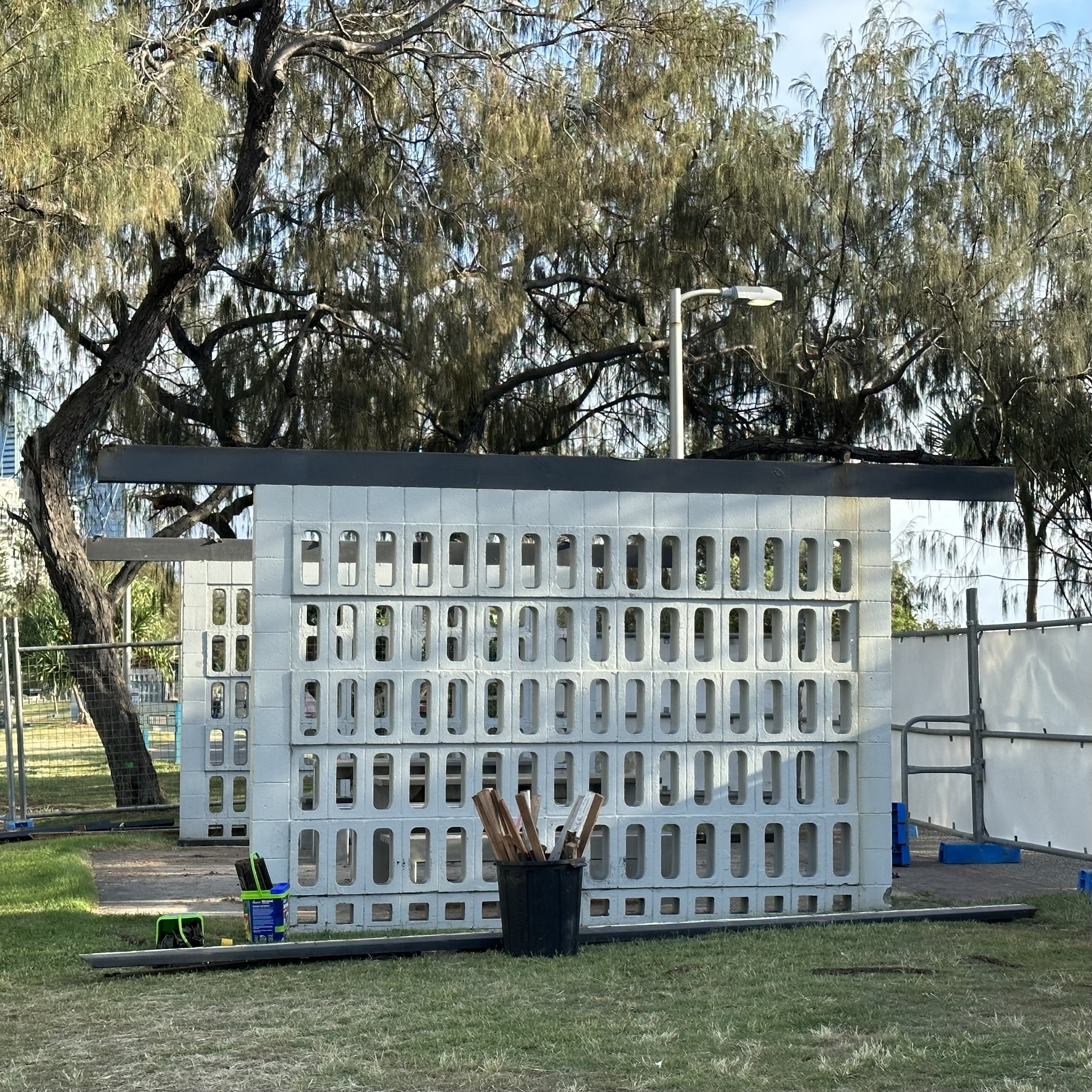
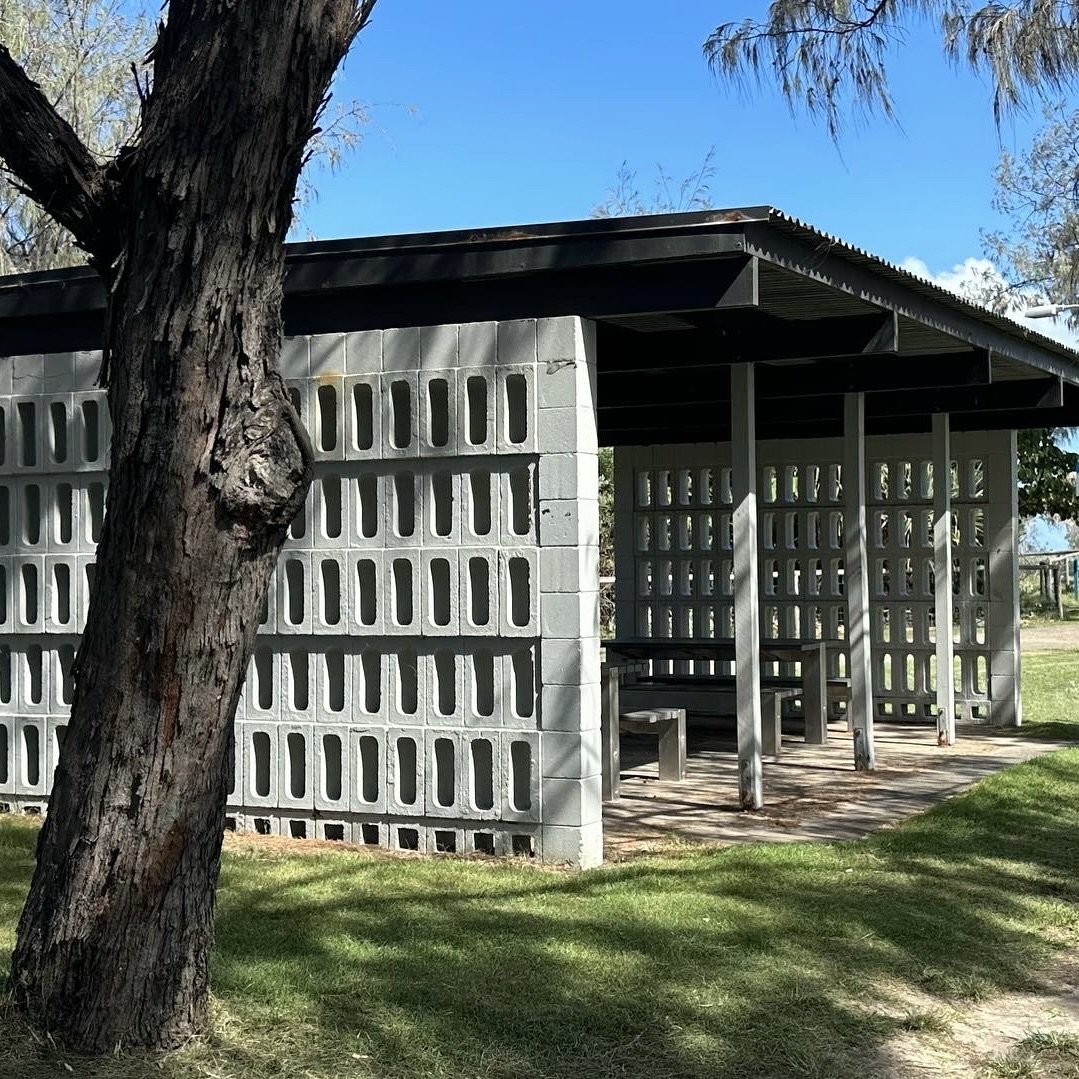
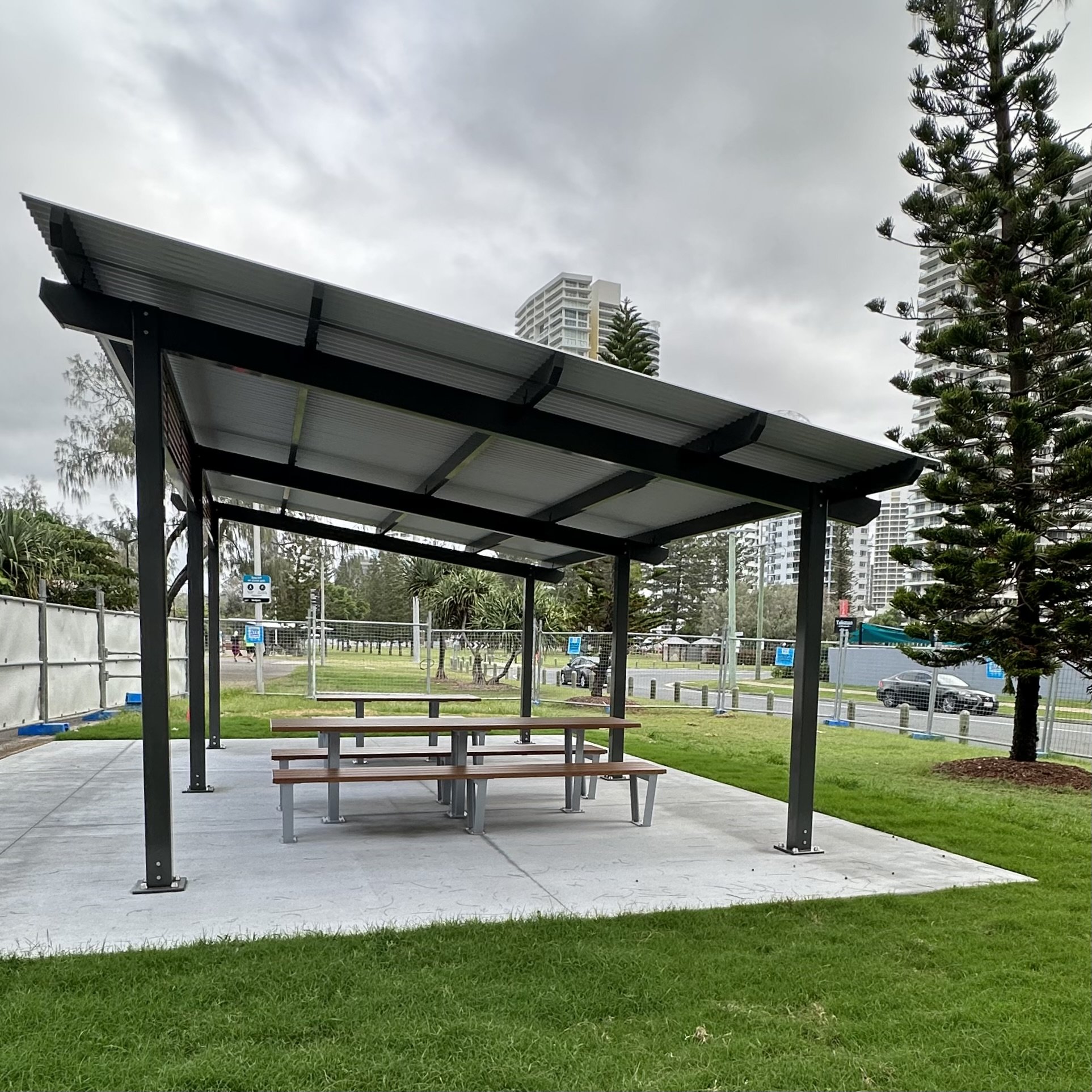
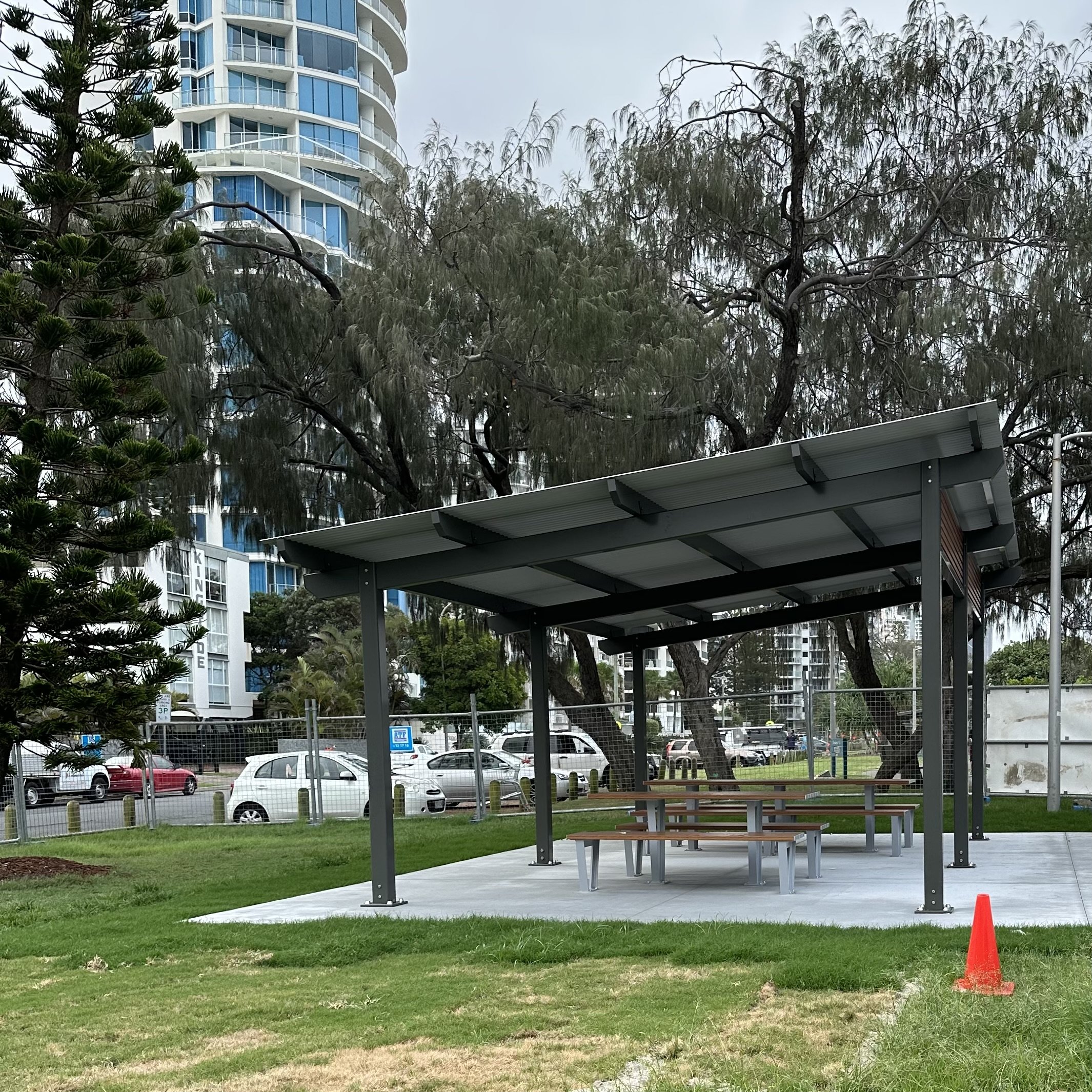
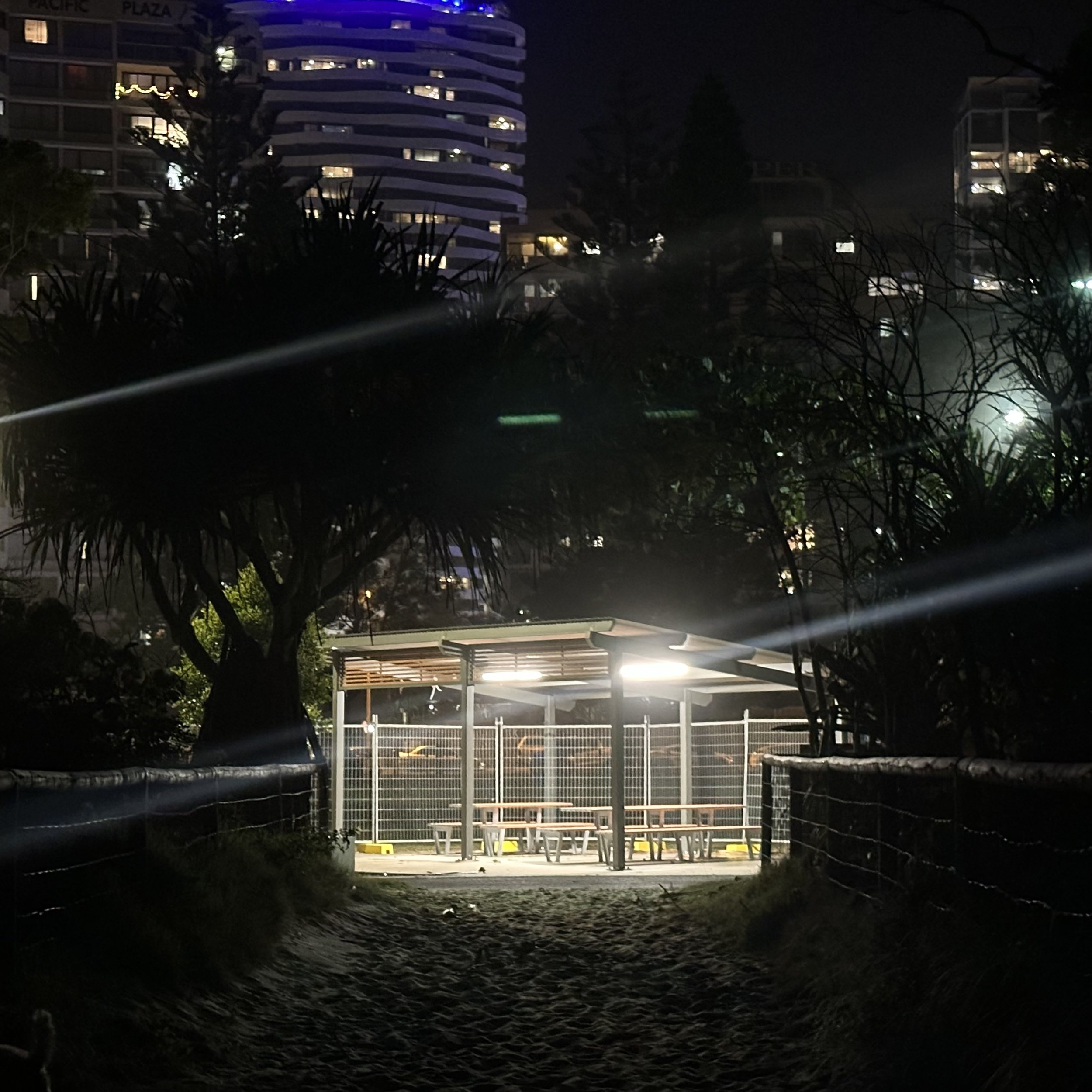
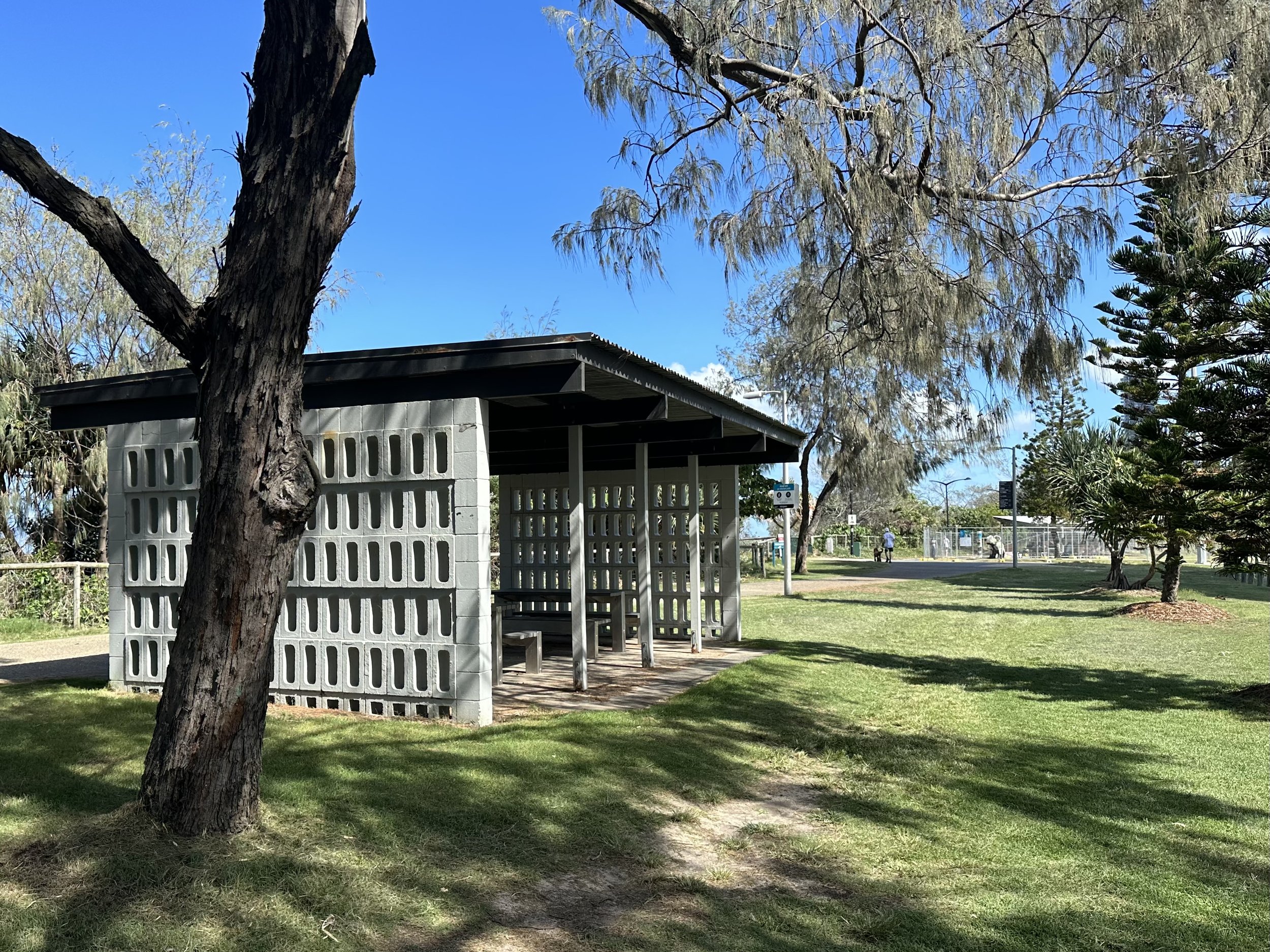
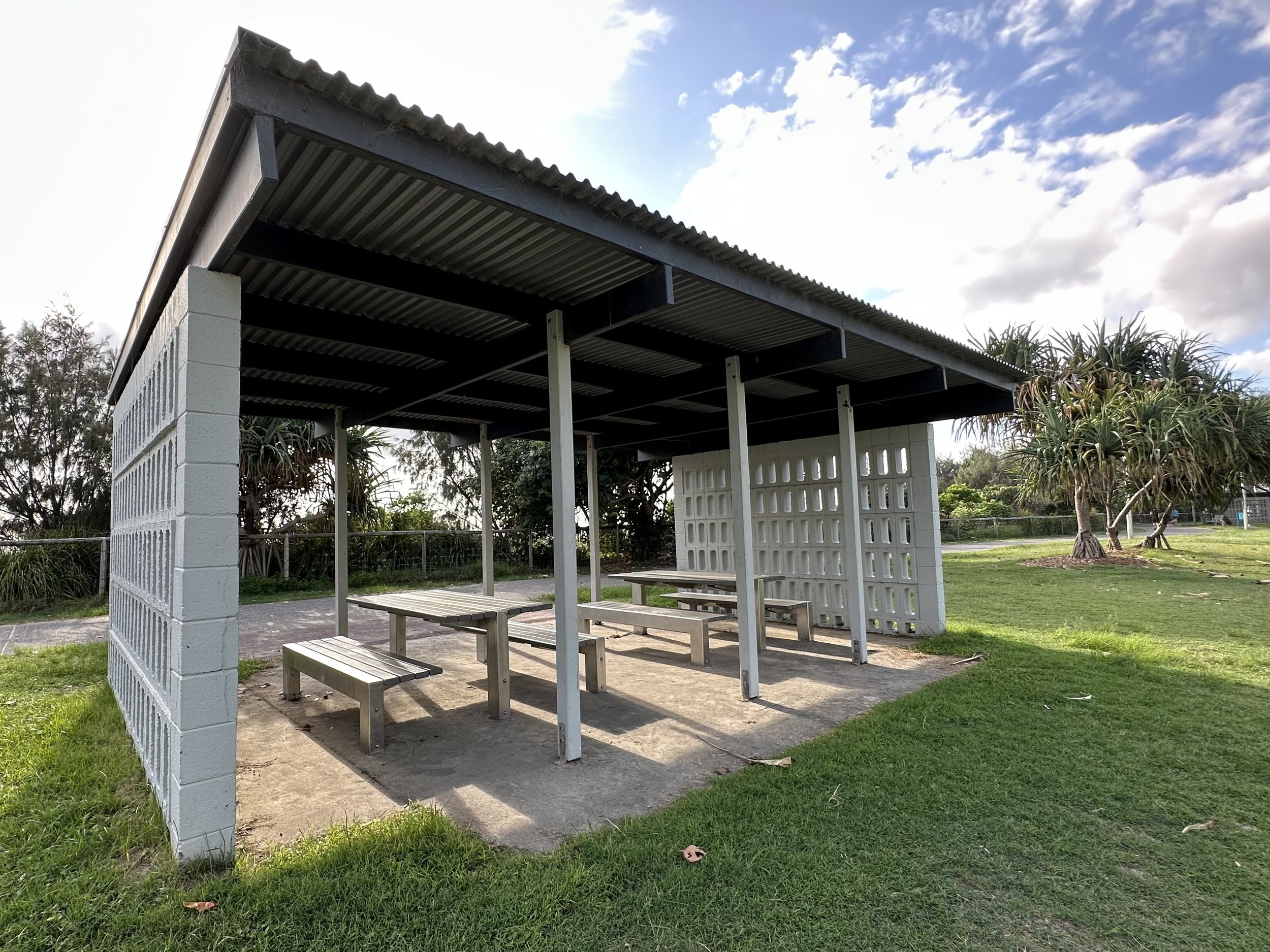
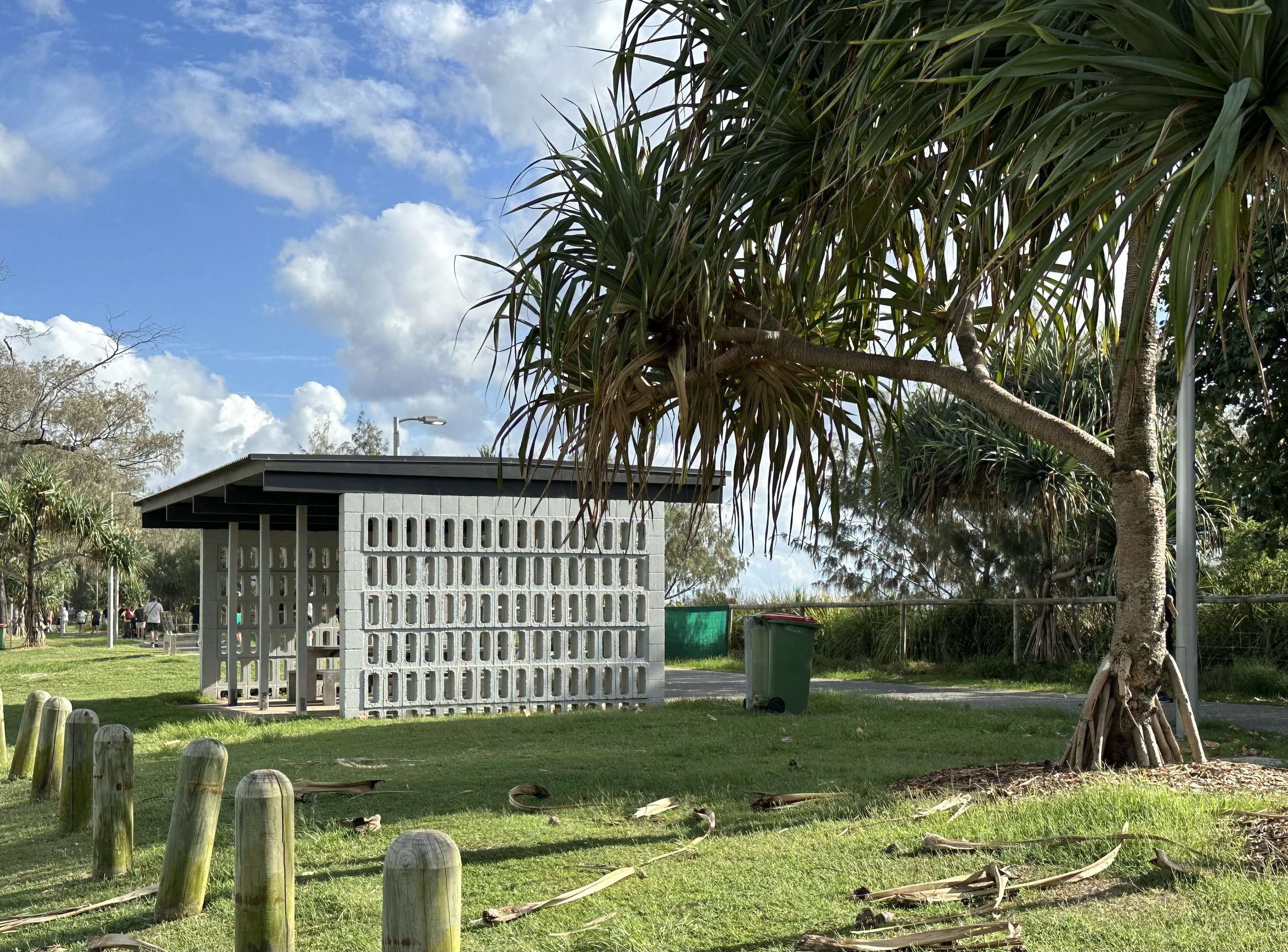
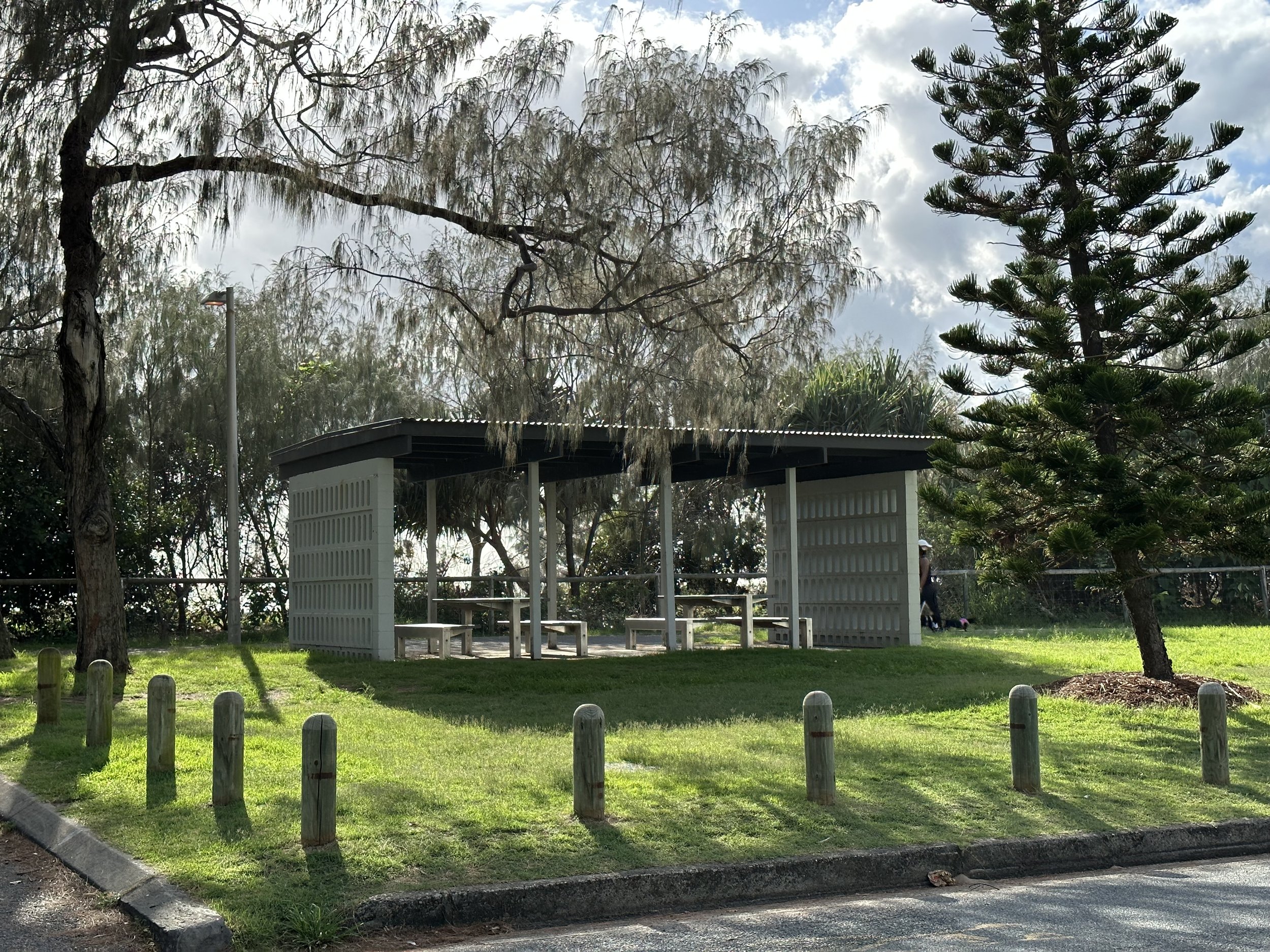
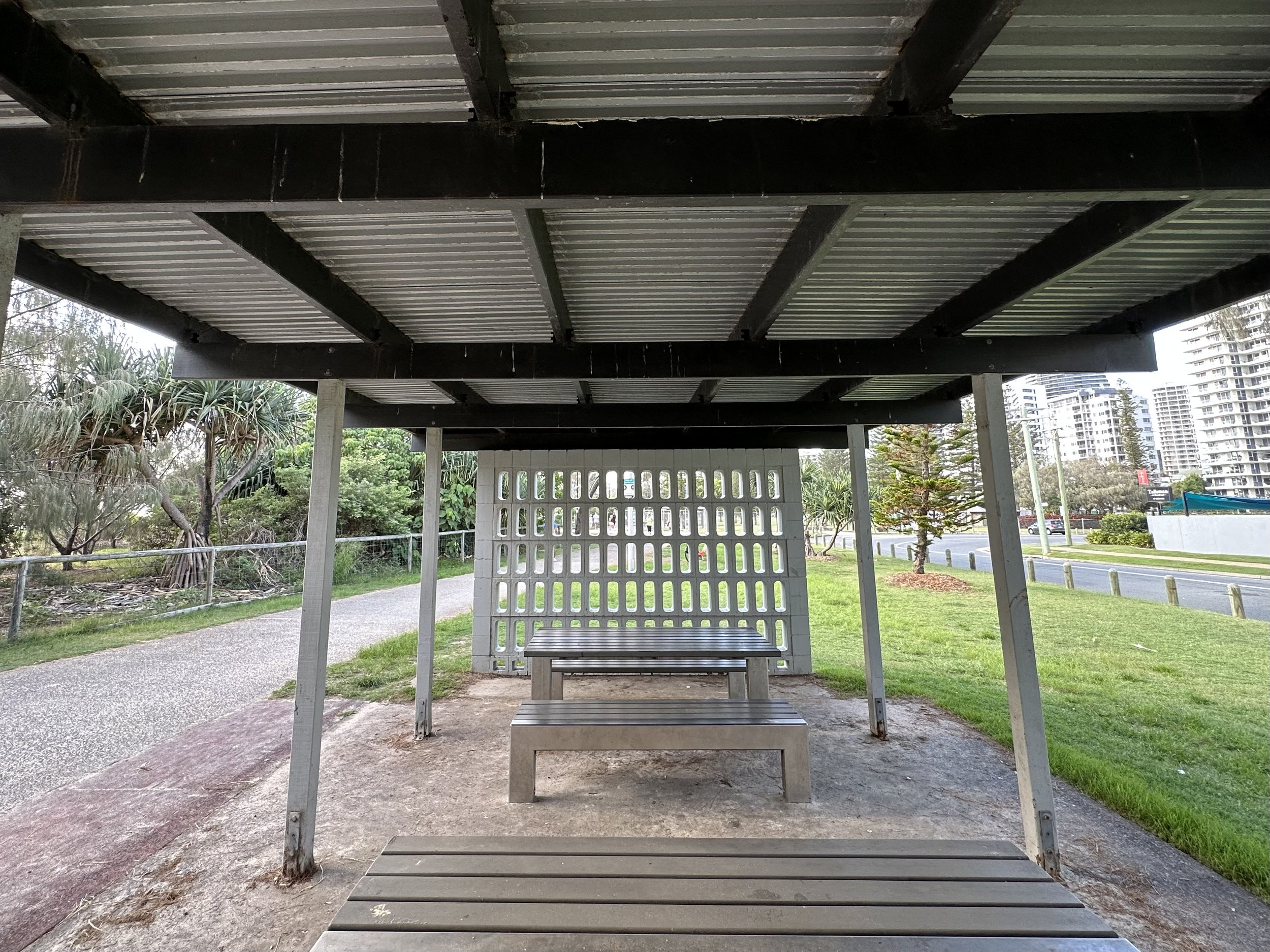
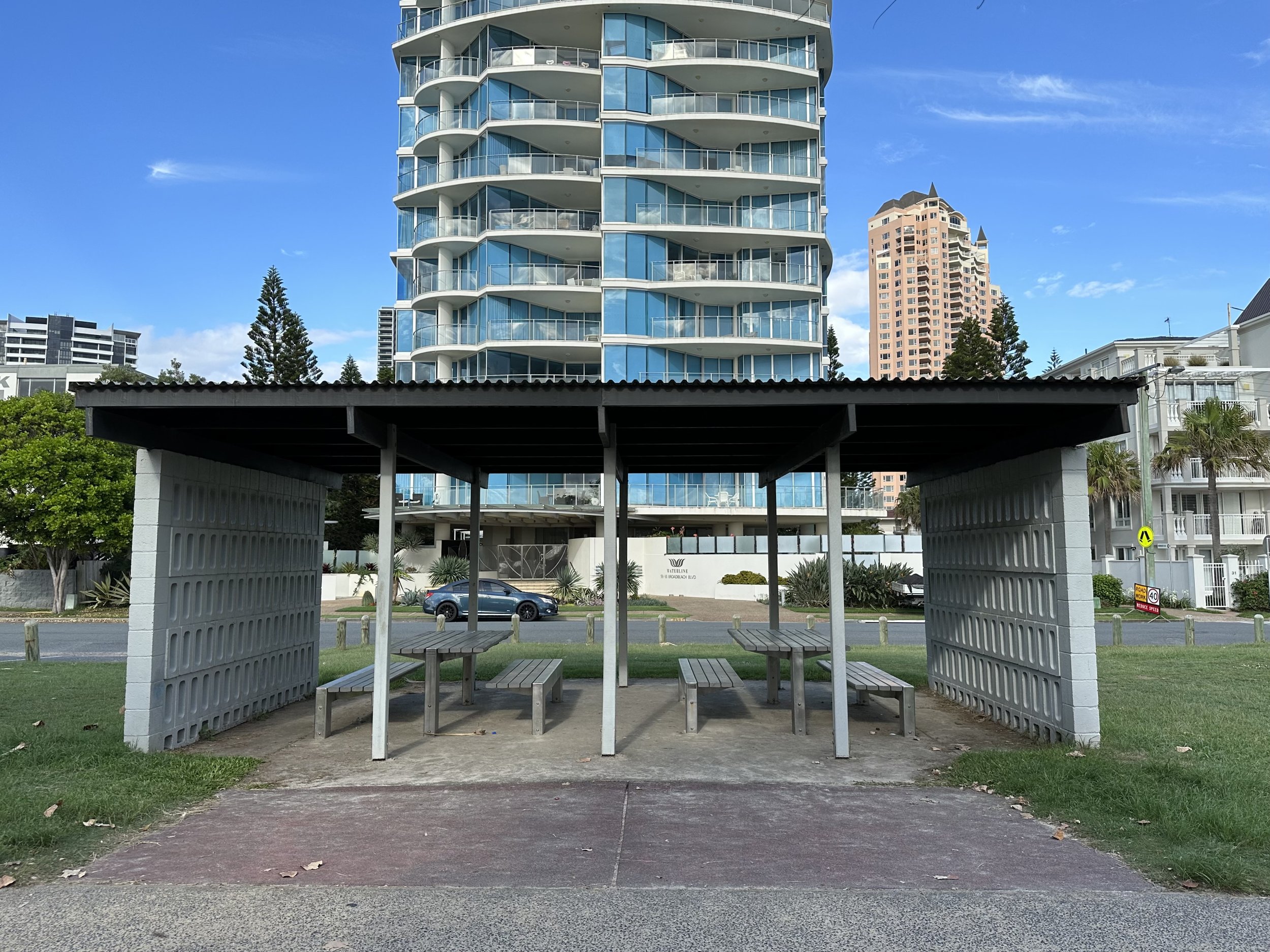
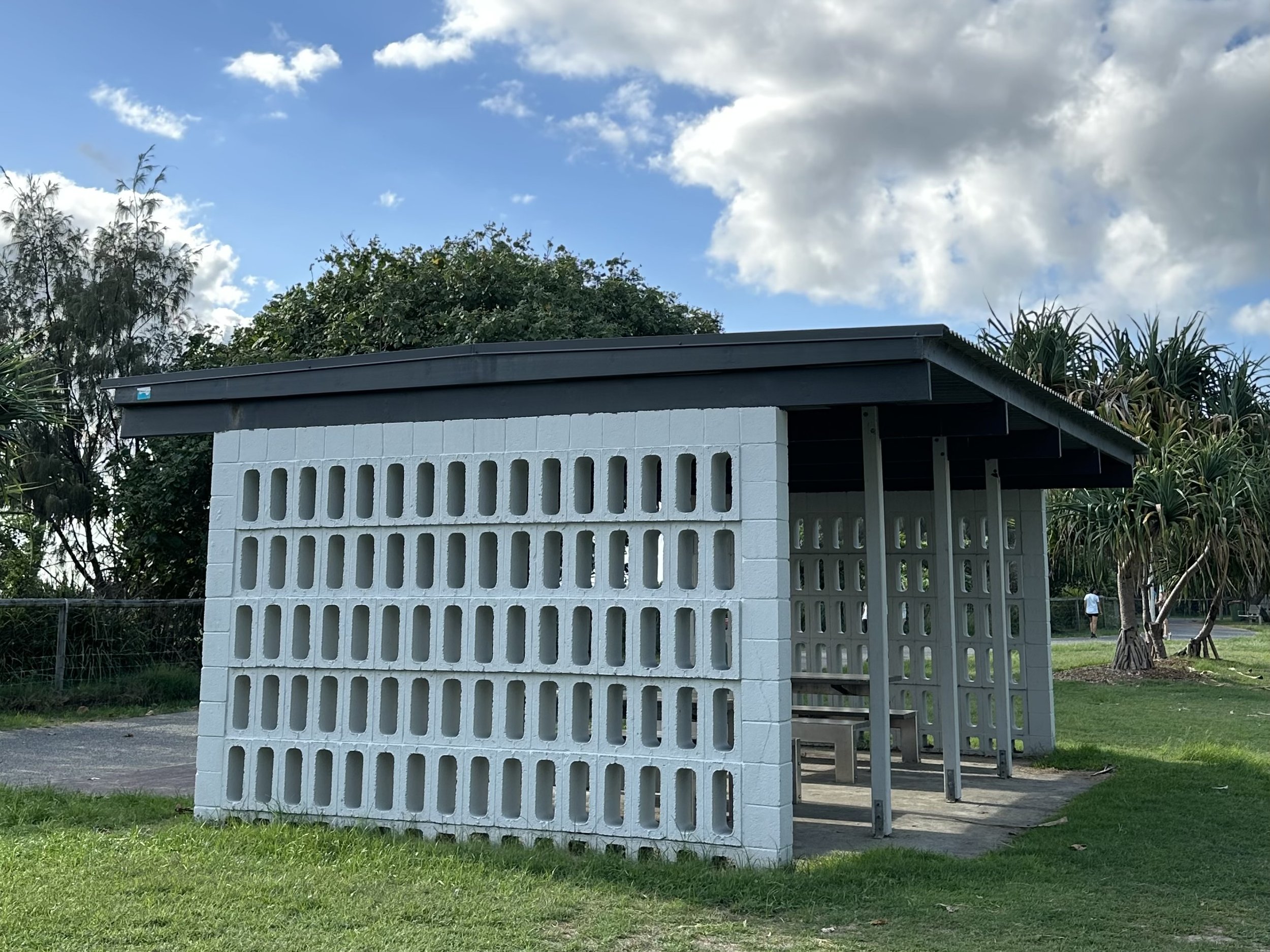
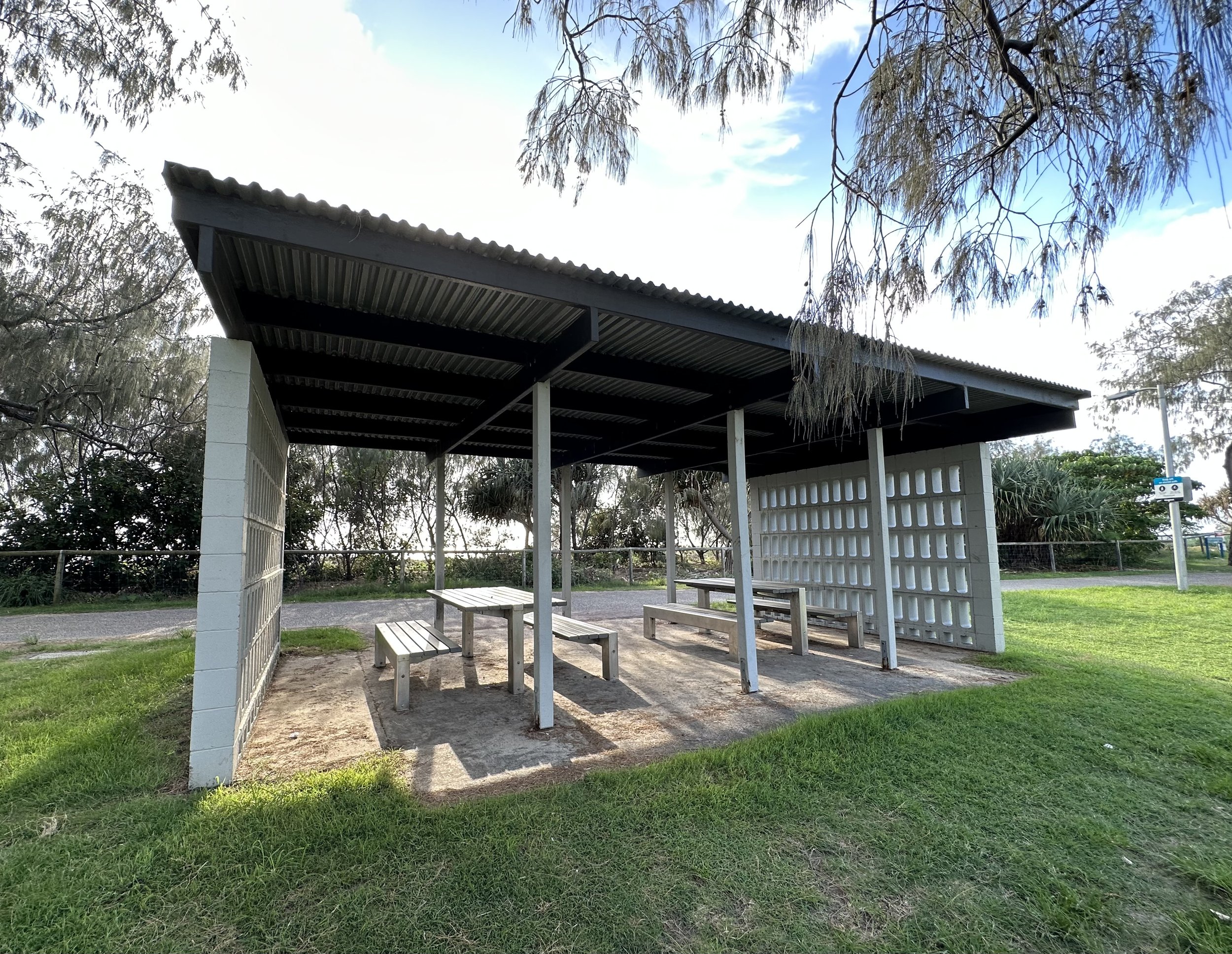
Before long, only people who read this might be prompted to remember the twin vintage breezeblock shelters that stood in this foreshore park at Broadbeach for 50 years. They were recently demolished and replaced with new structures, in what amounts to unnecessary public spending and loss of two pieces that added character to the landscape.

SEQUENCE OF EVENTS

7 February: Division 10 Councillor Darren Taylor gave public notice in a Facebook post that the shelters would be replaced. I promptly called the council’s customer service centre and was told that works were scheduled to commence on 23 March. I also spoke with an officer in the heritage branch who was not aware of the proposal. I indicated my intention to nominate the shelters for listing in the Local Heritage Register.

8-13 February: Over several days, our Better Broadbeach Association committee consulted with local architects and planners to prepare the nomination which was submitted to the CEO, Division 10 Councillor and Heritage Branch. In a previous post titled ‘Save Our Breezeblocks’, I elaborated on why the shelters were worthy of retention.

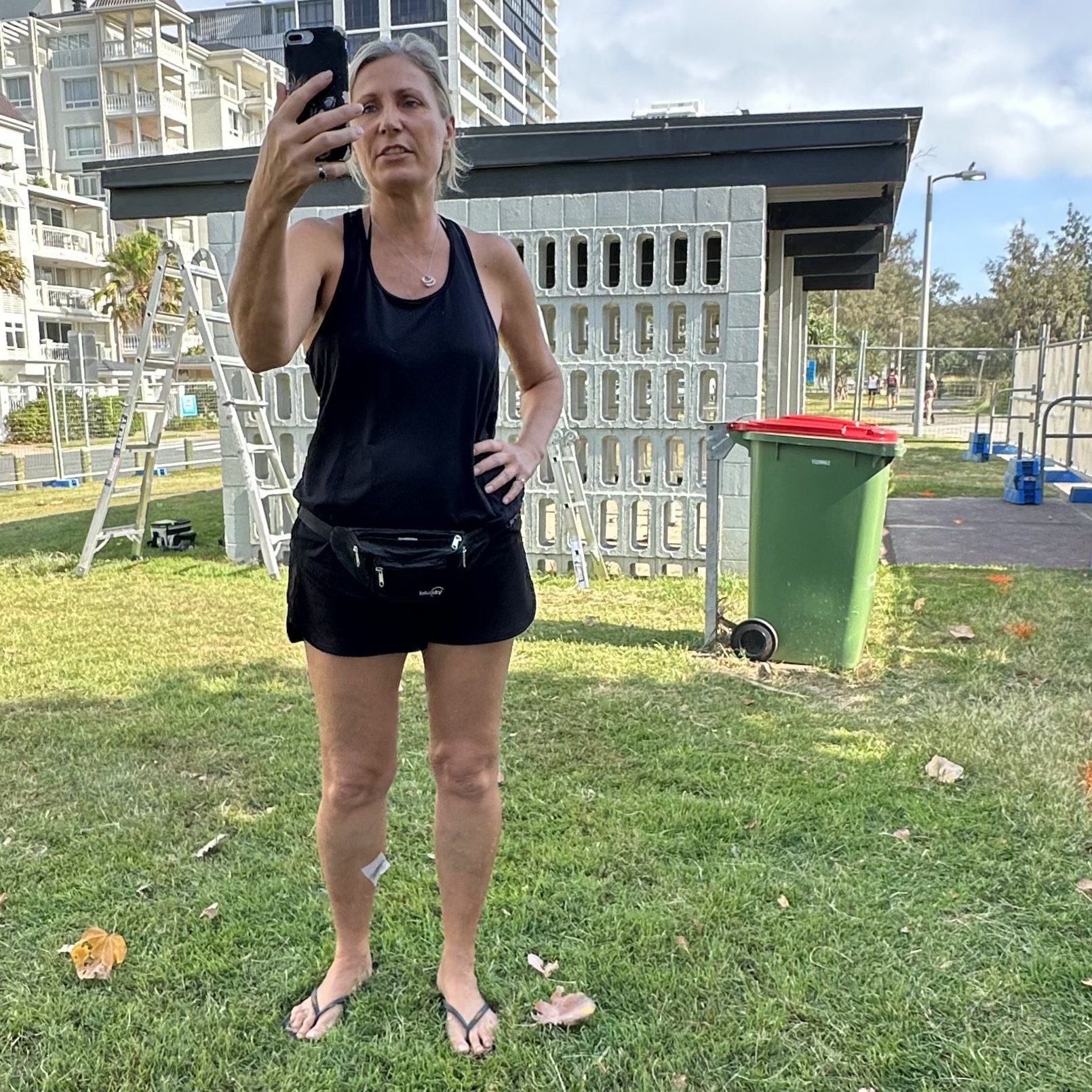
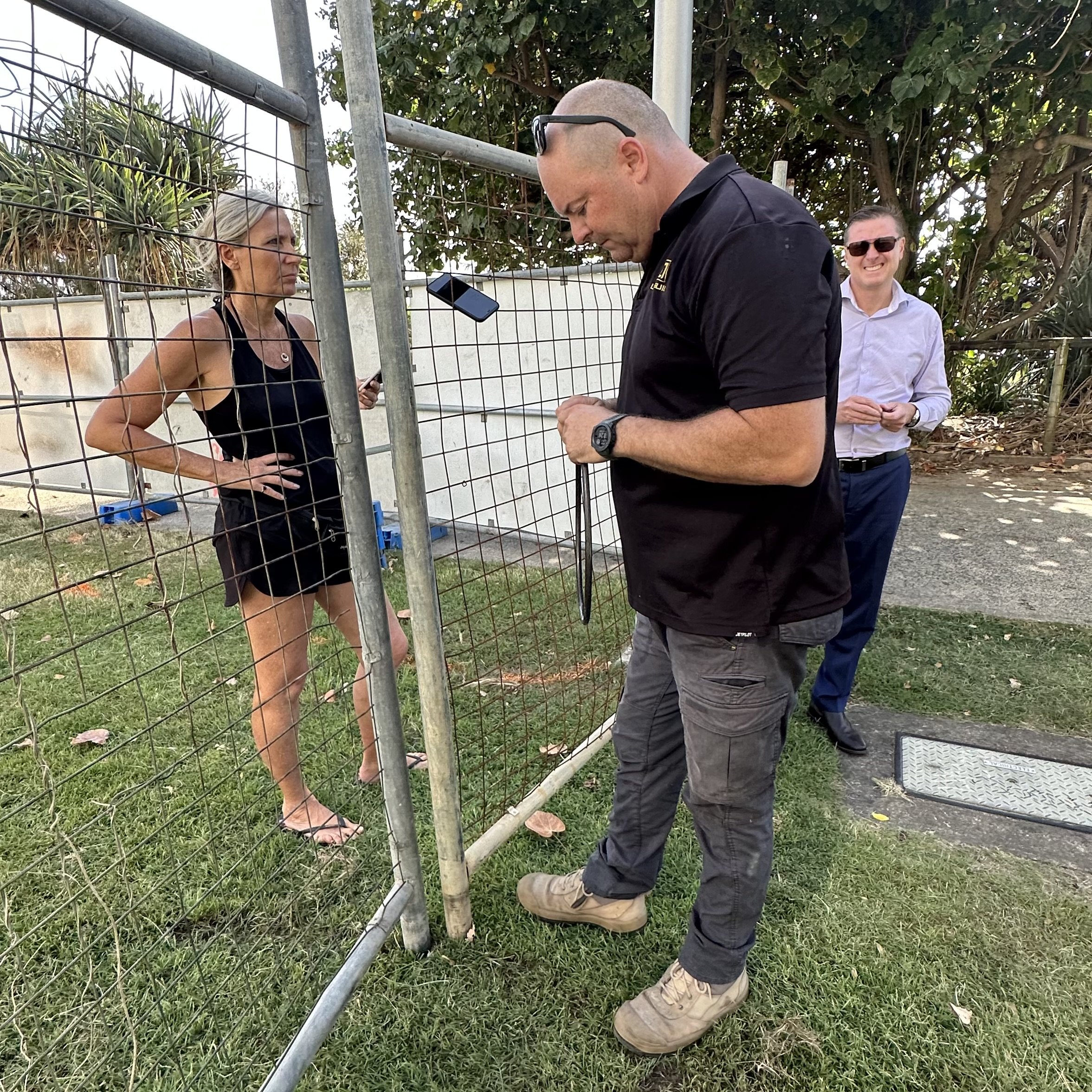
13 February: Later that same day, council contractors surrounded the shelters with hoardings, so at dawn the next morning, several of us slipped through the barriers and occupied the shelters, to alert contractors that a heritage protection nomination was in process.

The chief contractor arrived around 7am and insisted that we vacate the site. We called the council’s after hours number and were told that no-one would be available until 8am. We left voice and text messages on Cr Taylor’s mobile and office numbers and received no response.

By historical coincidence my phone contacts had the mobile number of Alton Twine, the Community Services Director, so at 7.22am I took the liberty to call and explain the situation. We talked for 7 minutes. I felt that he understood the issues and implications, including my request to instruct a pause on demolition works while the Economy, Planning & Environment Directorate assesses the nomination for heritage listing.

At 8.15am, Tony Jermyn, the Parks Manager, turned up. He claimed the shelters were dilapidated, dismissed the value of keeping them, and said that he had a 13-page report from the heritage branch signing off on their removal.

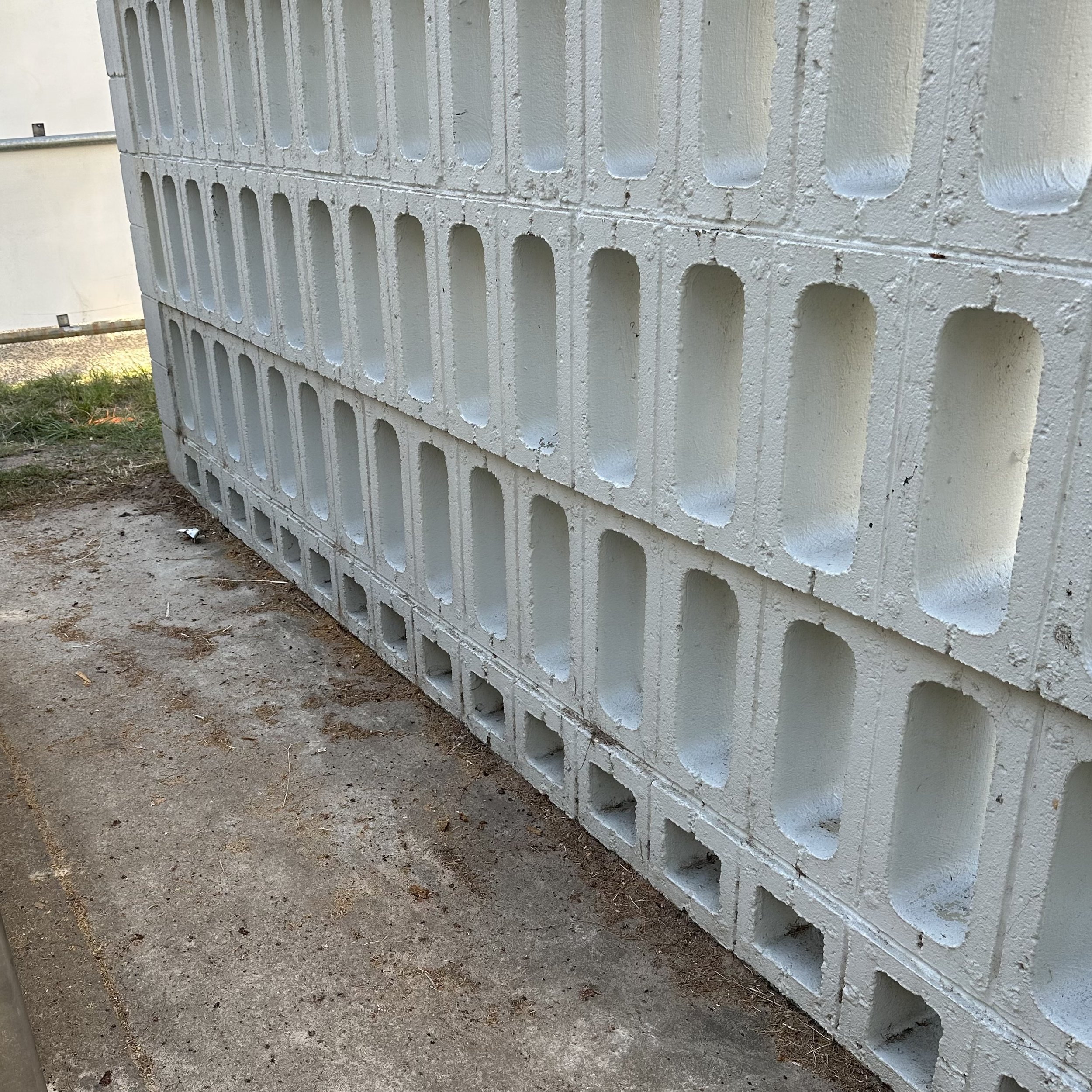
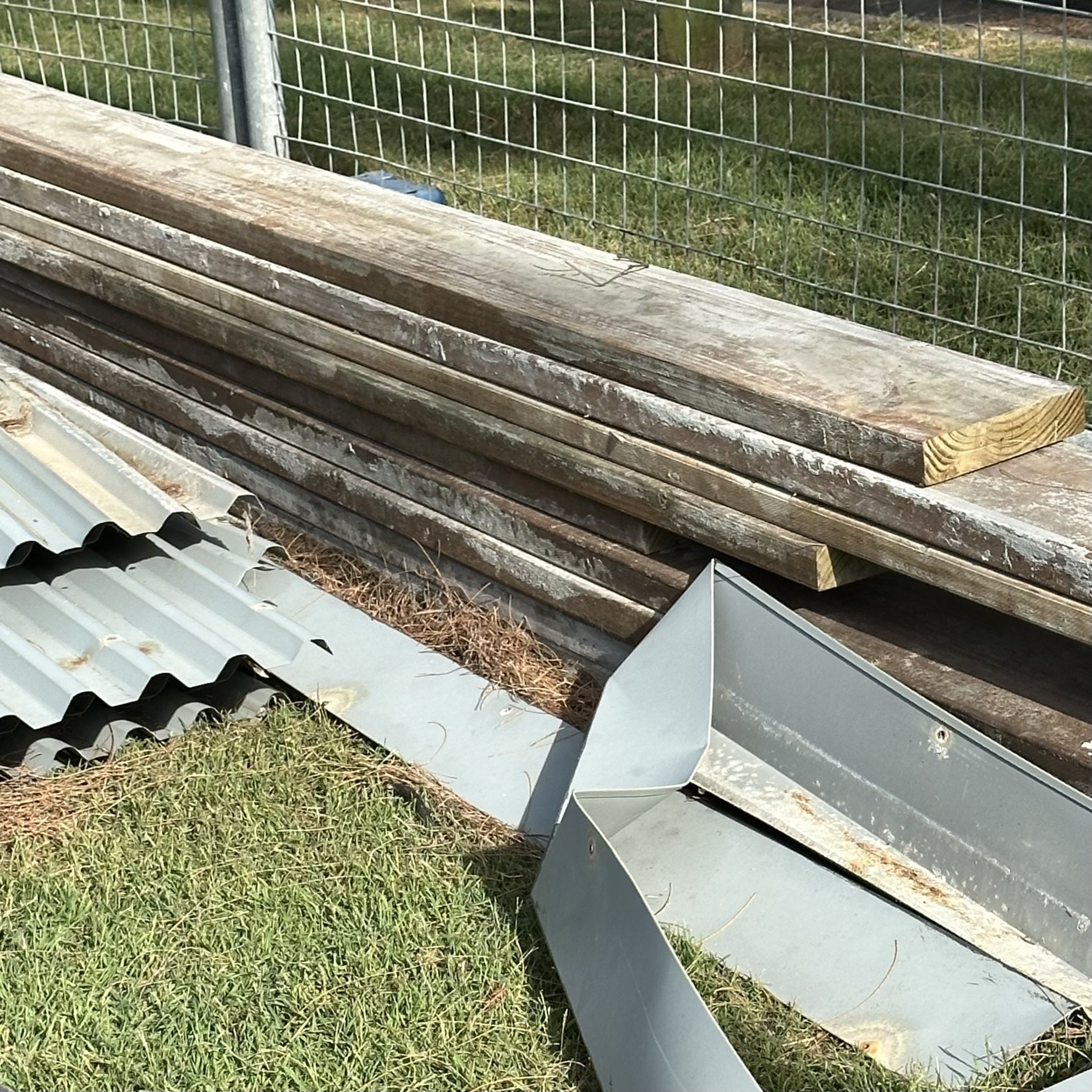
In actual fact, both shelters were rock solid. The breezeblock walls stood straight. There were no visible cracks in the concrete slab foundations. The hardwood timber beams that supported the lightweight roof were in perfect condition. Only the corrugated roof sheeting had any sign of wearing around the screw holes - as anyone can expect of building materials that are exposed to weather and sea salt. These could be patched or replaced for minimal material cost.

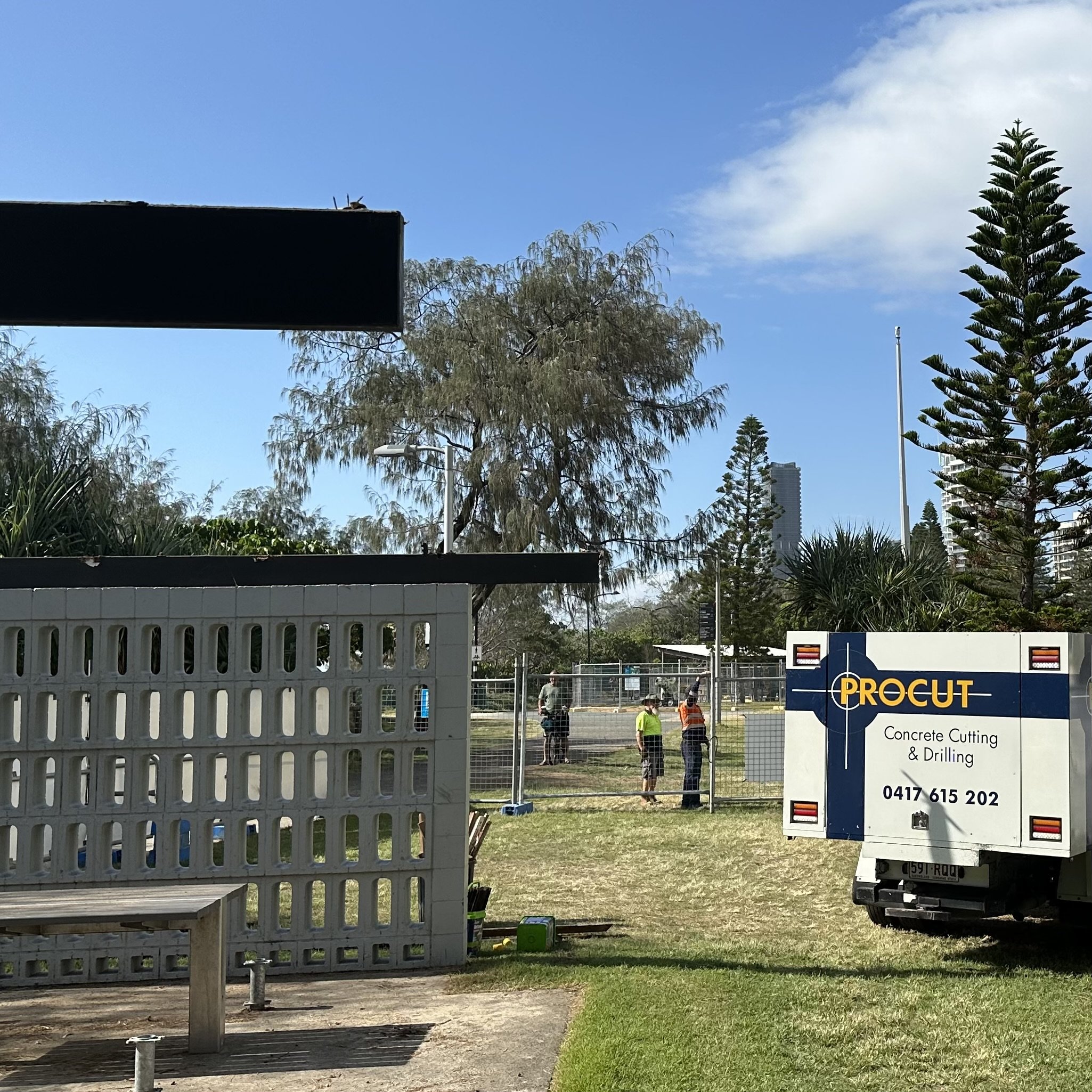
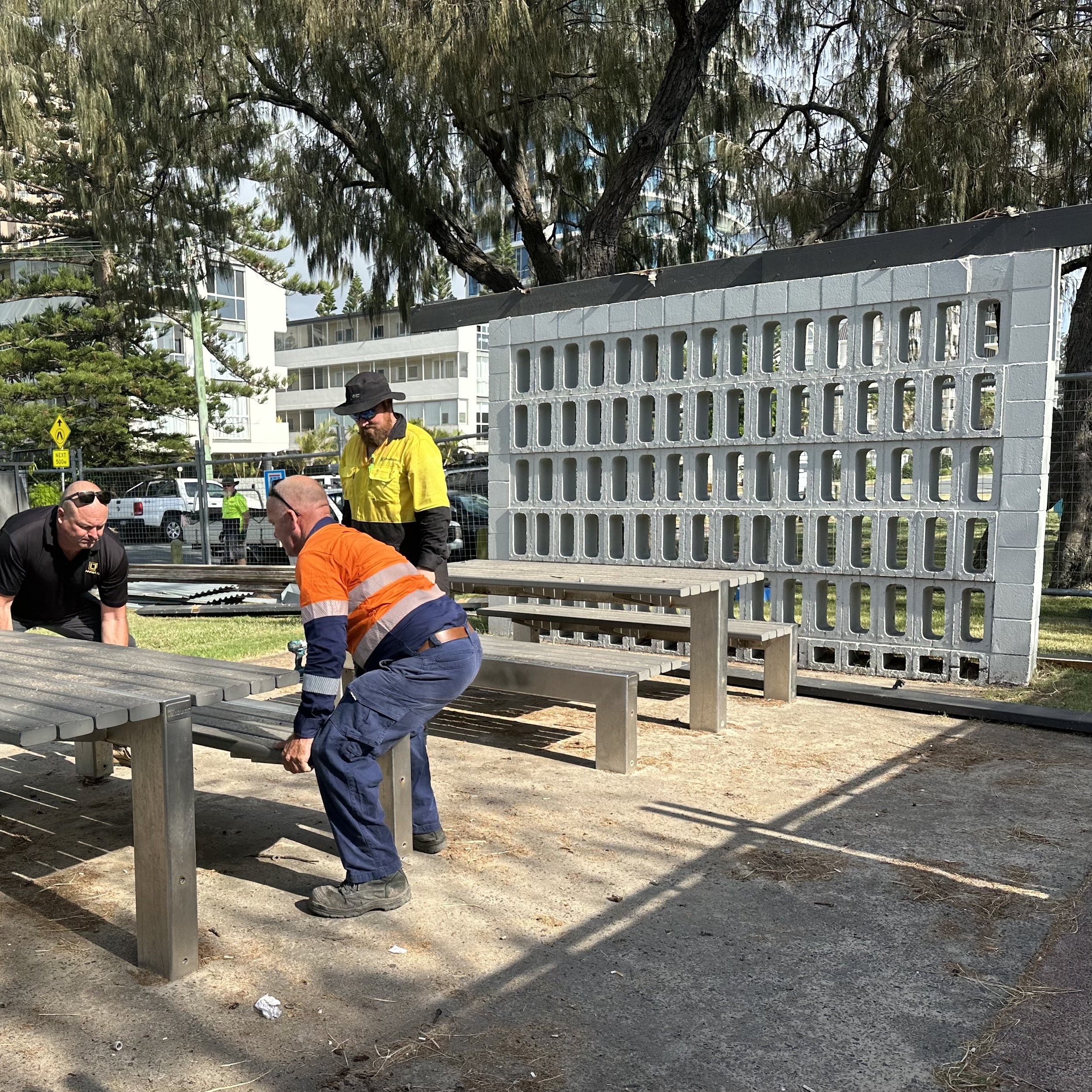
Mr Jermyn ordered us to leave and we resisted, then the contractor called the police who insisted that if we stayed they would fine us for trespassing. So, we abandoned our protest. Mr Jermyn then spoke with Cr Taylor who confirmed instructions to proceed. The concrete cutters swooped in and the shelters were gone in next to no time.

3 March: More than two weeks later, Better Broadbeach Association received a letter in the post. It was dated 27 February, and signed, not by the CEO, Cr Taylor or a Heritage Branch officer, but a Parks Coordinator who reports to Mr Jermyn. The letter is flawed. It glosses over the heritage matters and fails to acknowledge that works should have been halted until the nomination was assessed and determined. It wrongly asserts that the breezeblock shelters were in poor condition and offers inexpert reason for not repairing or reassembling the roofs.

QUESTIONS THAT LINGER

  • Did the Parks Department get wind of our heritage listing nomination and deceitfully hurry to demolish the breezeblock shelters before we could bring public attention to the value of keeping them?

  • Why didn’t the Executive Director instruct contractors to pause works when advised that the shelters had been nominated to the Local Heritage Register?

  • What did the referral report from the heritage branch say about the shelters?

  • What is the cost of this unnecessary replacement project?

  • Was it acceptable for the councillor to instruct a council officer?

  • Was the recent City Plan – Heritage Amendment consultation a wasteful, disingenuous charade?

WHERE THE STORY ENDS

Unless we pay for Right To Information requests, we are unlikely to ever know the answers and since the shelters no longer exist there’s hardly any point pursuing the matter, which is apparently the outcome that the Parks Department was playing for.

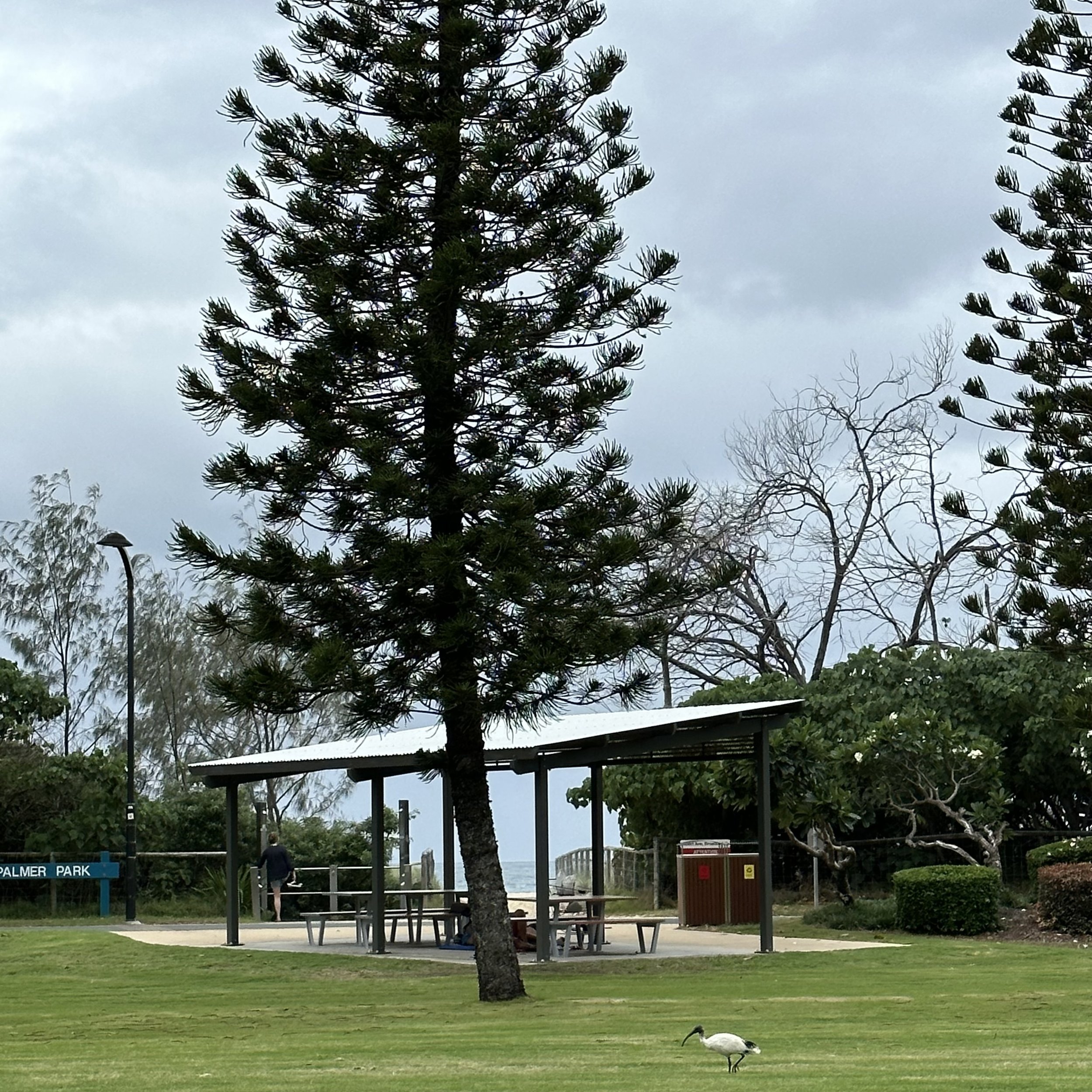
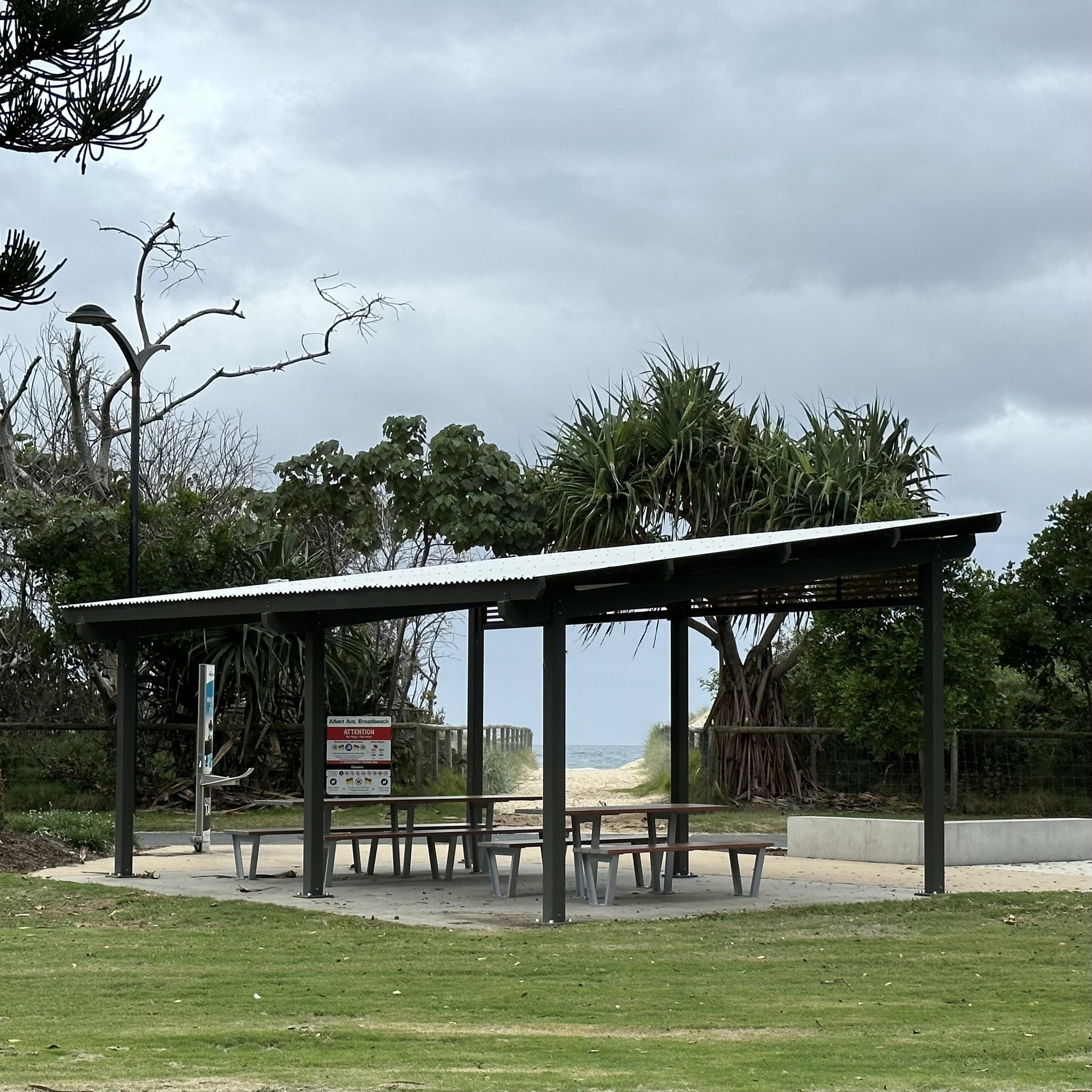
Today, the new shelters are almost ready. They’re okay, consistent with the design of other shelters nearby in Kurrawa Park, but soulless. Two of those are sited smack bang in the view corridor along accessways to the beach, which is something else that a skilful landscape designer would avoid, but most people are unlikely to notice, or care. And the Gold Coast is a little bit blander because of all of this.

ART FOR ARTS' SAKE

The council annually invites responses to a rather generic survey about Gold Coast Arts & Culture. I diligently respond each time because I believe that no city can invest too much in the arts and cultural infrastructure. This year, having regard to the council’s recent decision to roll HOTA in with operational entities for tourism, major events and Study GC, I felt the need to wave the flag again for the importance of “art for (the) arts’ sake”.

Amongst these changes I hope a distinction remains clear that while the arts are great for entertainment and tourism, their most beneficial dividend is 'community cultural development'. When it comes to public expenditure, the arts and cultural infrastructure should be expected to operate efficiently, but since the greatest value they create is a richer cultural life, pressures to turn a financial profit should not be the main driver. Exceptions to this may include some performing arts, major events, festivals, movie production and cinemas, but many artforms and creative practices that enhance our lives do not fit within commercial business operating models.

I also submitted a statement about the need for a city museum, plus a cultural heritage tourism enterprise and a Gold Coast History program - as outlined in my earlier post THE LAST RESORT.

SAVE OUR BREEZEBLOCKS

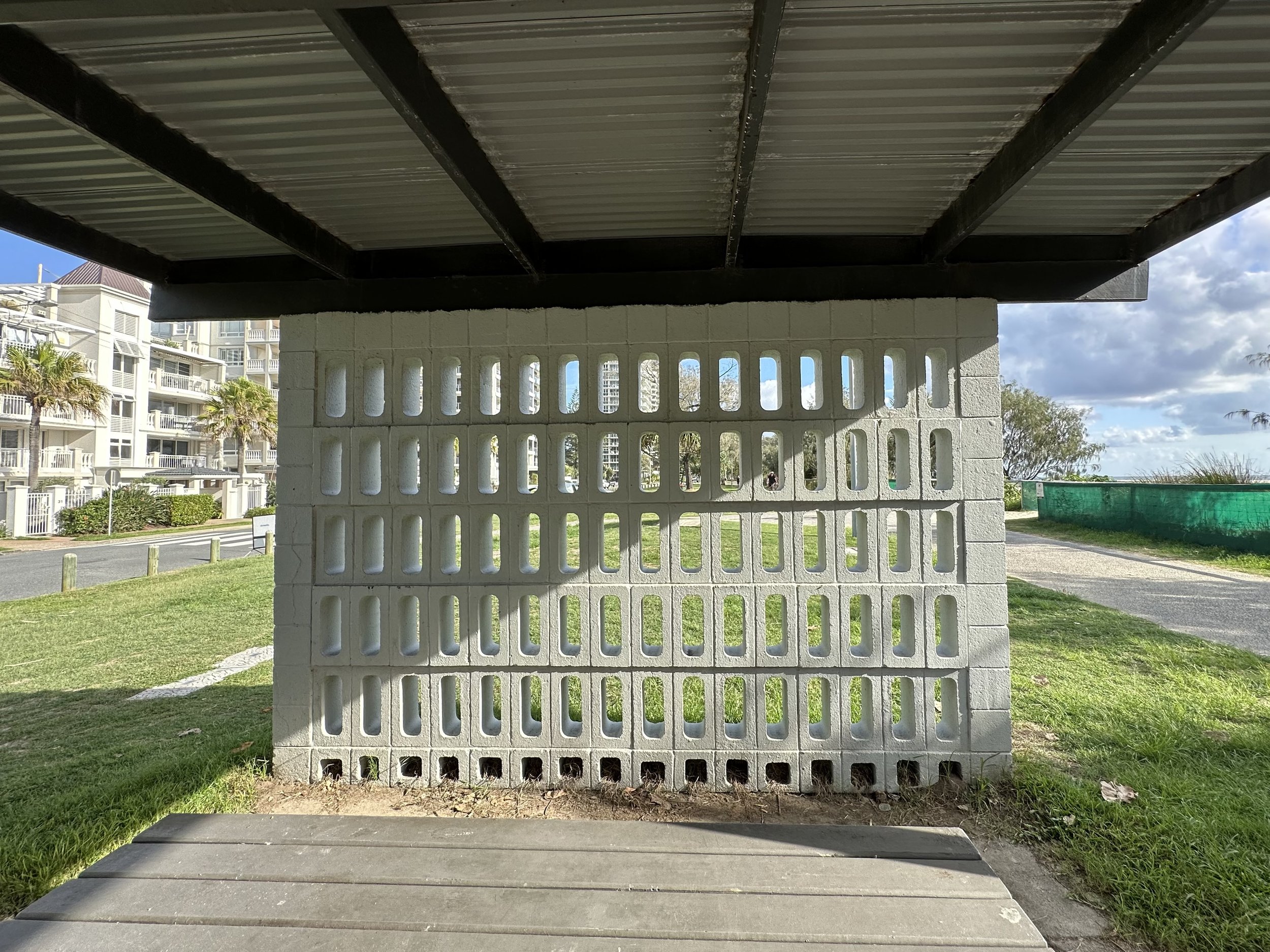
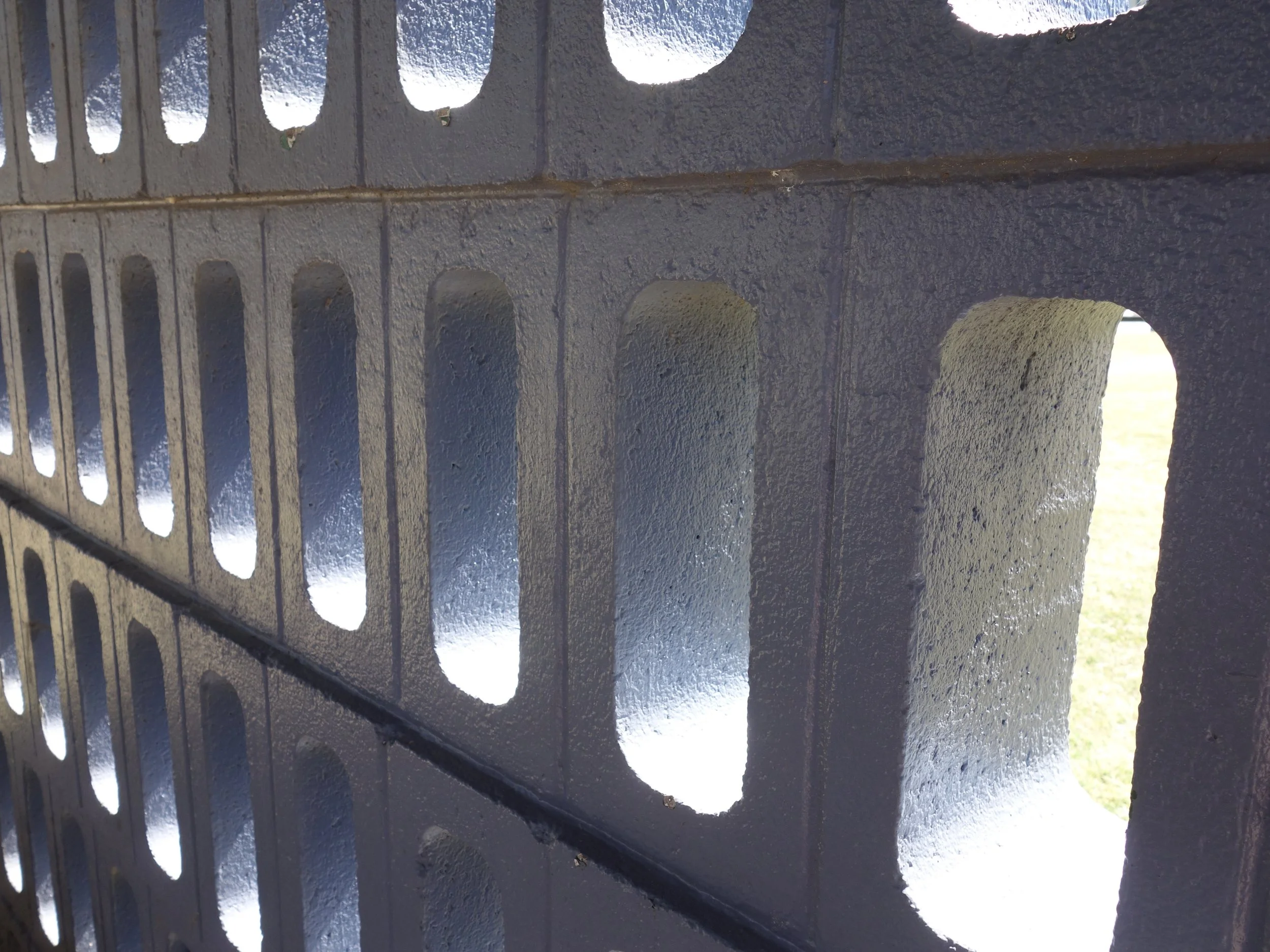
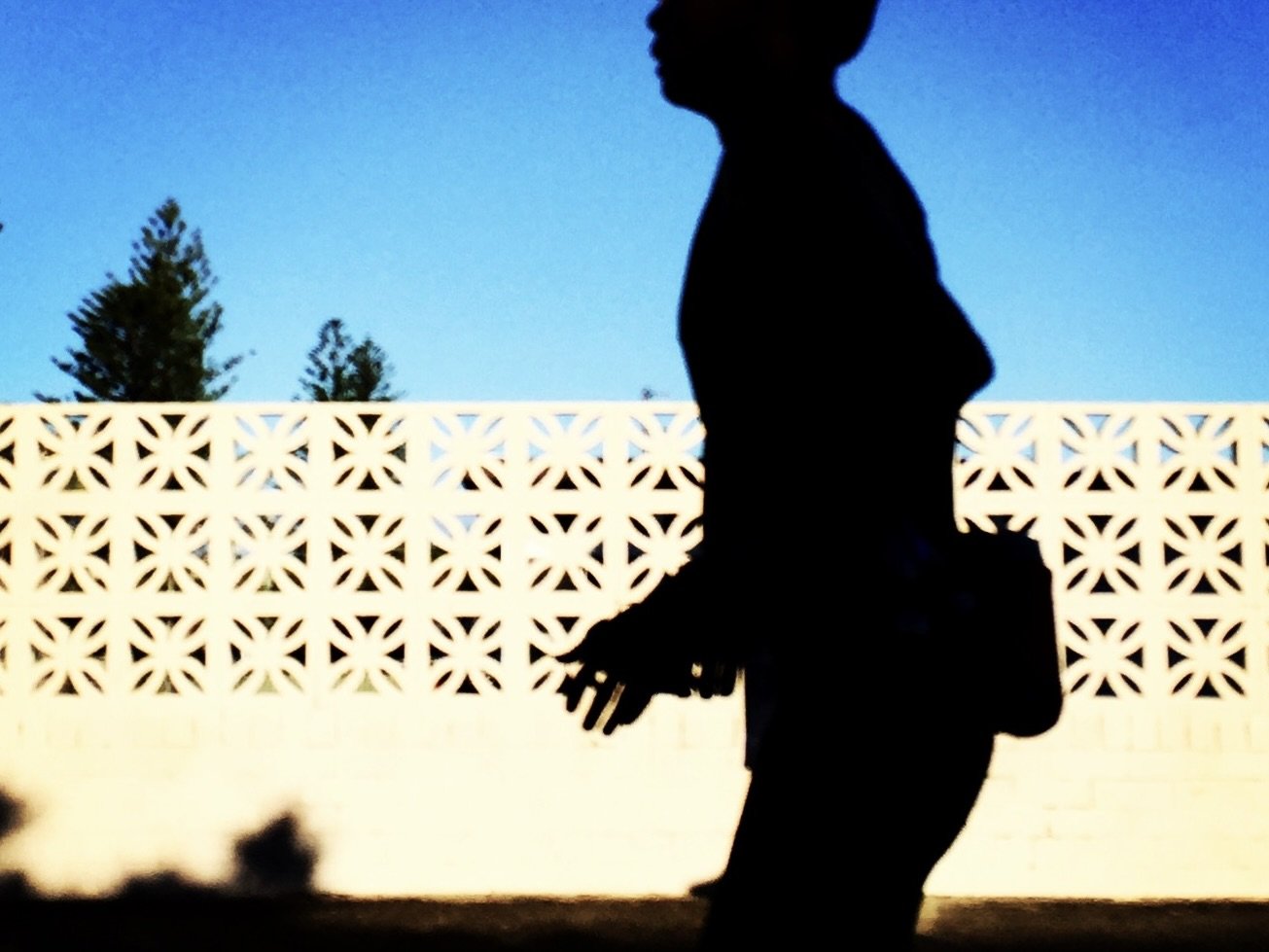
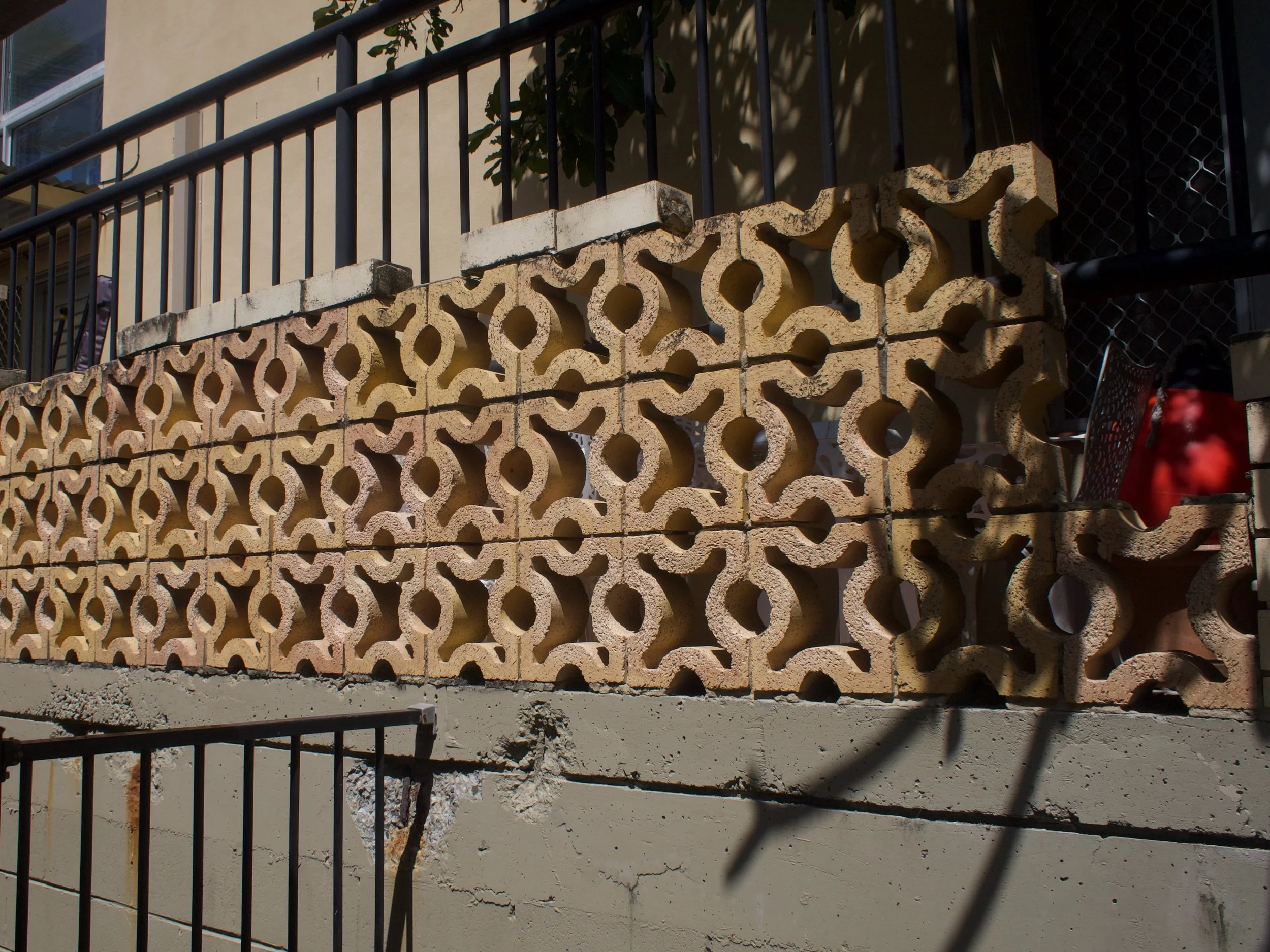
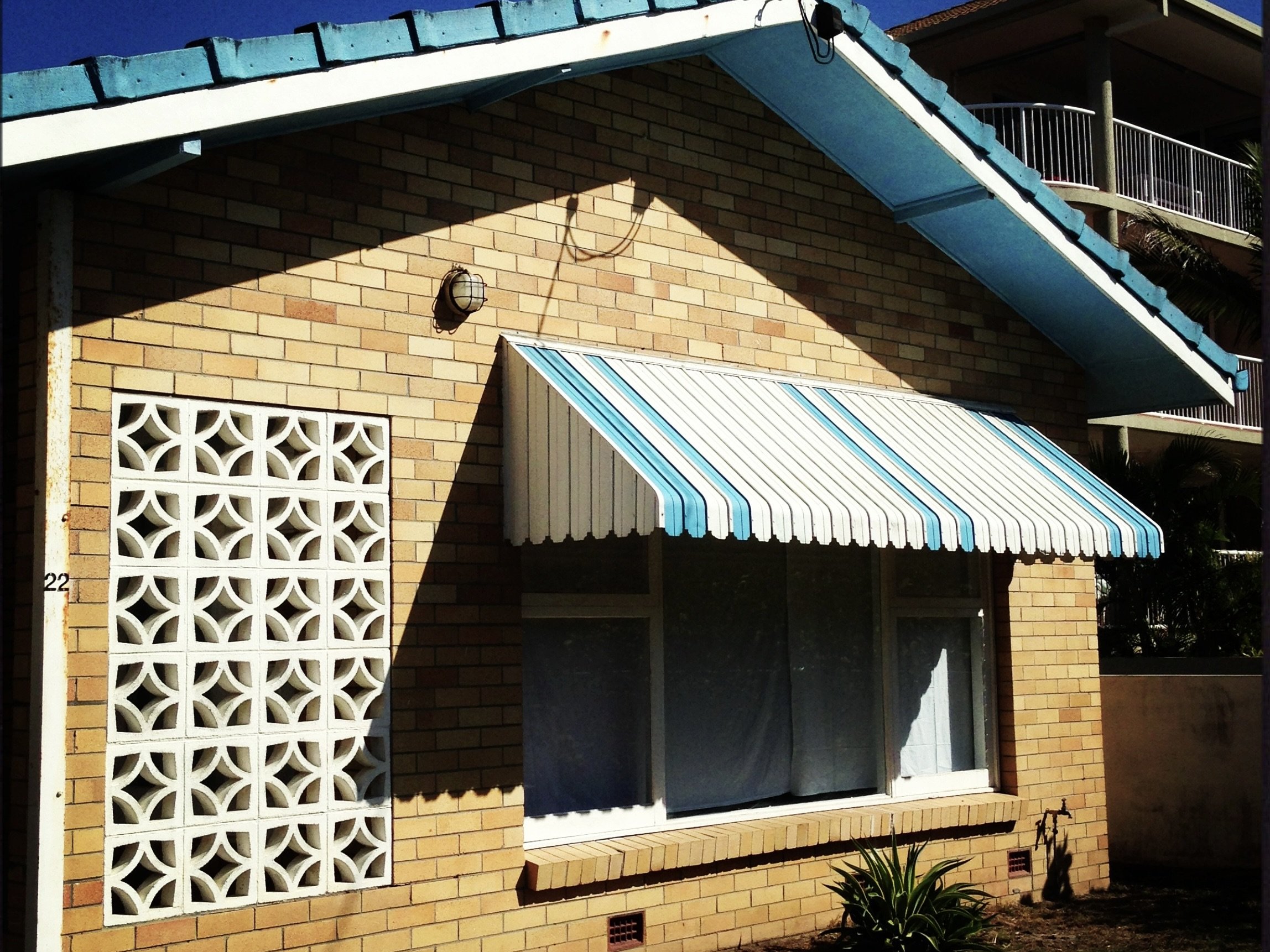
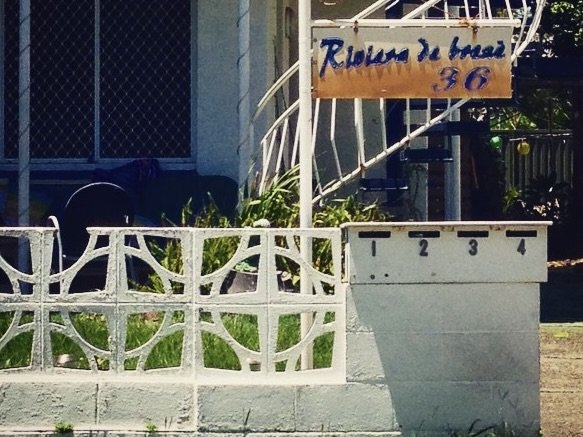
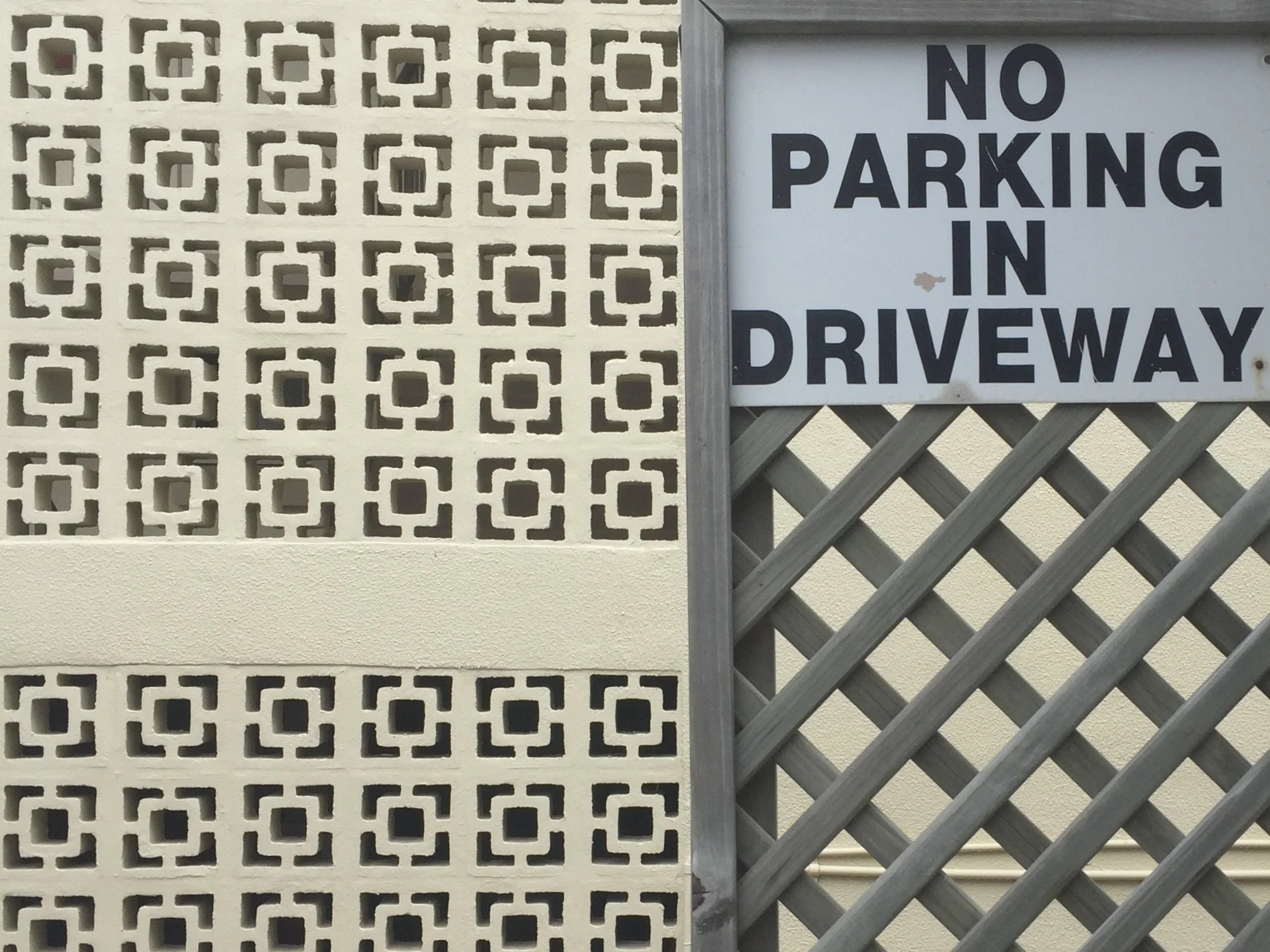
Breezeblocks were popularly used at the Gold Coast from the late 1950s to the 1970s, then as different building materials became available and stylistic trends changed, they lost favour and their ubiquity has been declining with each renovation and redevelopment. I started photographing breezeblocks in the mid 1990s when we surveyed the city for the Gold Coast’s first Urban Heritage & Character Study.

It has been pleasing to see a revival of breezeblocks in recent years. HOTA’s upcoming exhibition ‘Lost in Palm Springs’ will surely feature breeze blocks in artworks and photographs related to the qualities of mid-20th century modern architecture. So we were baffled to learn that the council intends to replace these two breezeblock park shelters in Broadbeach. The new shelters are to be like the three that have recently been installed in Kurrawa Park, which are skimpy and soulless.

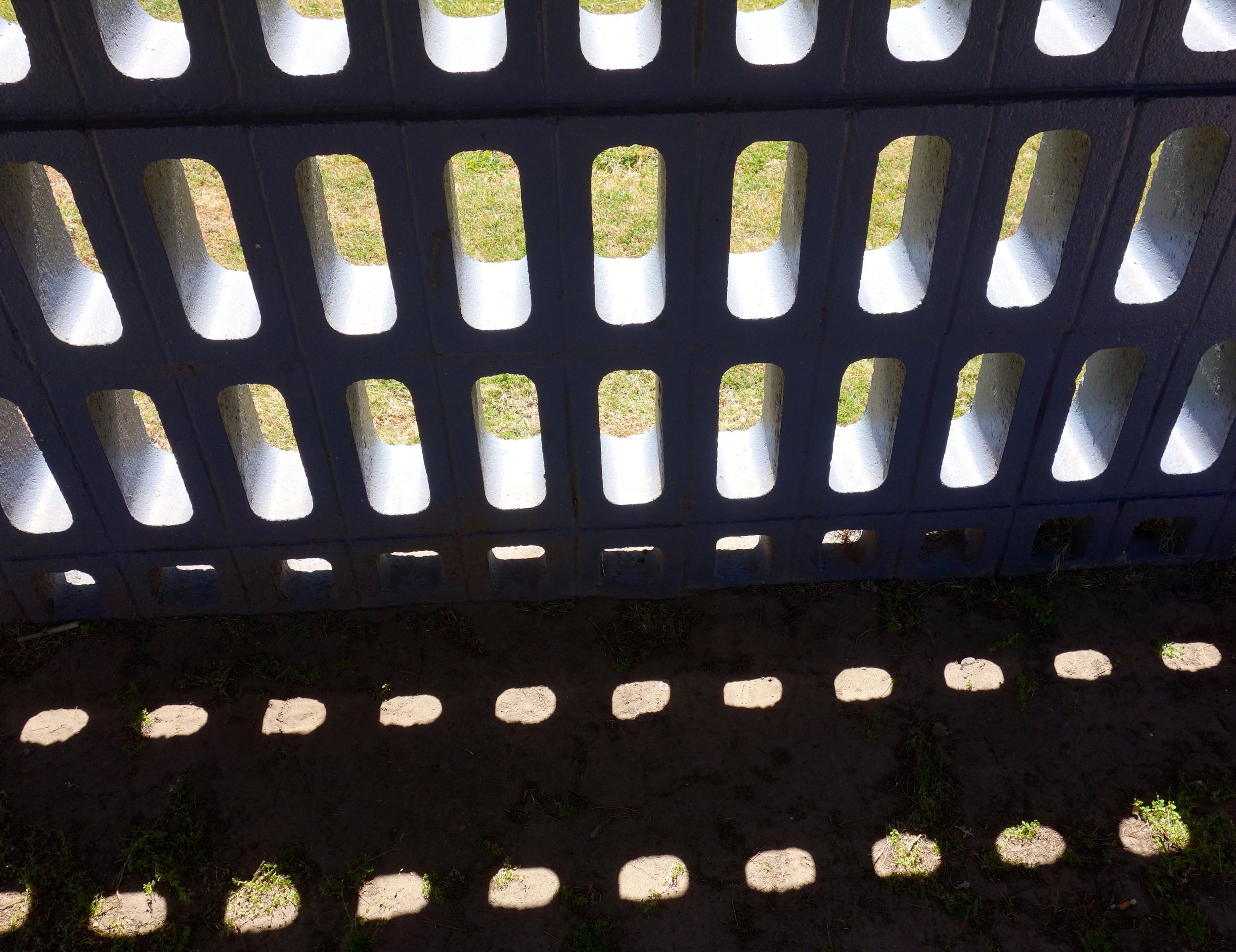
The existing breezeblock shelters were built in the 1970s. They are sturdy, in good condition and easy to maintain. They provide functional, comfortable social spaces. The breezeblock walls allow ventilation and visibility, and they cast decorative shadow patterns in sunshine.

We think it would be a mistake, and unnecessary to replace the breezeblock shelters so our Better Broadbeach association alerted the local councillor, CEO and heritage department of our desire to keep these structures, and we nominated them for listing on the Local Heritage Register.

They’re not highly significant heritage buildings, but they are perfectly fit for purpose, and in a modest way they contribute to the 'sense of place' in this locality. Broadbeach is changing massively, but let’s hold on to a few bits of The Old Coast so that we don’t only have photos to remind us of the past.

I’ve never found time to write a proper story about Gold Coast breezeblocks, and perhaps I never will, so now seems a good time to make a scrolling gallery of some photos from my archives at the end of this post. Many, or maybe most, here have already disappeared.

I’d be grateful for anyone with local breezeblock pictures to post your own, tag @the_old_coast and add the unique aggregating hashtag #gcbreezeblocks

And if you want to learn more about the use of breezeblocks in Queensland, there’s a great Masters thesis (2014) by local Broadbeach architect Pam Deasy, called “Blocked Out: the role of breeze block within contemporary architectural history in south east Queensland from 1955 to 1970.

GOLD COAST BOULEVARD BECOMES THE SPINE OF A TRULY GREAT CITY!

Highway n. a main road, thoroughfare, Boulevard n. a broad street, typically lined with trees

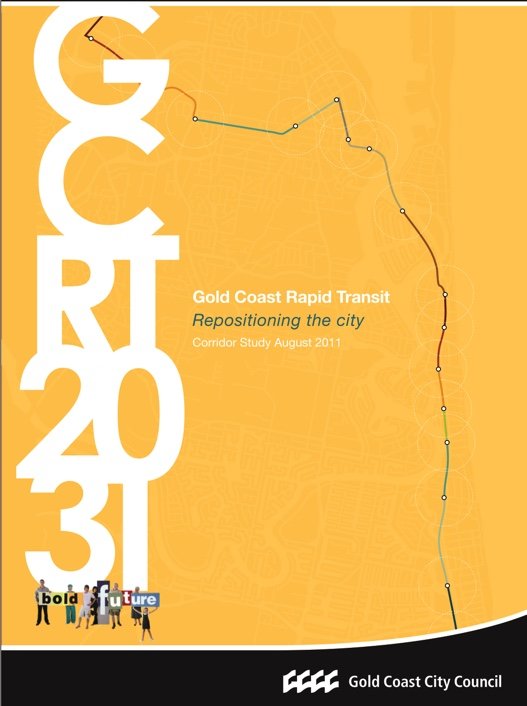
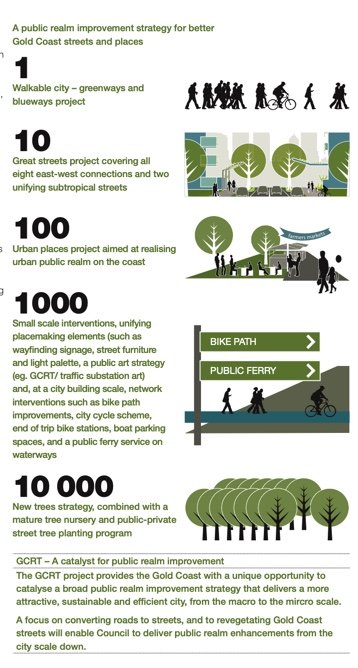
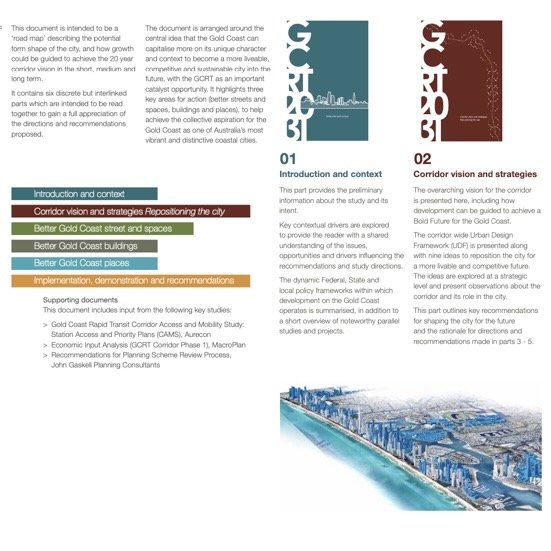
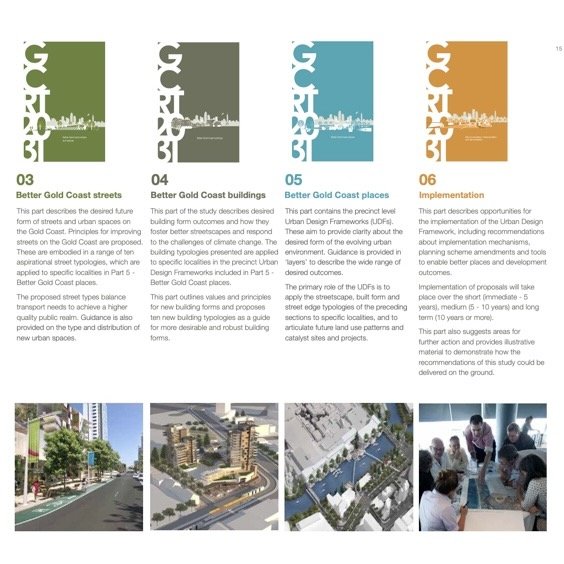
I drank the Kool-Aid. I remember feeling elated in 2011 at the prospect of the urban transformation that was foreshadowed in the Gold Coast Rapid Transit Corridor Study. Checkout the beautiful pictures and urban planning and design ideas. There’s not much to disagree with. I didn’t scrutinise the detailed planning and design as it progressed because I trusted that it would be delivered to plan and I didn’t want to give fuel to the dissenters to slow or halt its delivery.

Most people accepted the transformation and expected that dramatic changes would occur alongside the light rail route, from Main Beach to Broadbeach as depicted in the diagram below from the study.

GCRT 2031 Repositioning the city 2011, p41

At that point, no-one knew that in 2012, Tom Tate would pull a Steven Bradbury to slide into the Mayoral role, and appoint Cameron Caldwell to the influential position ad Chair of the City Planning Committee, with an agenda to aggressively supercharge the construction industry. Nor did anyone expect that within four years, they would radically deregulate the town planning scheme and make the entire stretch from Main Beach to Broadbeach an unlimited height area, with no plot ratio control, and switch the hierarchy of assessment criteria so that even development proposals that fail to satisfy performance criteria are exempt from Impact Assessment - which means there is no opportunity for objections from neighbours.

On top of this, to ensure nothing could be inhibited, they designated a Light Rail Urban Renewal Area that essentially lets the council approve anything that developers serve up within walking distance of the corridor.

Of course, the council could reassure residents that along the four-year and largely confidential process of reviewing the planning scheme, they commissioned a variety of studies that guided and justified the final draft that was exhibited to the public for feedback. A sceptic might suggest that to some degree, studies were biased to affirm pre-determined outcomes. For example, in early 2015, the brief for the Building Height Study that was awarded to planning form Urbis and revealed publicly in late 2017 instructed that “The northern coastal high rise strip will continue to grow with the emerging Southport CBD and the consolidation of Surfers Paradise and Broadbeach. The City Plan contains “no prescribed height limit” provisions in these areas which will also facilitate this outcome.”

HX(HX) Building Height overlay from Main Beach to Broadbeach

Little had the trusting public expected that the ‘Iconic Skyline’ principle applied to the area from MacArthur Parade to Peerless Avenue, meant that the council would neglect to care about the character and amenity of local streets and neighbourhoods within that frame. In the maelstrom of the City Plan public review period, there was hardly time to properly examine, query and understand the implications, let alone respond on matters like this. In the years that followed, the council granted hundreds of approvals for highrise development proposals which councils in most cities would regard as excessive, even preposterous. As residents began to realise the grave implications of this broad brushstroke (i.e. the HX(HX) unlimited height overlay that guarantees all development applications for highrise residential towers are Code Assessable), they began to joke that the area from Main Beach to Broadbeach had been HeXed. Yet, it wasn’t a joke. This has become the new reality.

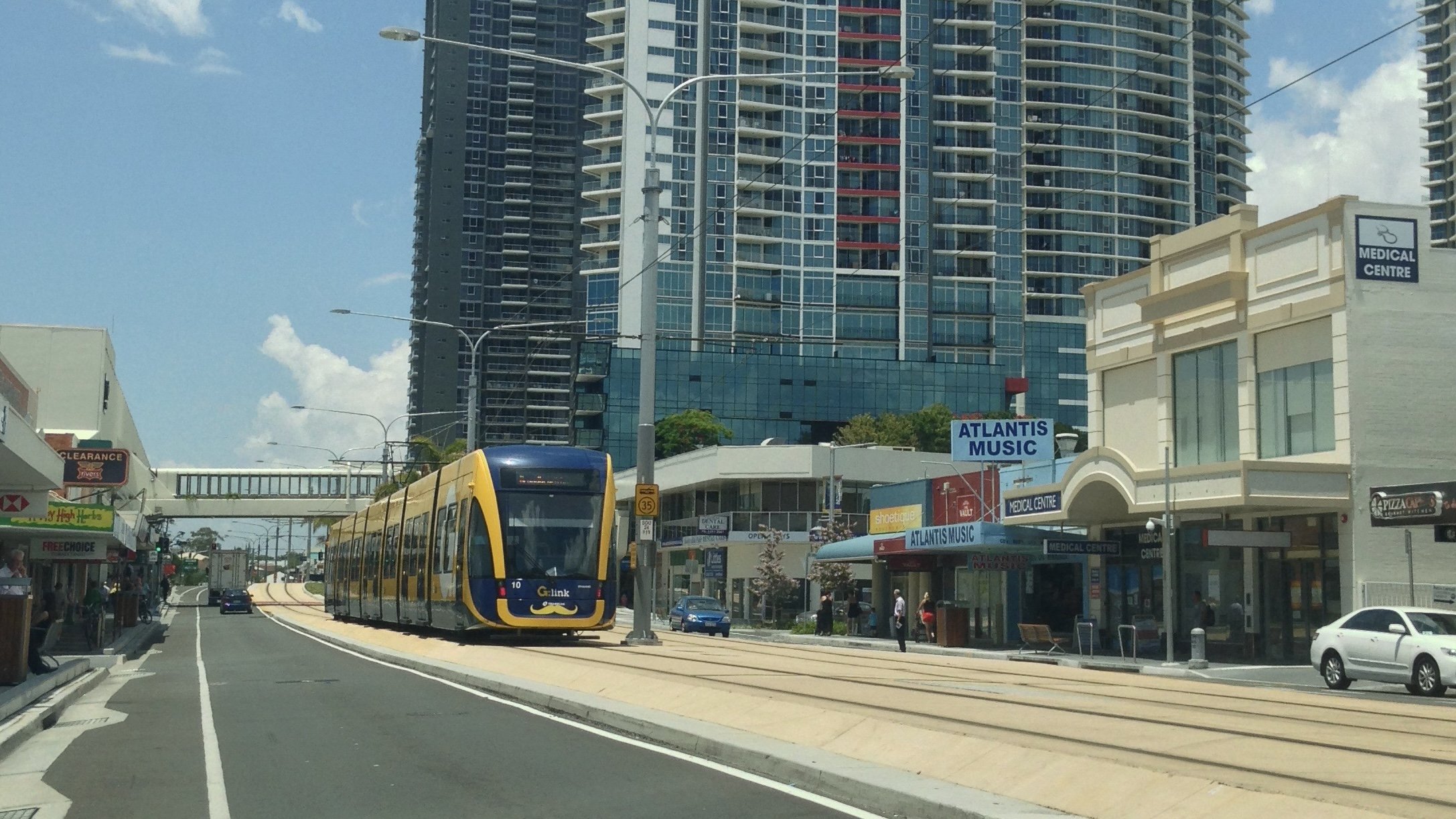
Streetscape alongside the light rail track through Surfers Paradise

In response to criticism about poor design outcomes, the council produced an excellent Urban Ground Guide to demonstrate good design for development at street faces. However, they stopped short of incorporating the guide within the City Plan so it has little more effect than a public relations exercise.

I wrote about the politics of tall buildings and how the City Plan’s design code for highrise accommodation could be amended to mandate better design outcomes in a previous essay titled ‘Trojan horses, red herrings and green wedges’. It wasn’t picked up by the council or news media, and if you looked at social media likes and comments, you’d think that hardly anyone read it. However, my website analytics reveal it has been viewed over 3,000 times, which makes me feel that it’s worthwhile continuing to comment on urban planning and design matters.

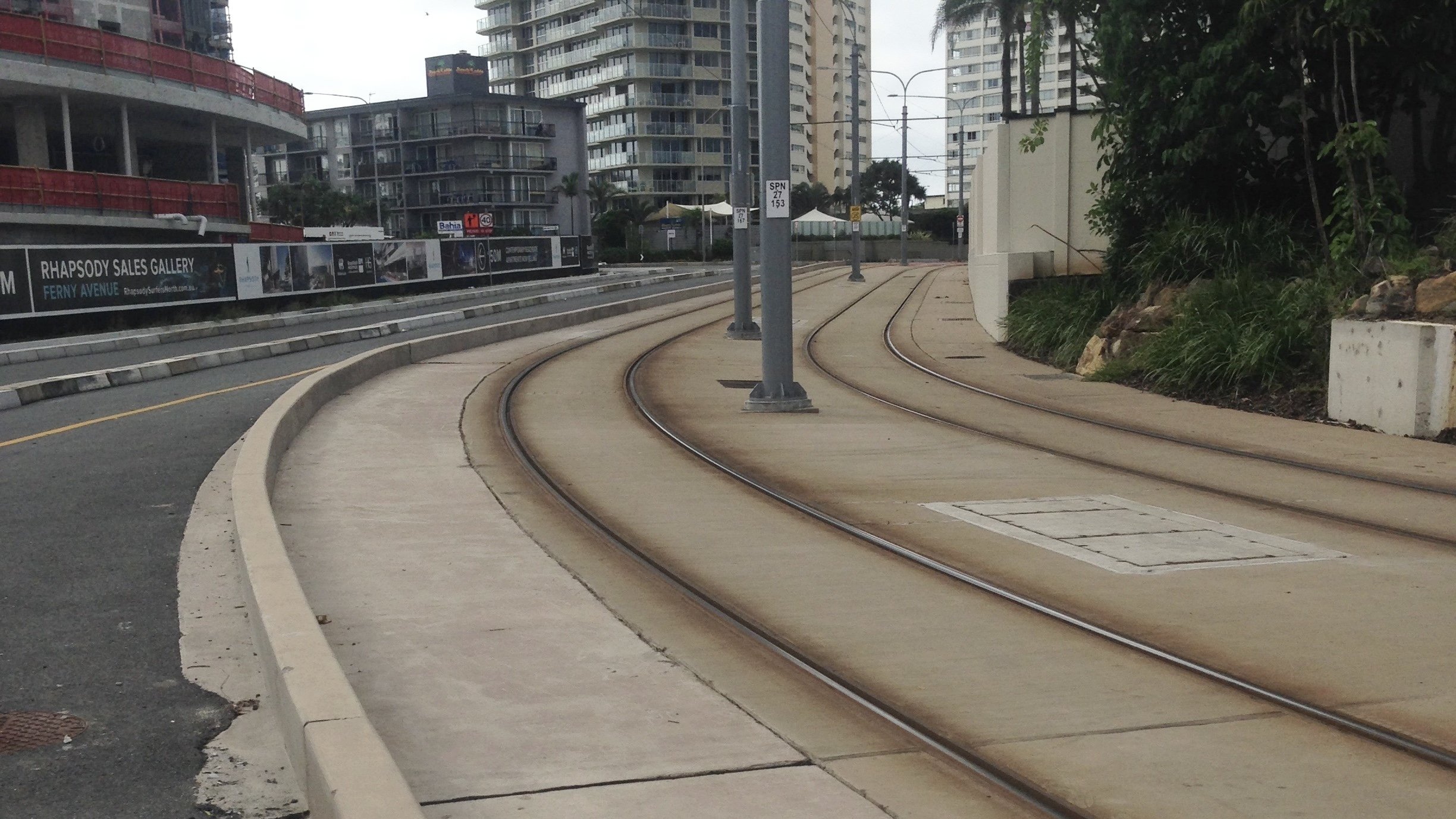
It is regrettable that strategies and initiatives in the 2011 Corridor Study, that were intended to make buildings and streets and places better, were superseded and forgotten. Through Southport and Surfers Paradise, the corridor is like a concrete scar and residents of Mermaid Beach, Nobbys, Miami and Burleigh fear that the Stage 3 extension of the light rail will similarly make Gold Coast Highway worse instead of better.

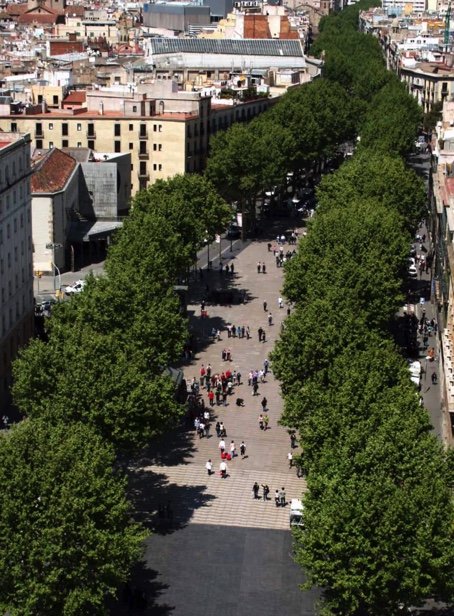
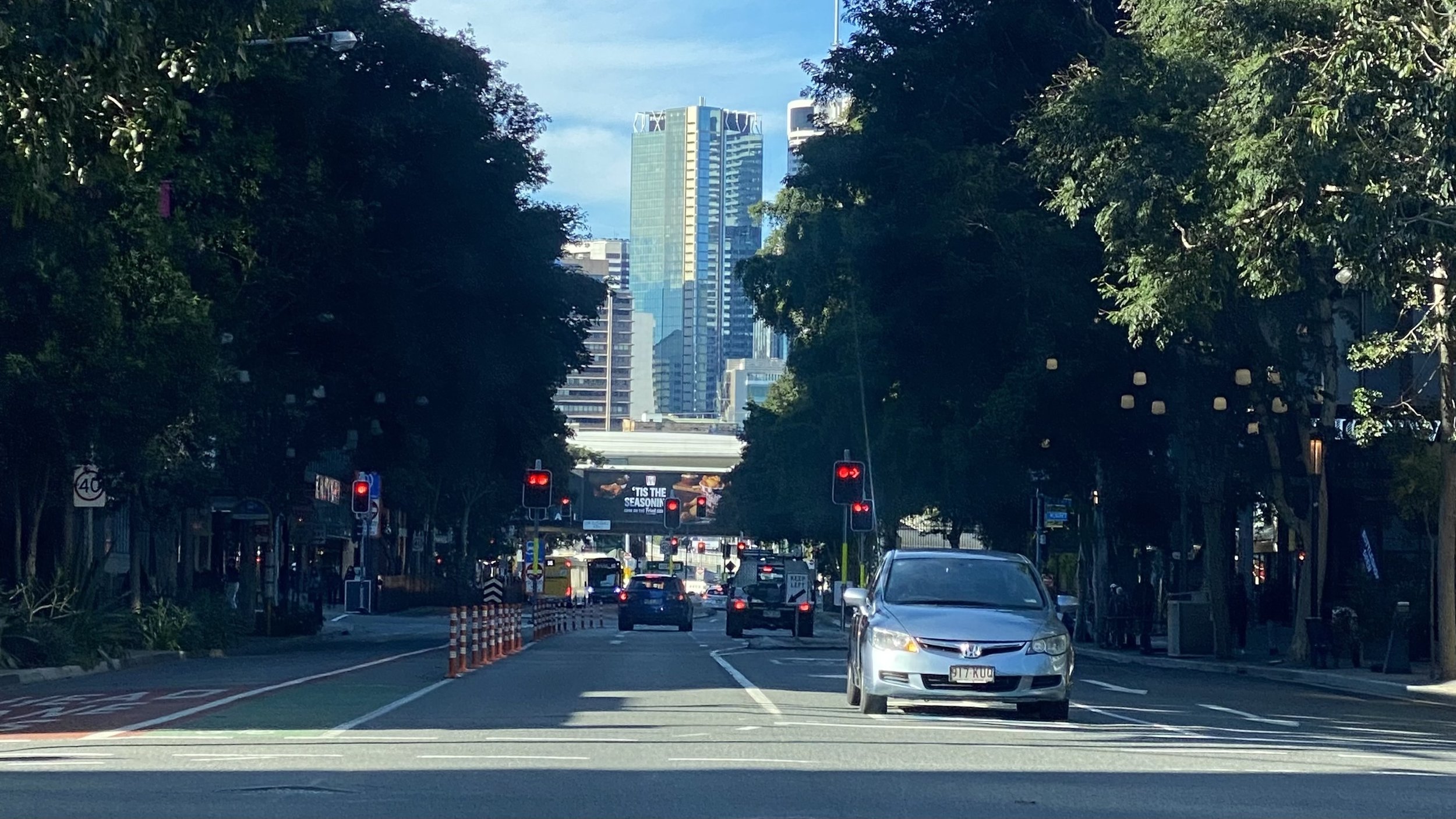
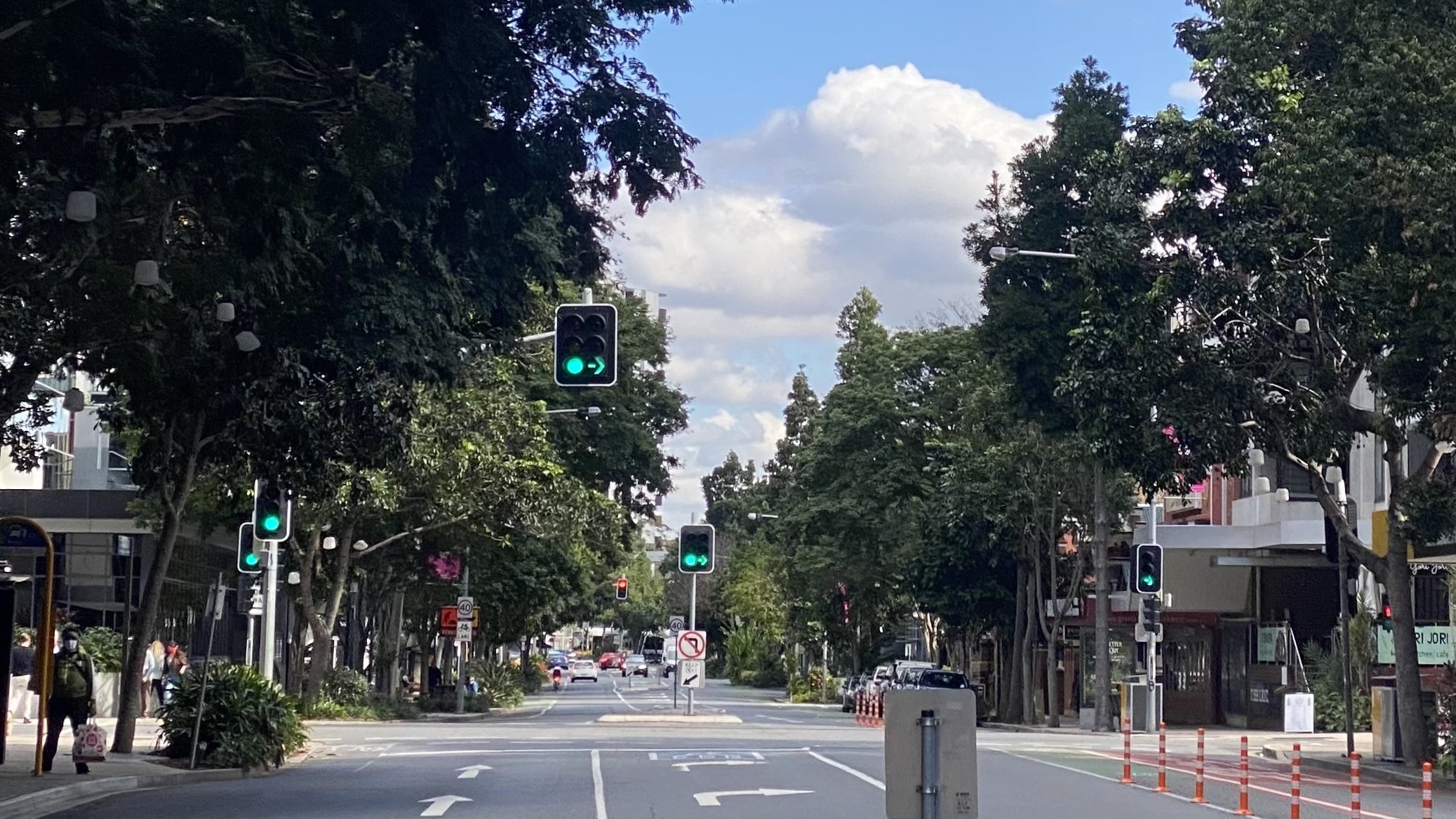
Sometimes I dare to re-imagine the highway as Gold Coast Boulevard - lined with green, subtropical vegetation. We know this is achievable in the South-East Queensland climate. Melbourne Street Boulevard in South Brisbane is a great example where a harsh urban streetscape has been softened by green and shady planting.

Products like Citygreen strata cells and pavement systems can be used to enable establishment of big trees without concern about tree roots damaging underground pipes and cables. And as electric vehicles take over our roads, traffic noise will diminish. There will be little reason why the Gold Coast Highway can’t become a tree-lined boulevard from Coolangatta to Labrador, and even Helensvale.

It’s not only the council that is responsible for the undesirable outcomes along the corridor. We have a State Transport Minister who perhaps wasn’t familiar with the 2011 vision and seems dedicated solely to the aim of driving light rail south to the airport, with little care for the urban quality and amenity of the corridor. And now, it emerges that the State Planning Minister is unwilling to support the very modest expectations of many residents to claw back on excessive affordances of the 2016 City Plan. This news comes as a huge disappointment to Gold Coasters who hoped that the minor concessions in Amendments 2 and 3 could help to salvage the quality of the coastal strip.

The Gold Coast is certainly growing, but it’s questionable whether it is moving in the right direction. Most people accept that to accommodate population growth, the urban form needs to consolidate, and we need public transport infrastructure to reduce our reliance on cars so that the city won’t choke with traffic. However, there is a lot of dissent about extension of light rail to the airport and supercharging of highrise development as the principal ways of achieving this.

Meanwhile, there’s a conspicuous absence of mid-rise, medium-density residential development. To elevate this in public discourse I have previously written about the attributes of well-designed and affordable three to eight storey typologies for infill and renewal areas at the Gold Coast. For several years there has been constant news and narrative about a housing affordability crisis. Recently Premier Palaszczuk has announced a Queensland Housing Summit to address multiple housing issues, but Mayor Tate’s continuing silence on this topic is deafening.

More and more Gold Coasters are getting frustrated by these various planning and development conundrums. They feel like they have been sold a pup and now there’s a lack of positive action to remedy the problems.

  • They want the Planning Minister to gazette City Plan Amendments 2 and 3.

  • They want State and council planning departments stop giving lip service to the need for medium-density housing and prioritise a ‘Missing Middle’ agenda, to promote and facilitate well-designed and affordable mid-rise housing.

  • They want to see commitment to converting the Gold Coast Highway to an attractive, green boulevard that’s more like the 2011 Corridor Study vision than the harsh and hostile passage it is today.

Herein lie the failures of, and the opportunities for the State and local planning authorities to collaborate and coordinate, in the public interest…

SUNSHINE STATE OF MIND

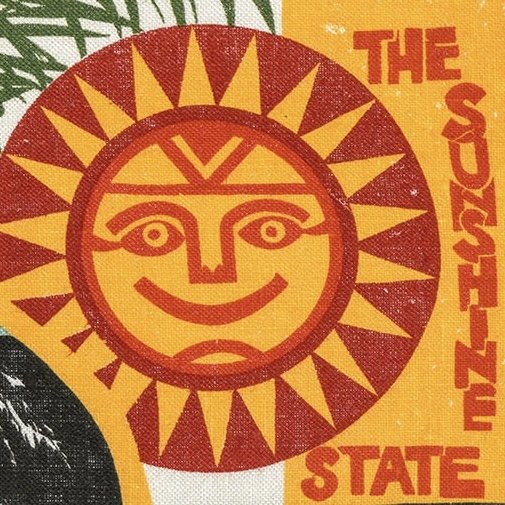
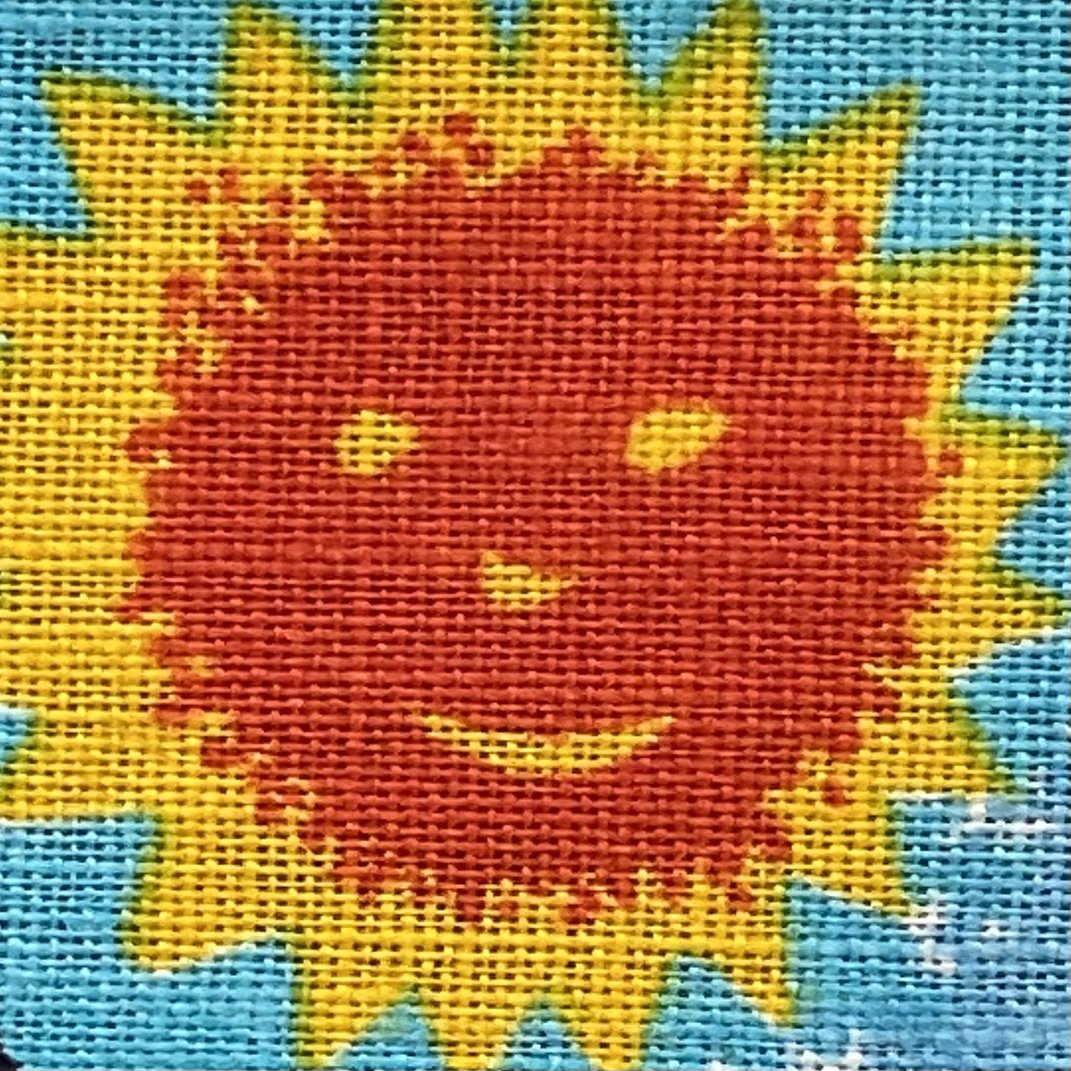
Queensland is best represented by images of sunshine! This becomes clear as day when you see the hundreds of tea towels from the ‘Glenn R Cooke Souvenir Textiles Collection’ which have been hung out to for all to see in the State Library’s current free-to-enter ‘Queensland to a T’ exhibition. Presented en masse, the linen tea towels are a Queensland encyclopaedia in themselves, depicting the great diversity of attractions across the State, primarily to promote tourism, and also celebrating rural and regional communities and events. By their nature, tea towel designs feature curiosities and stereotypes, but what caught my eye and drew me to study them closer was the preponderance of smiling suns.

I’m a sunseeker. I migrated from Melbourne and adopted this ‘Sunshine State’, specifically for the weather and the lifestyle that it offers. I consciously appreciate every sunny morning, never taking it for granted ­unlike many of my Queenslander friends and neighbours, who understandably do!

We can't taste, or hear, or smell or touch sunshine, but we feel its warmth. It darkens our skin and lightens our mood. It creates colour and brightens the world around us. Its magic makes nature and agriculture grow and thrive, and us with it. We can even harness it to power our homes, machinery and transport.

I often wonder if sunshine is a critical success/failure factor in all human endeavour. Were everyone to enjoy a sunny climate, could there be fewer famines and wars, smaller nuclear arsenals, less reason for frustrated middle-aged men to brood over their failings and make poor decisions under the oppressive influence of grey skies?

Canned sunshine, gag souvenirs, from the collection of the author, aka Gold Coast Collector

It’s a pity we can’t contain sunshine. Imagine if we could mine it instead of coal, bottle it like beer, compress it like Vitamin D into capsules, or can it like pineapples and export it to places that don’t get enough.

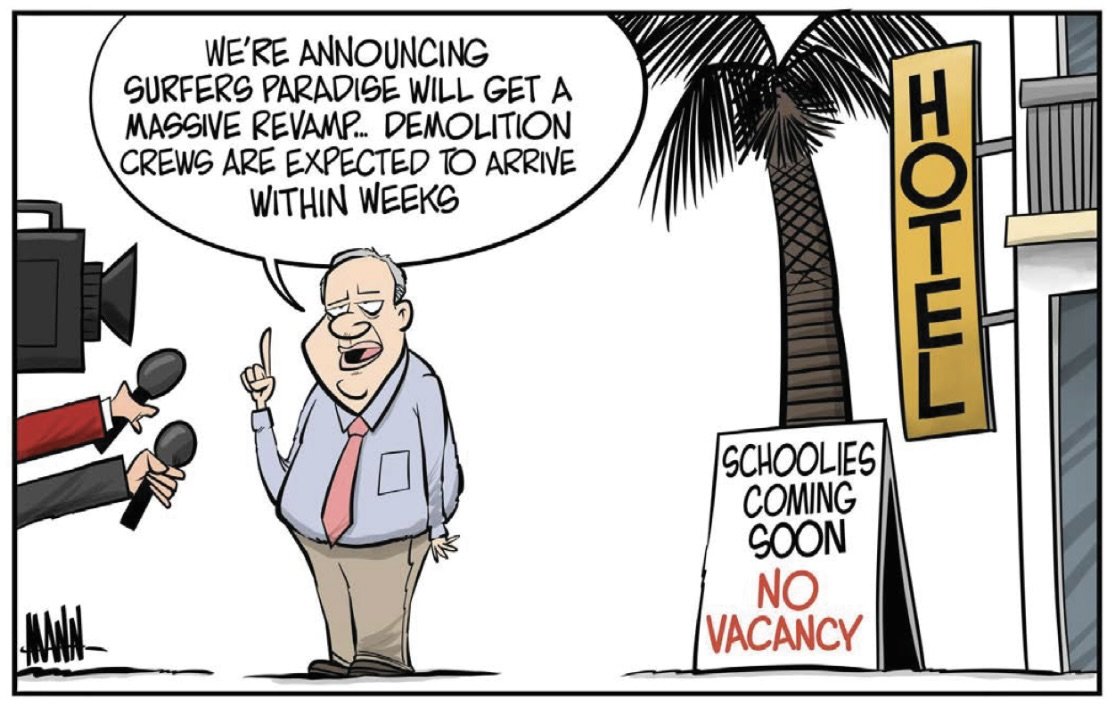
Gold Coast Bulletin cartoon

Cartoon from Gold Coast Bulletin

Paradoxically, Queensland fails to value and take full advantage of its abundant sunshine. For the last 30 years, Queenslanders have been robbed of a precious hour of sunshine every morning in summer, simply because in 1992, the State Government abandoned Daylight Saving Time. However, that’s immaterial, when considered alongside grand scale theft of sunshine which is occurring in growth areas of south-east Queensland. City planning authorities routinely approve excessively dense tall buildings that steal sunshine from neighbours and cast shadows over streets, parks and beaches. I wonder if people realise that the most precious, public and iconic of all aspects of Gold Coast life, is literally being blacked out by development? Many stretches of our magnificent coastline, alongside the unlimited building height area, are in full shadow from early afternoon. It is easy to envisage the future when there will be continuous beach shade from Broadbeach to Narrowneck. Perhaps councillors and developers think that we get enough sun in the mornings, but it seems criminal to me.

Wall of sunshine, 130 Scarborough Street, Southport, February-April 2020

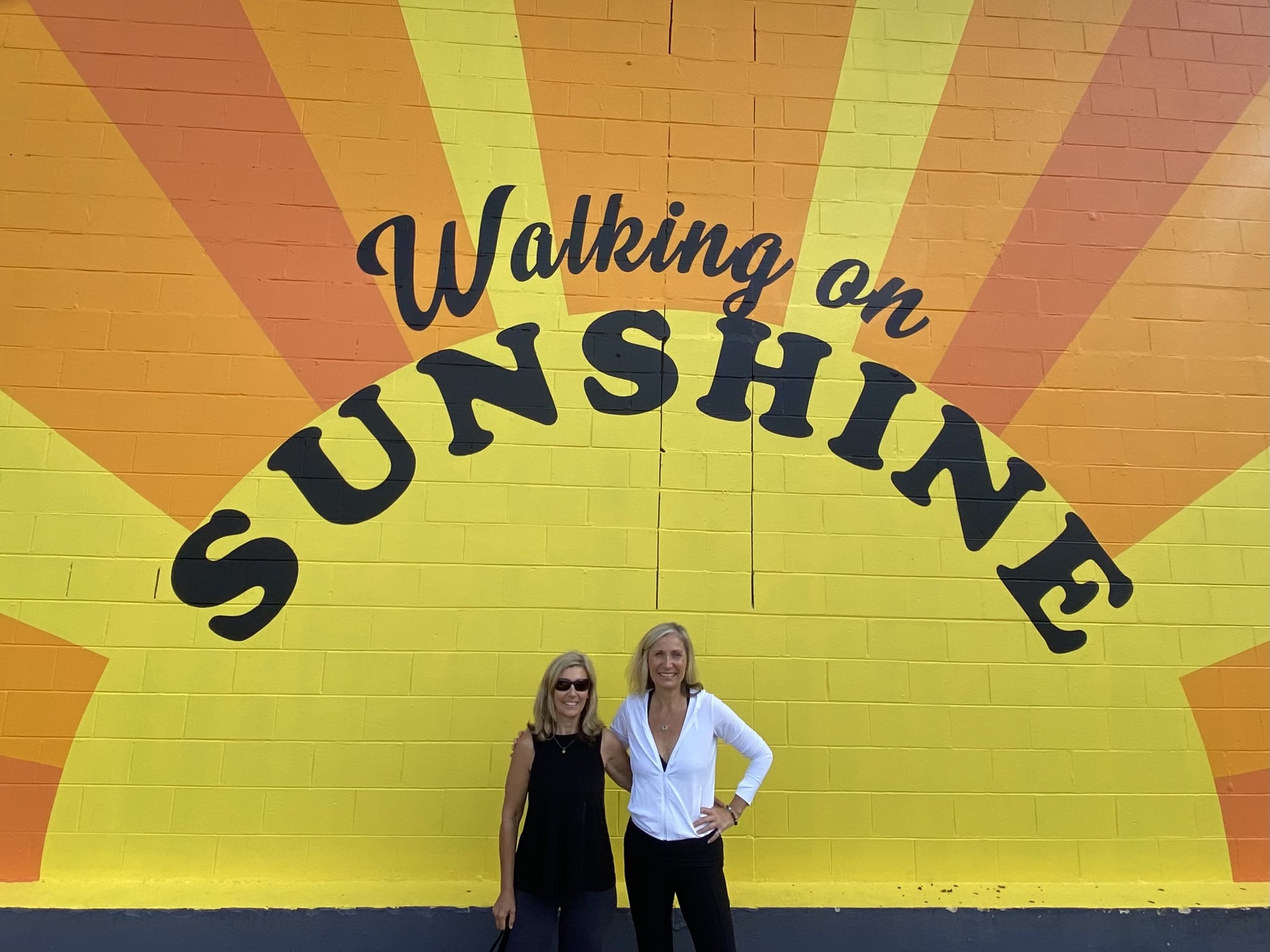
Resident protests against excessive buildings fall on deaf ears. I took an opportunity for my own public protest in the lead up to the 2020 Gold Coast council election. With my friend Yen and a couple of old-skool sign painters, we created a giant wall of sunshine to brighten up the grey space outside the Southport campaign office of mayoral challenger Mona Hecke. ‘Steal My Sunshine’ by LEN was playing on the radio and I thought that could be our anthem with its lyrics “And of course you can’t become if you only say what you would have done.” So we did it! https://www.instagram.com/p/B-Asvt8Jmd8/?igshid=YmMyMTA2M2Y=

The initial concept said “DON’T STEAL MY SUNSHINE” but we thought that sounded a bit aggressive and switched to ”Walking on SUNSHINE”. It was intended as the backdrop to Mona’s campaign countdown launch, and victory celebrations, but then COVID came. There was no opportunity to for public events. The election came and went, and while the city was still in lockdown, we honoured our promise to the landlord to repaint the wall grey. I wish the story had a different outcome.

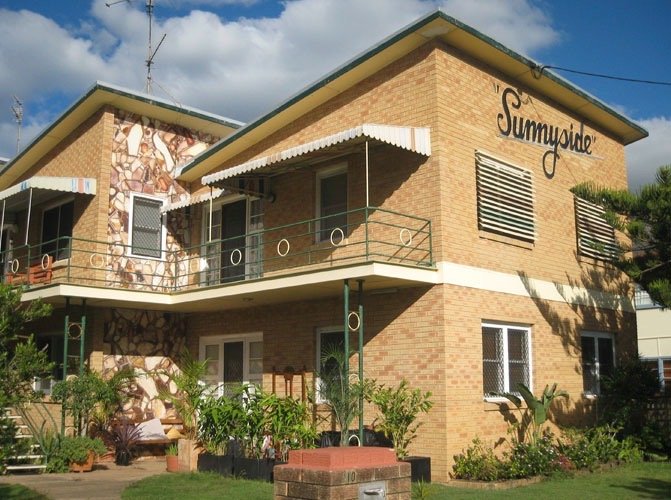
Sunnyside Flats, Haig Street, Kirra

The current (2016) City Plan is designed to deregulate and super-charge development across swathes of the city. Coinciding with a national construction boom, it has proven to be a death knell for ‘the old Coast’. Buildings from previous eras, which most cities regard as heritage worth keeping, are being rapidly and senselessly replaced. I keep close watch on a handful of remnant gems from the 1950s, 60s, 70s, including “Sunnyside’, a cheery block of flats in Haig Street, Kirra, but I don’t expect these to survive. That’s why, like Glenn Cooke I collect memorabilia (and photos), so that history doesn’t forget these places.

‘Don’t it always seem to go, that you don’t know what you got ‘til it’s gone’. That’s why it’s important to aggregate, acknowledge, embrace and remember the values that we attach to things. Perhaps then, our communities, and the politicians we elect to represent us, will be more inclined to protect the things we value most. If you want to help save our sunshine, or the historical record of our changing cityscape, here’s a starting list of things to do!


SUN FAILS TO SHINE OR SET OVER BEACH BAR TRIAL

Putting aside the many legal, ethical, economic, environmental, safety, aesthetic, practical and anti-egalitarian arguments that have been thrashed out on social and news media for and against beach bars, it strikes me that the council, in deciding to persist with the trial over the next three years, has misjudged the Gold Coast’s beach culture.

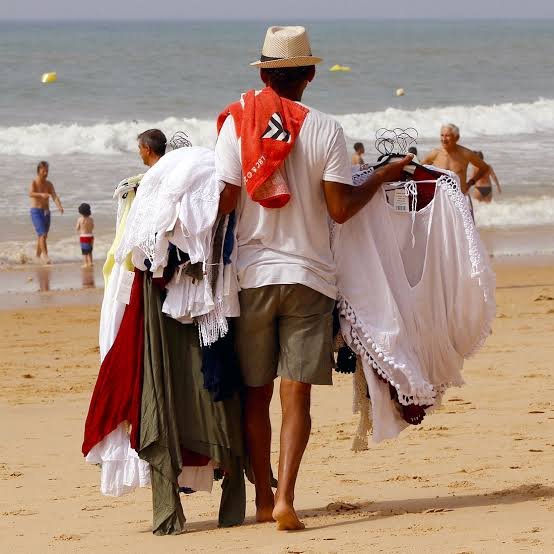
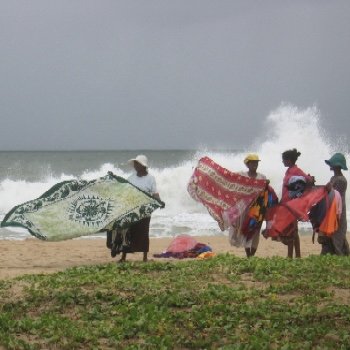
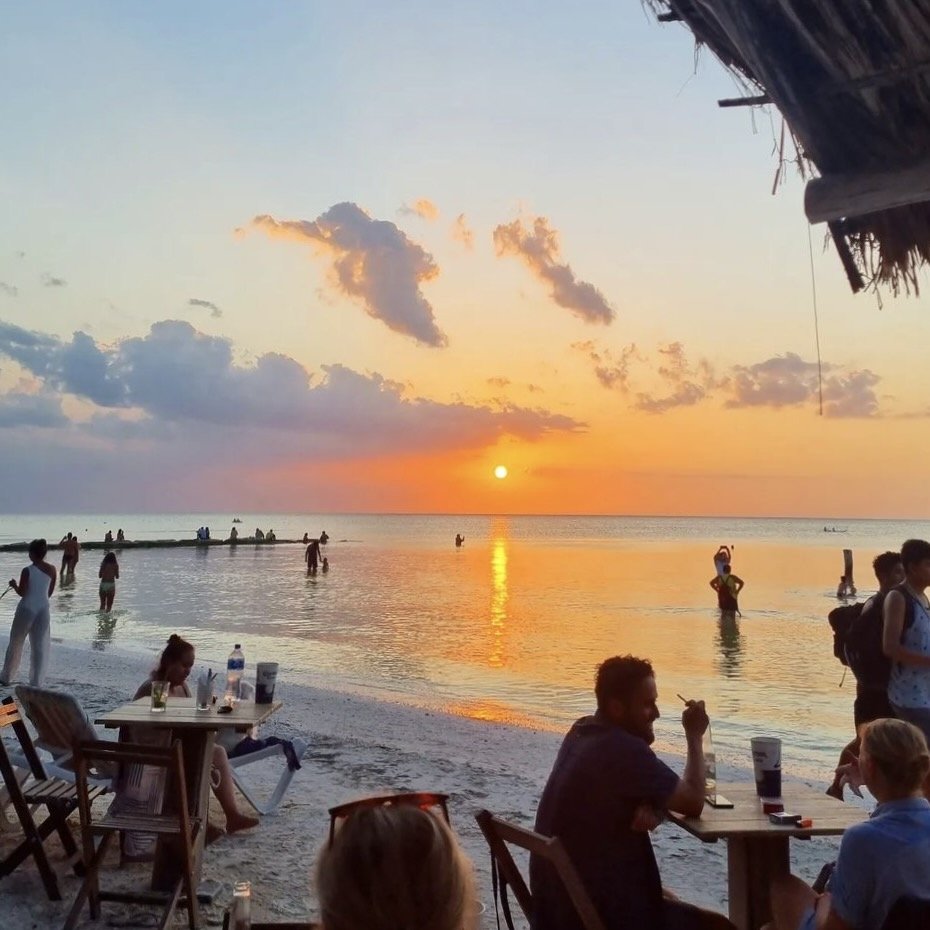
Two fundamental issues relating to the ‘WHAT FOR’ factor, have been overlooked. Both are compelling at many foreign beach holiday destinations, but absent here. One is protection from roving hawkers selling handicrafts, snacks and knick-knacks - but that doesn’t happen here in Australia so there’s no justification for segregation. Another is the romantic ambience of sensational sunsets over water.

Australian beach experiences are different. It’s customary for beach-goers to set-up anywhere, hassle-free of hawkers. There is plenty of wide, open, white, sandy beach so if you don’t want to be close to others, you can simply position yourself away from the surf lifesaving flags where people tend to cluster. Unless we live within a close walk to the beach, we tend to drive, so when we plan to settle down for more than a surf or quick swim, we bring our own folding chairs, umbrellas, marquees and maybe an Esky with drinks and snacks.

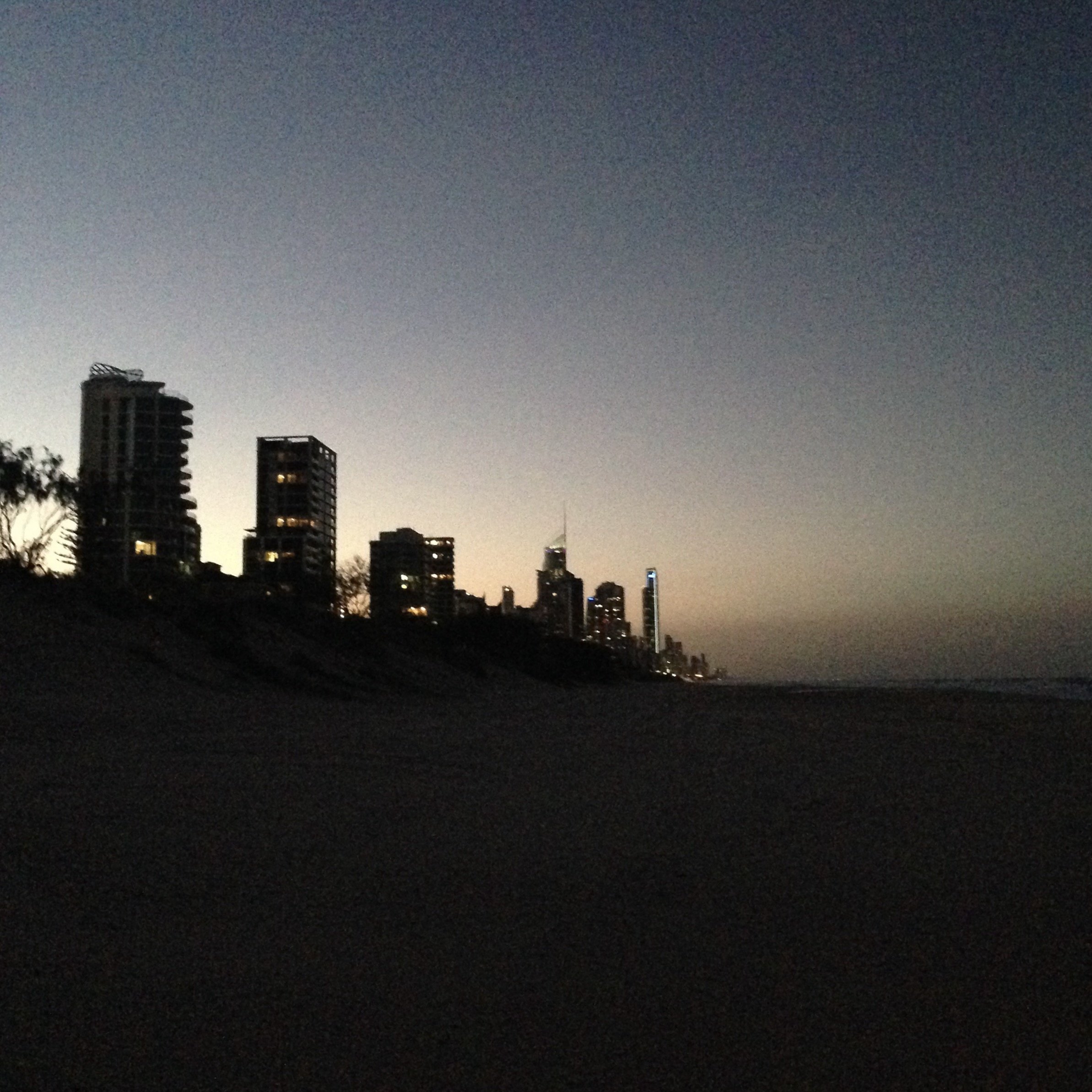
Kurrawa boardwalk, 5.30am, January 2012

Much like ‘the other Gold Coast’ in Florida, USA, mornings, from sunrise to midday are the best time to enjoy our east-facing ocean beaches. After noon, wind gets stronger, and shadows from Casuarinas and tall buildings stretch across the beach. There are even some stretches between Surfers Paradise and Broadbeach where the building shadows join up to create continuous shade. At sunset, if you crane your neck away from the ocean to the west, you might be lucky to catch a bright crack of sunlight passing between silhouetted buildings; and after dark, there can be a glittering presence of lights in the apartment buildings, but looking east, the ocean and sky appear black. There is little more to see than the outline of breaking waves, lights of passing aeroplanes or ships on the horizon, and occasional fireworks. If the weather is fine and calm, the ambience can be lovely, but seldom is it sensational like the mornings, or evening sunsets in other places where beaches face west.

By far the best locations for afternoon or night-time drinking and dining at the Gold Coast, are west-facing with outlook to sunsets and city lights over water.

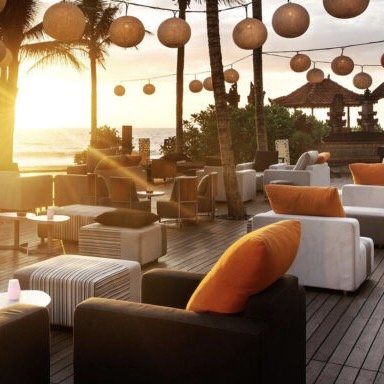
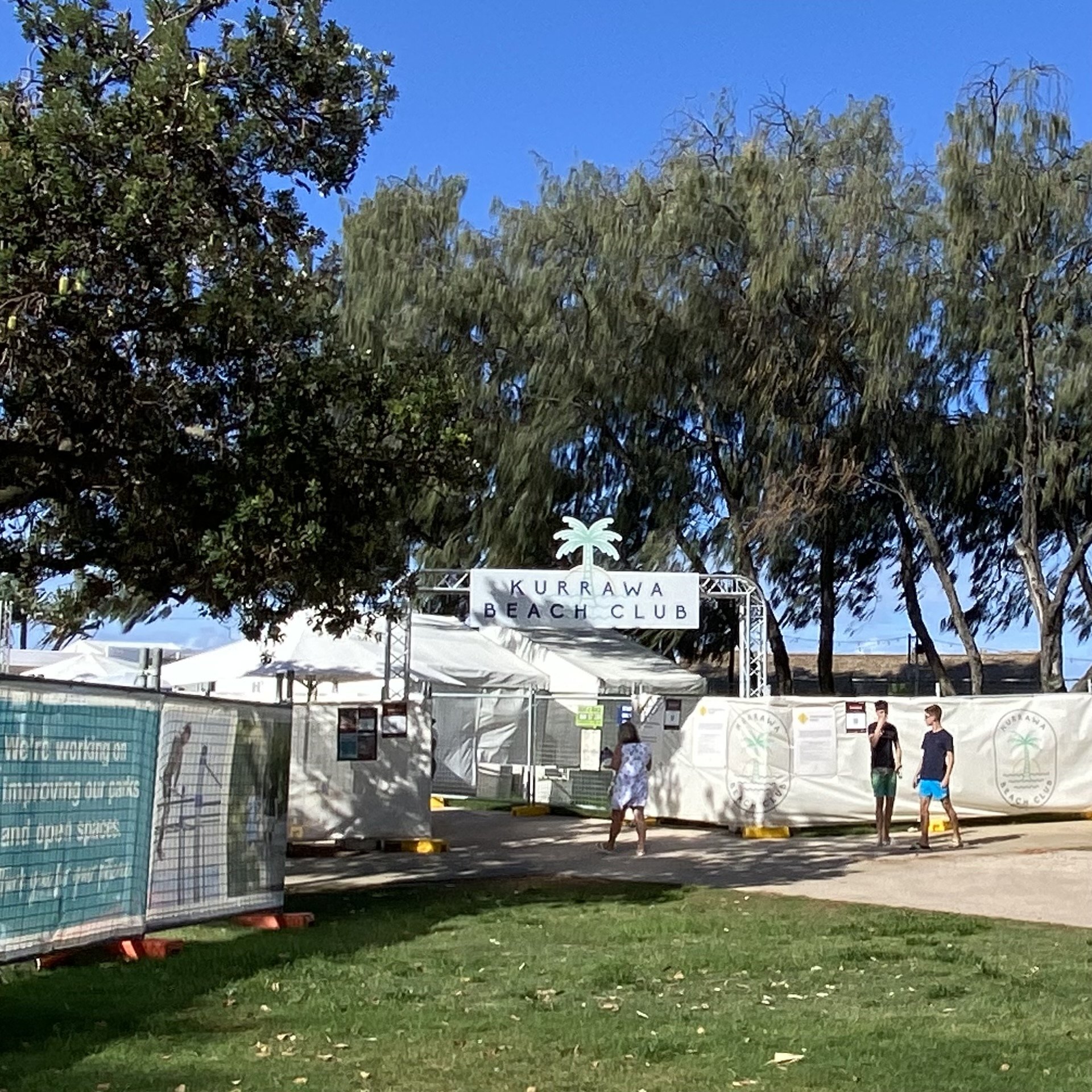
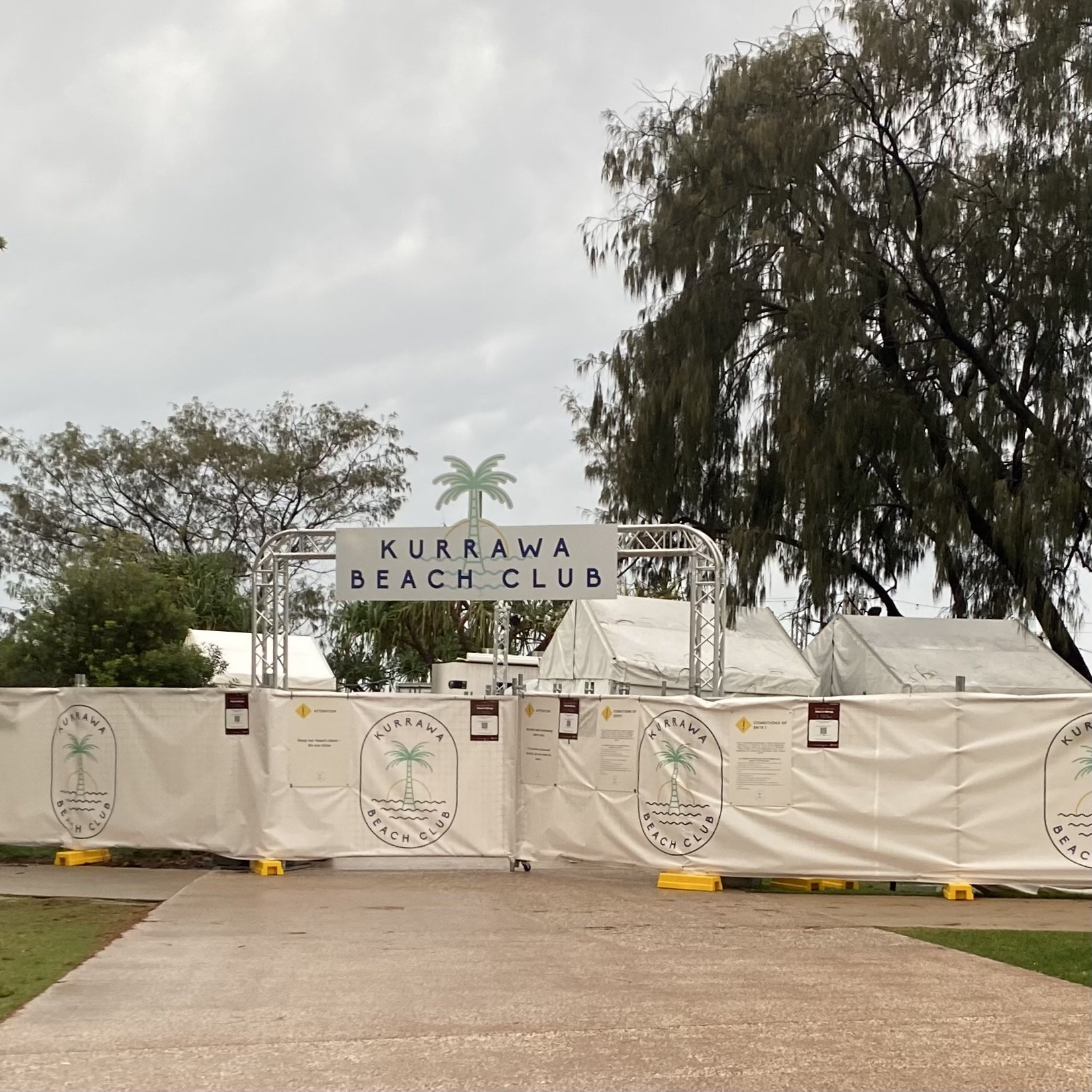
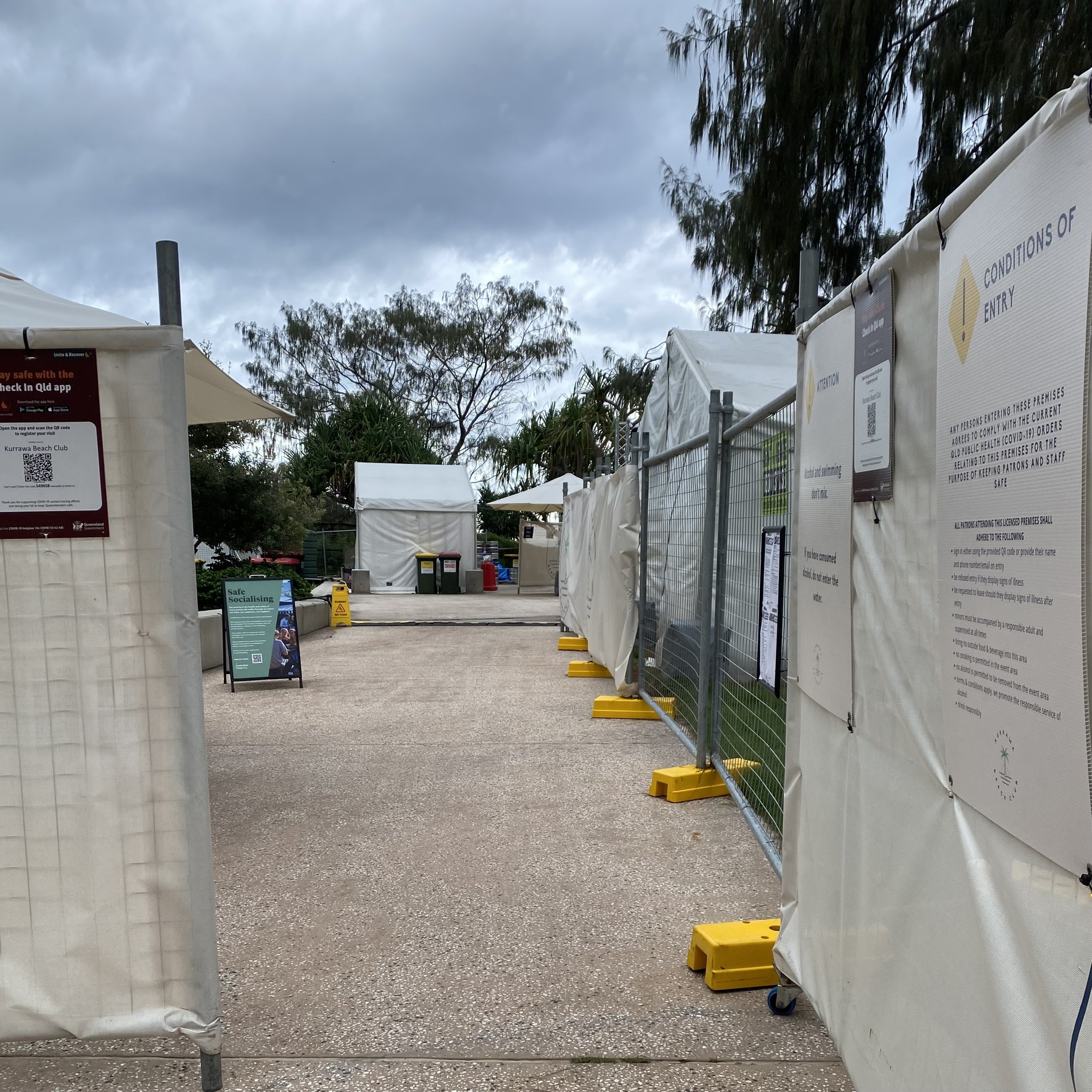
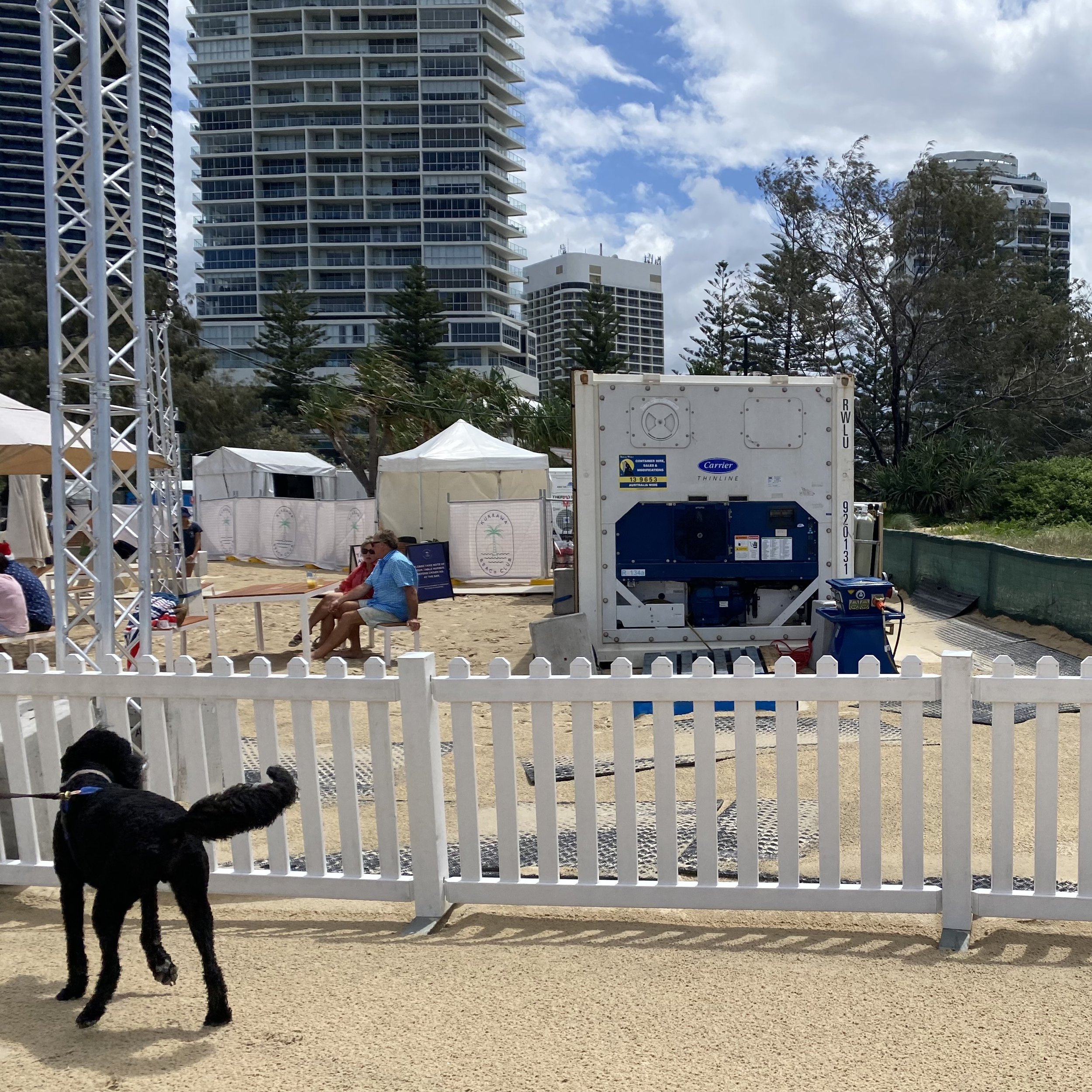
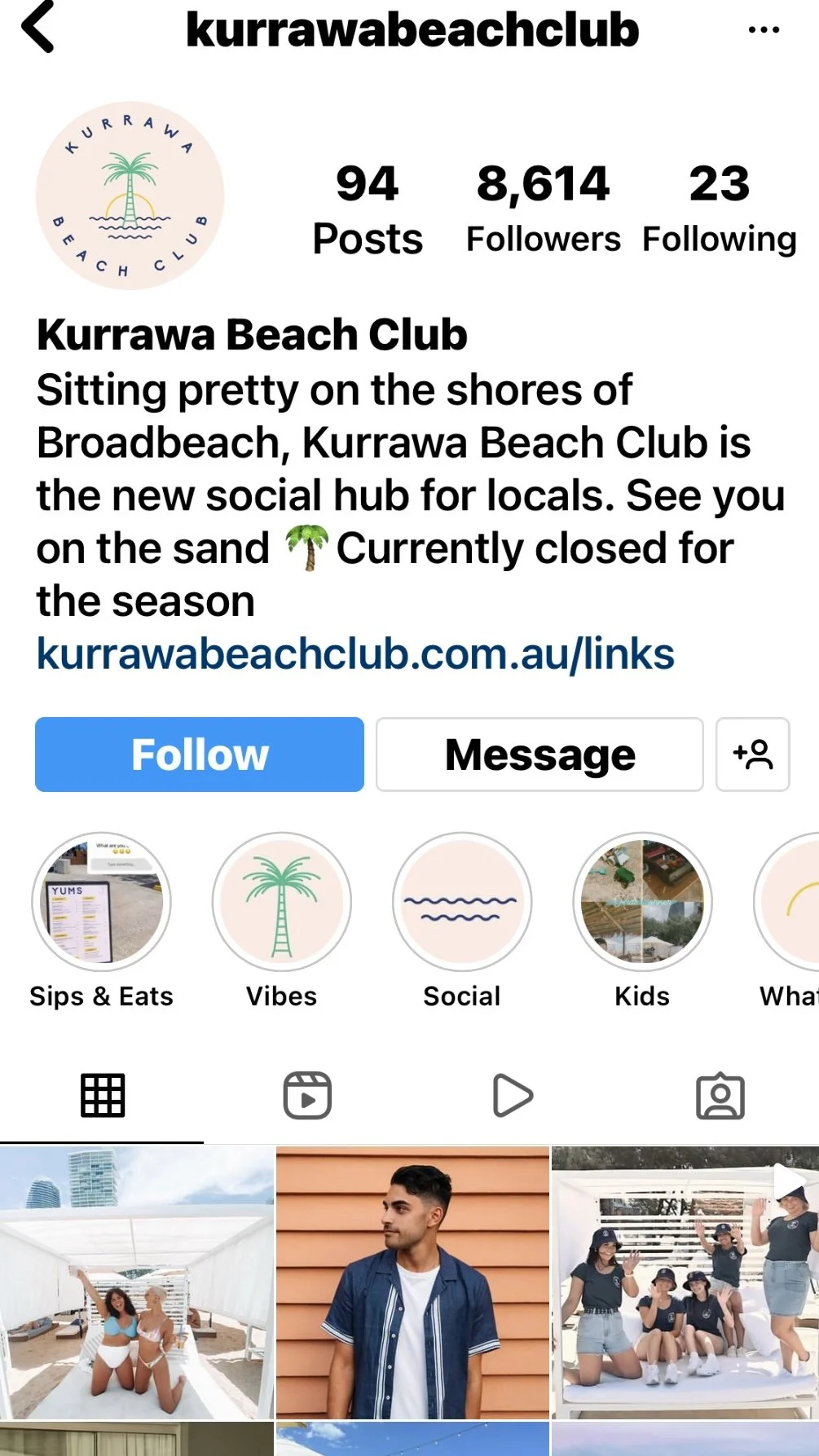
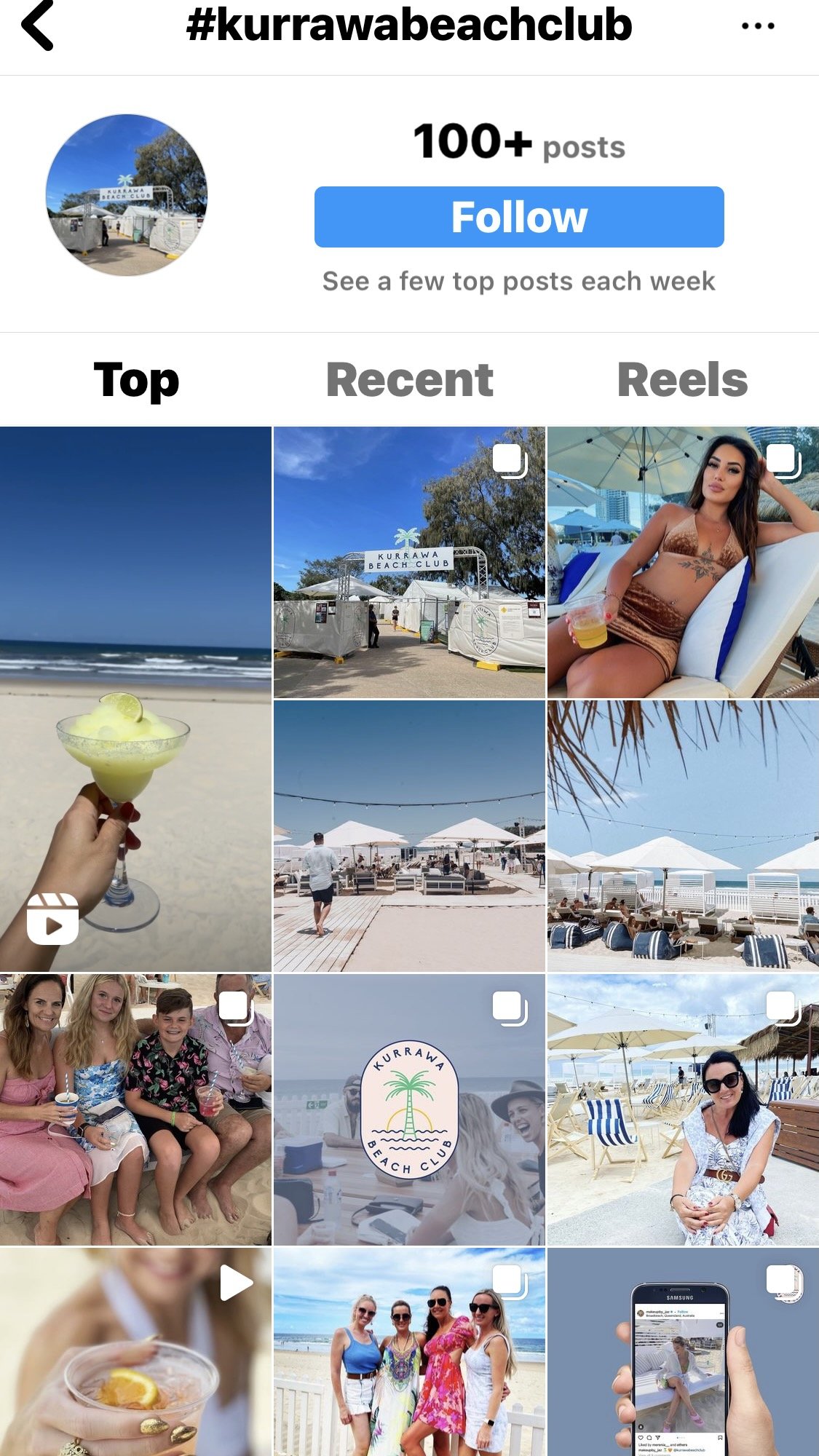
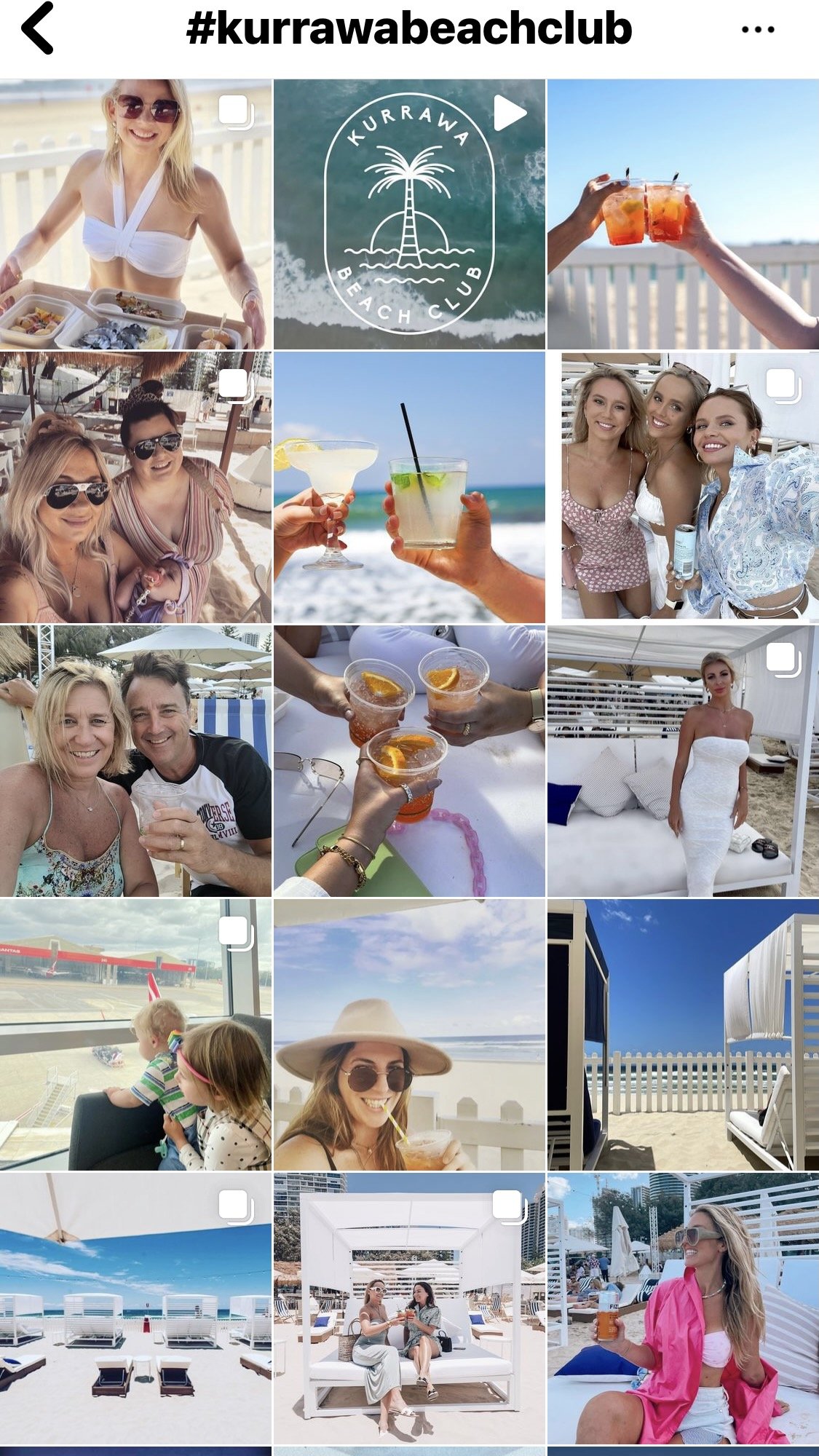
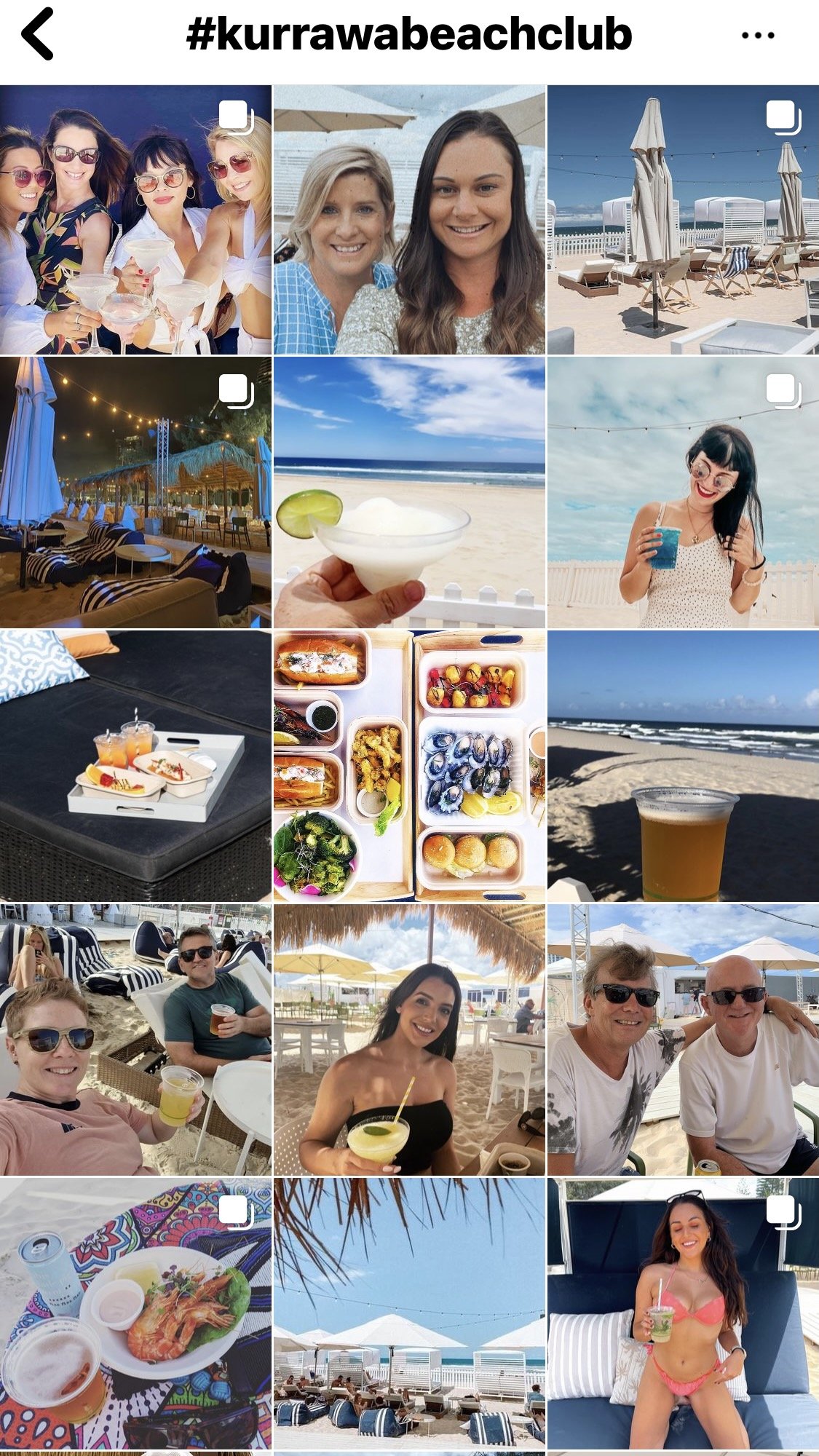
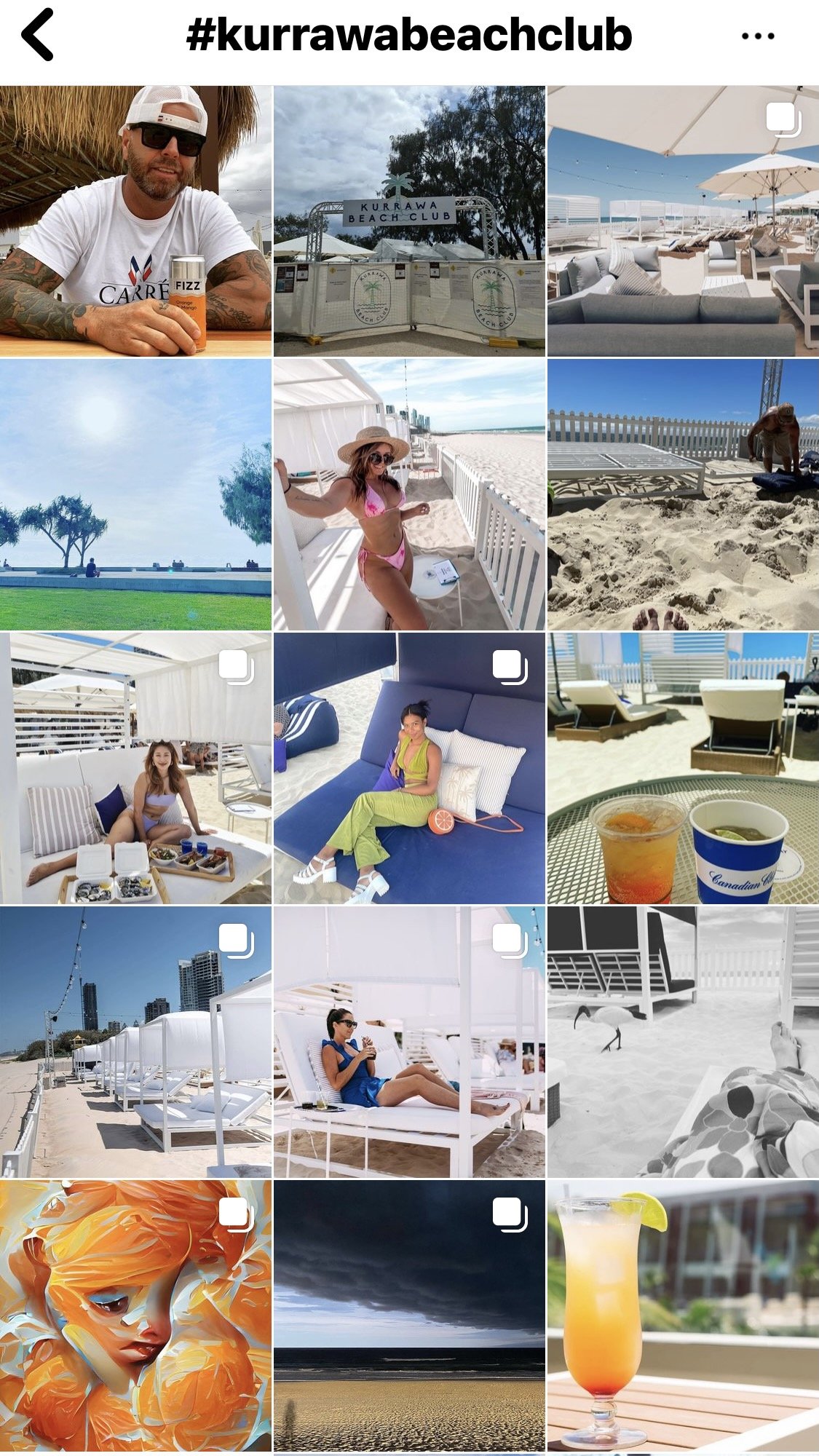
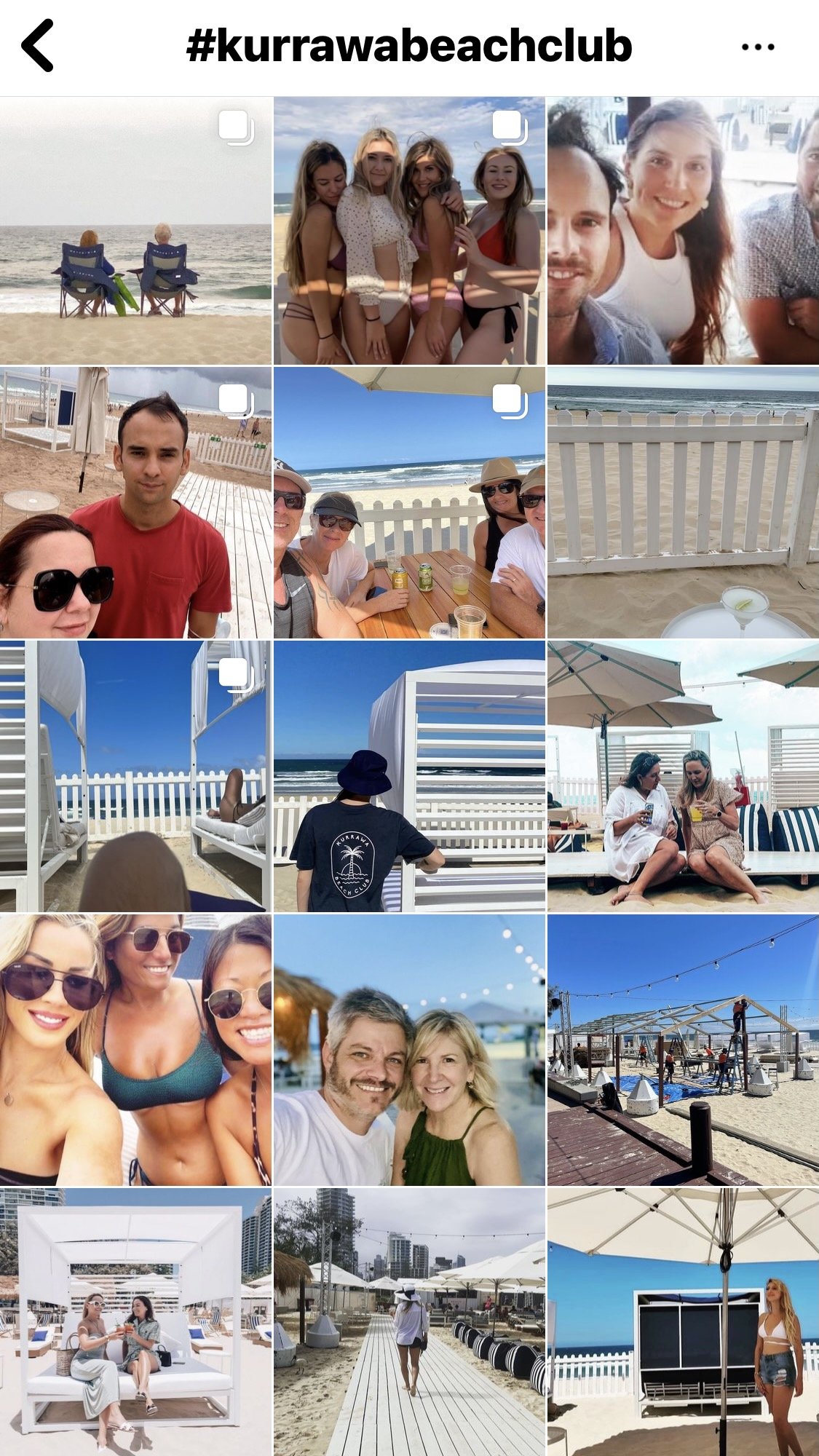
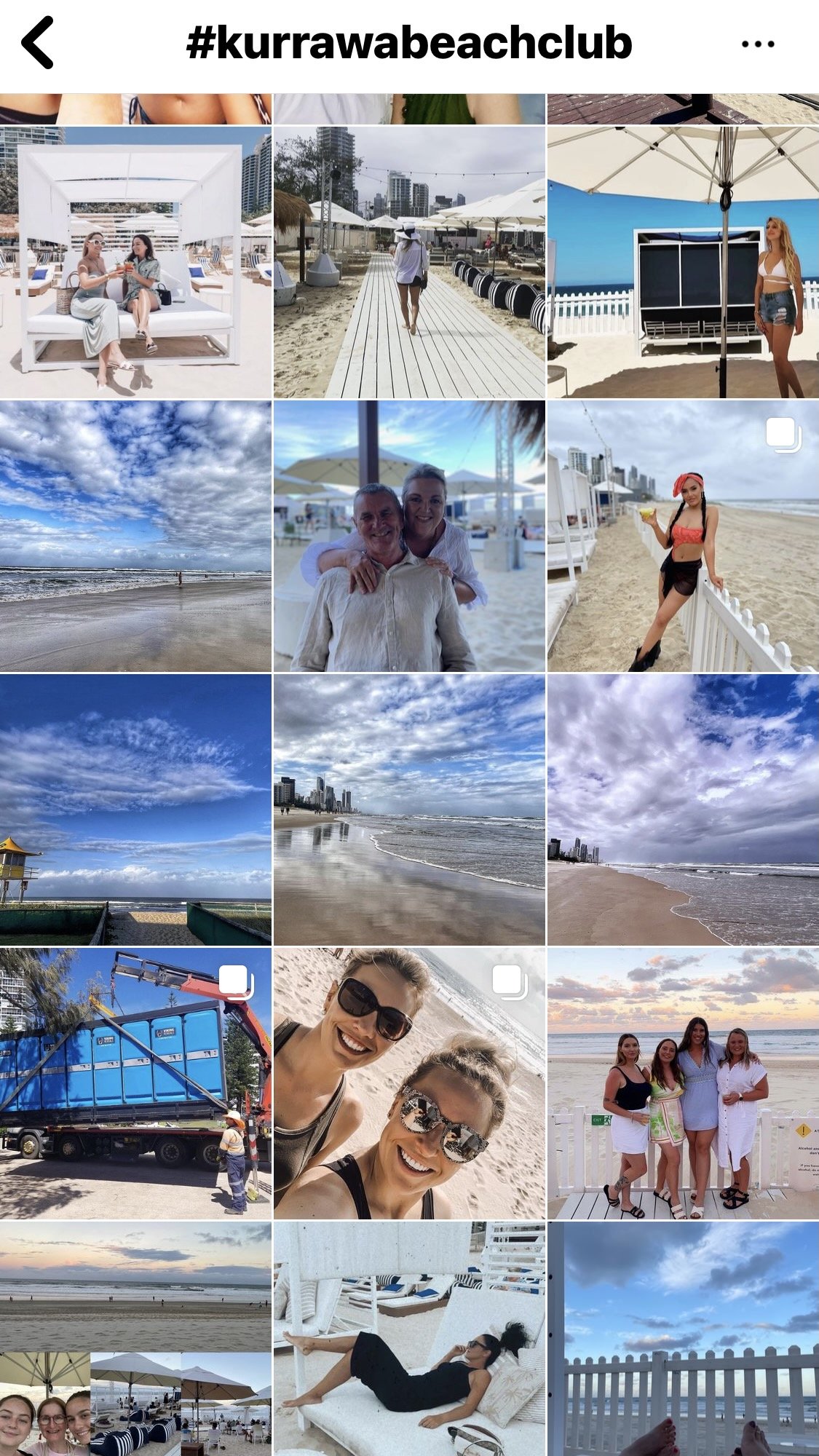
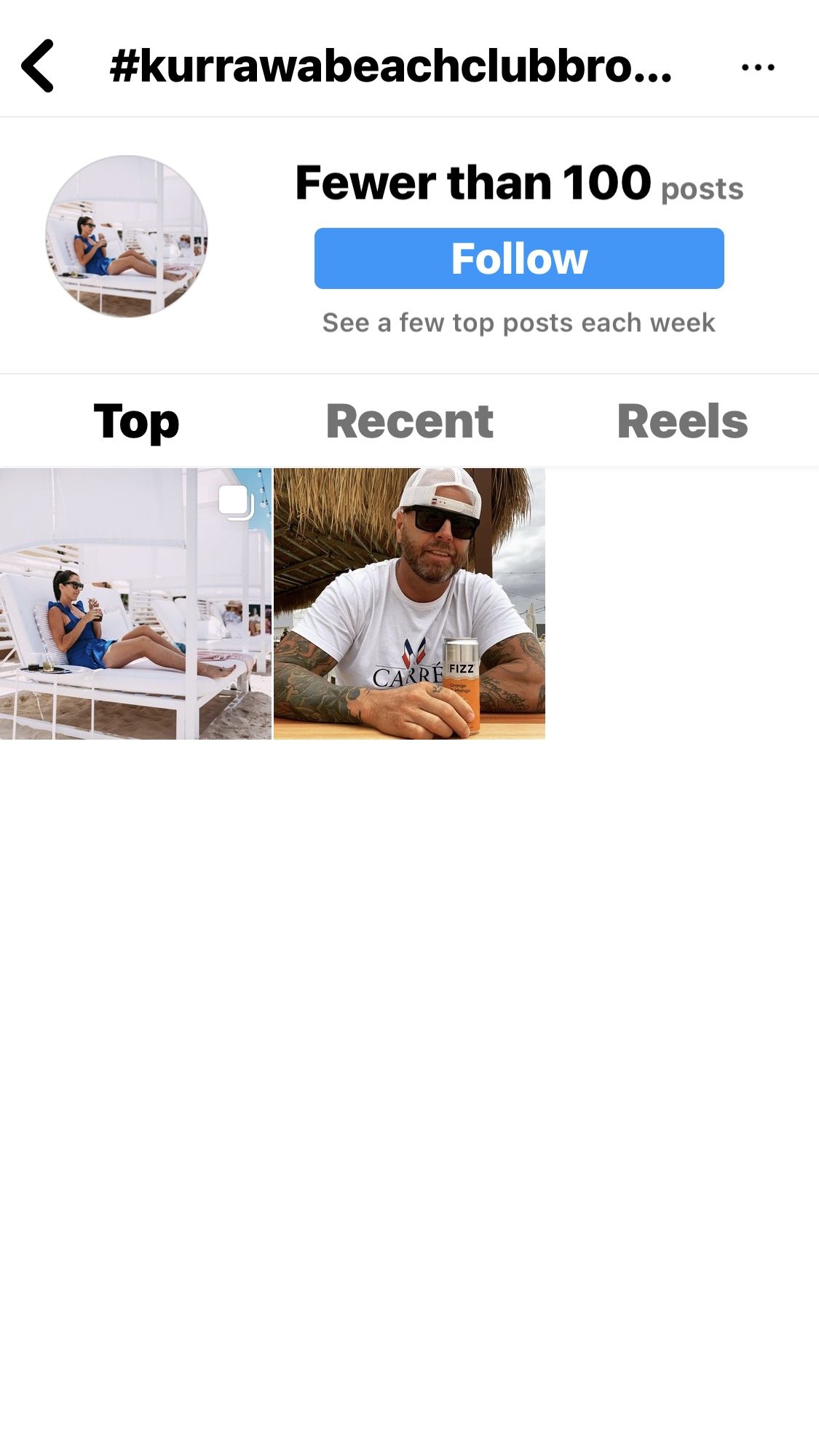
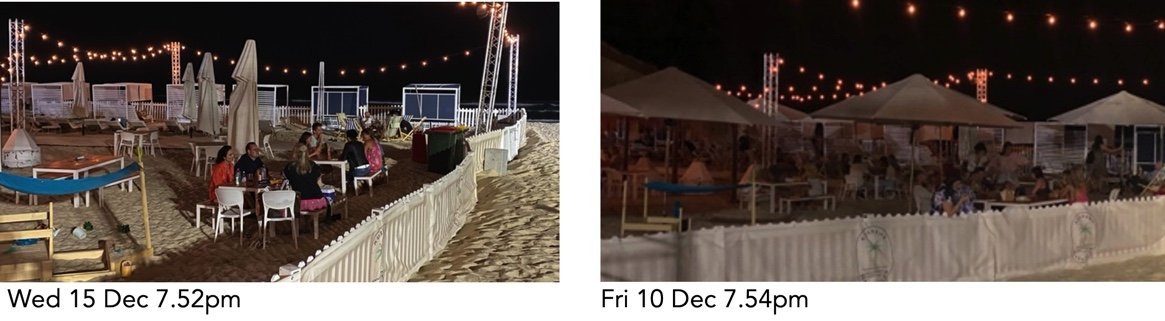
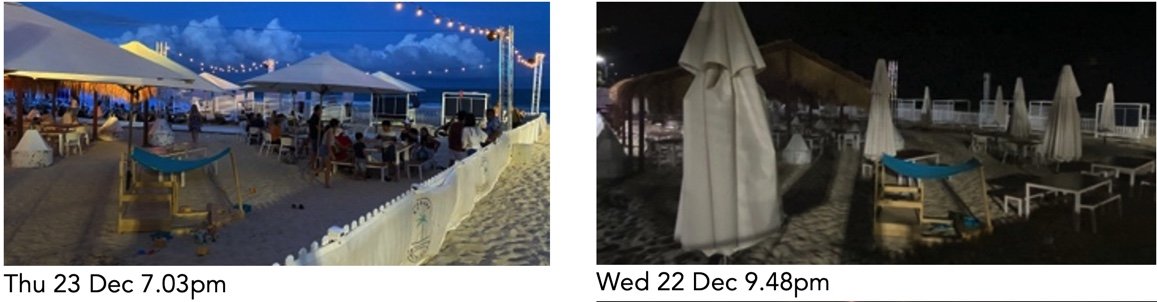
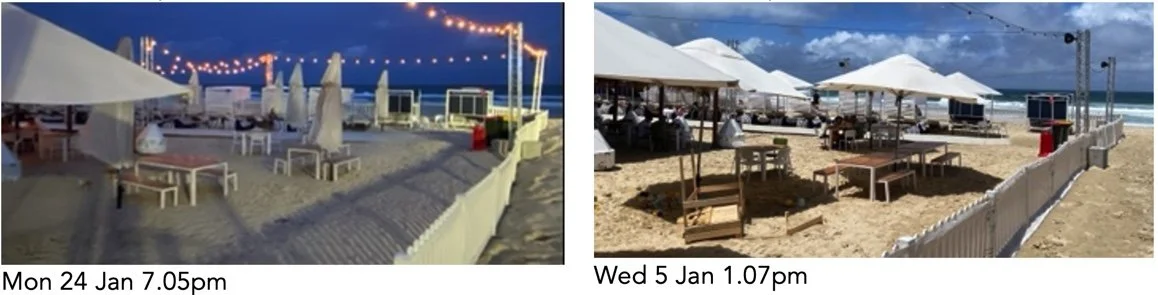
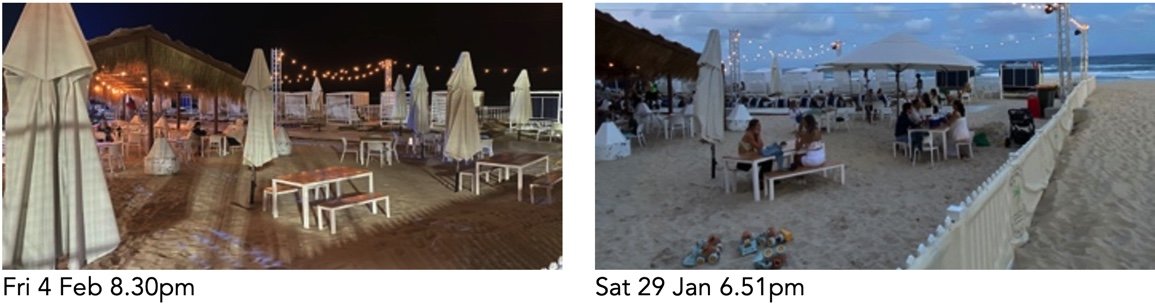
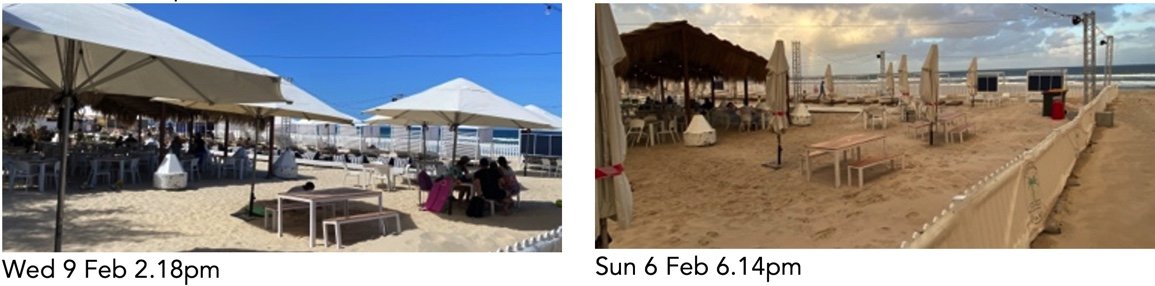
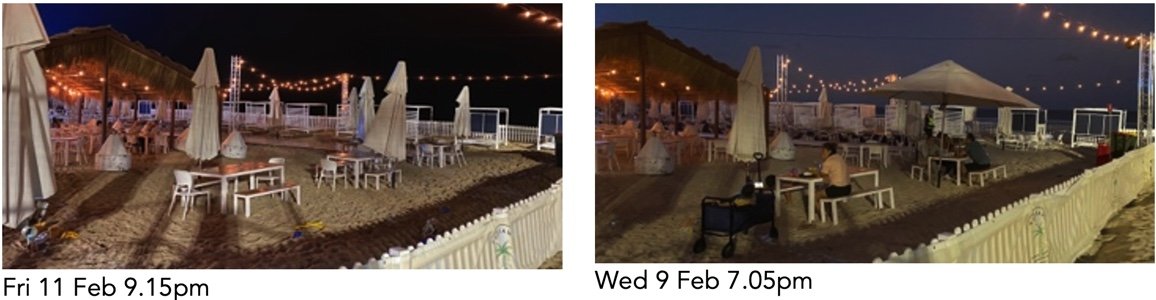
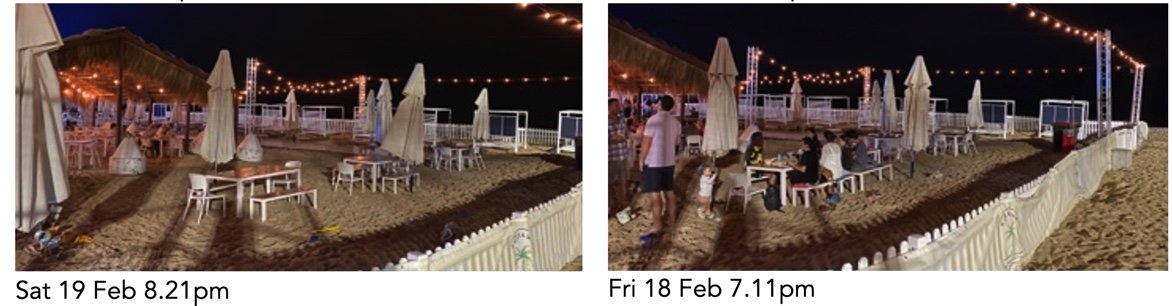
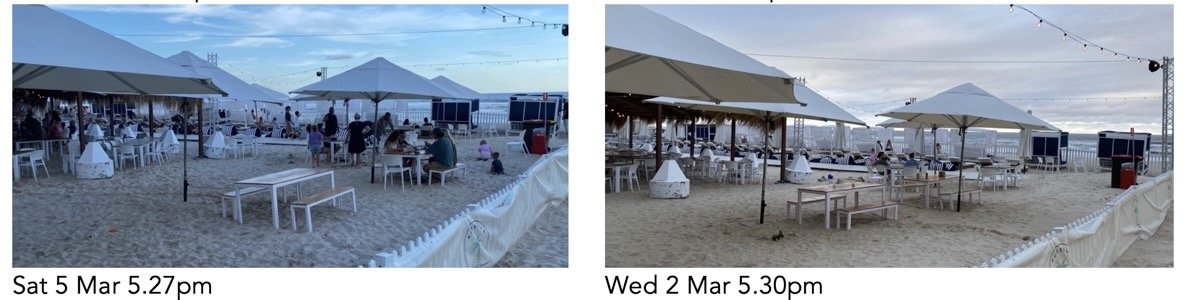
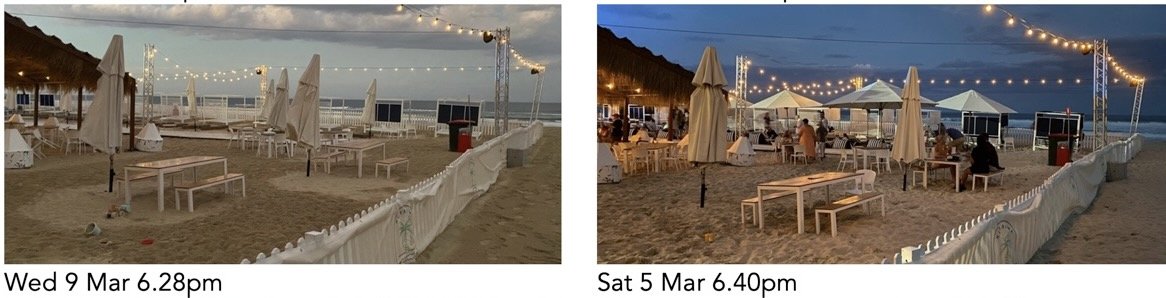
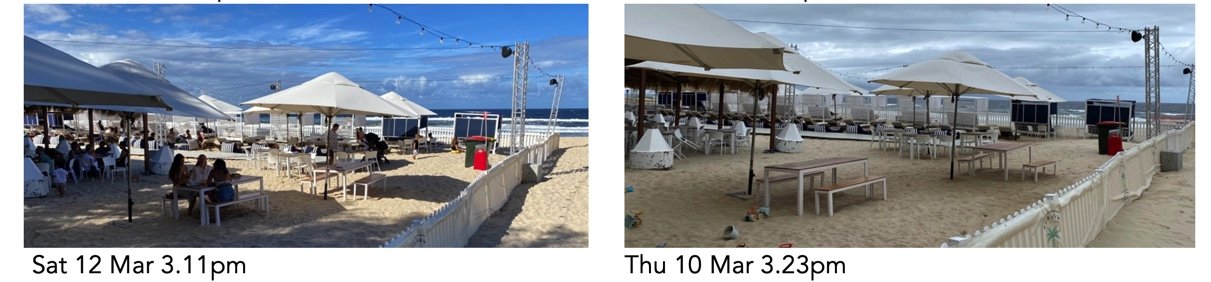
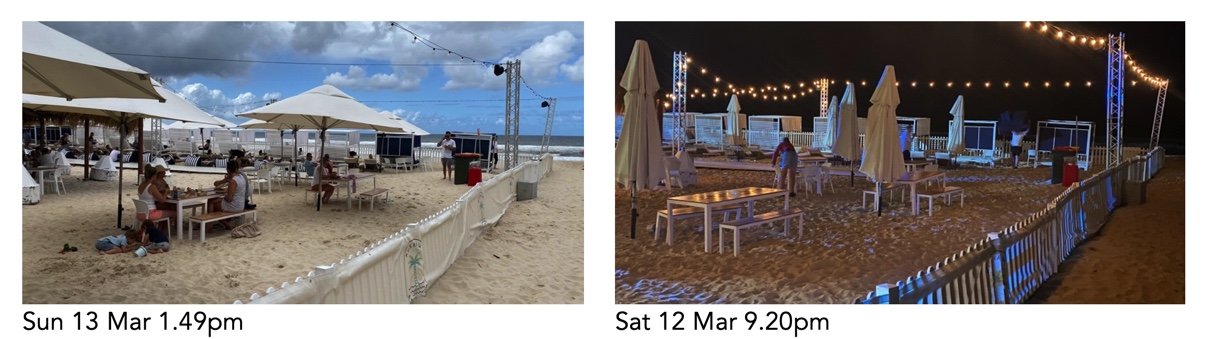
It was no surprise to many that the Kurrawa Beach Club trial was a fizzer. Despite the operator’s efforts to set it up with smart furniture and decor, it didn’t achieve a great vibe. Visitors were sparse - even on bright sunny days and fine evenings. I took a series of photos at random times, and I followed Kurrawa Beach Club’s Instagram account and hashtag. Collectively, these give a picture of the beach bar’s popularity, or rather lack thereof. A security fellow told us that there was one busy night in January for a private function associated with the ‘Magic Millions’ carnival, but I missed that. Despite targeted events and entertainment, marketing initiatives and social media influencer promos, the beach club didn’t show promise of attracting regular crowds.

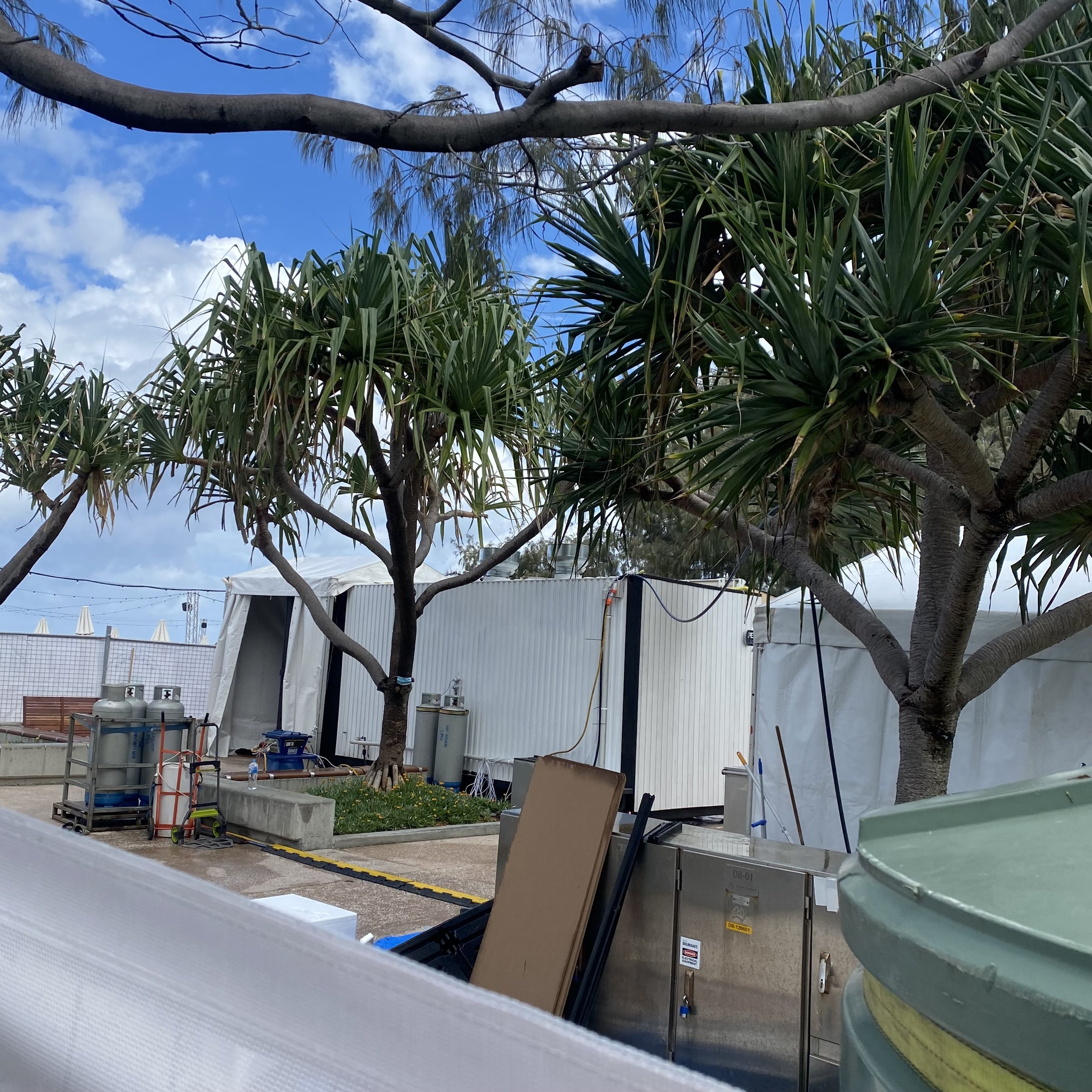
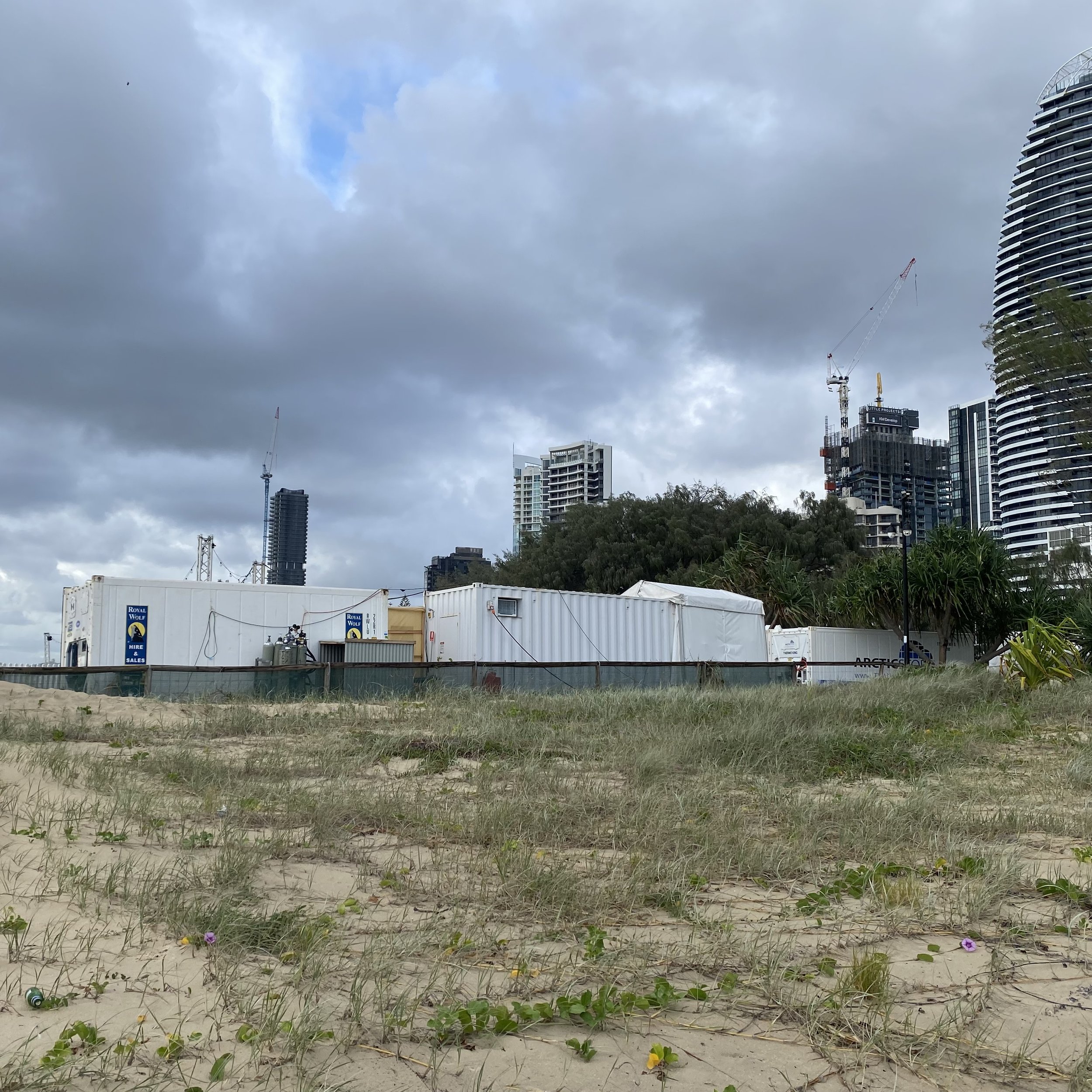
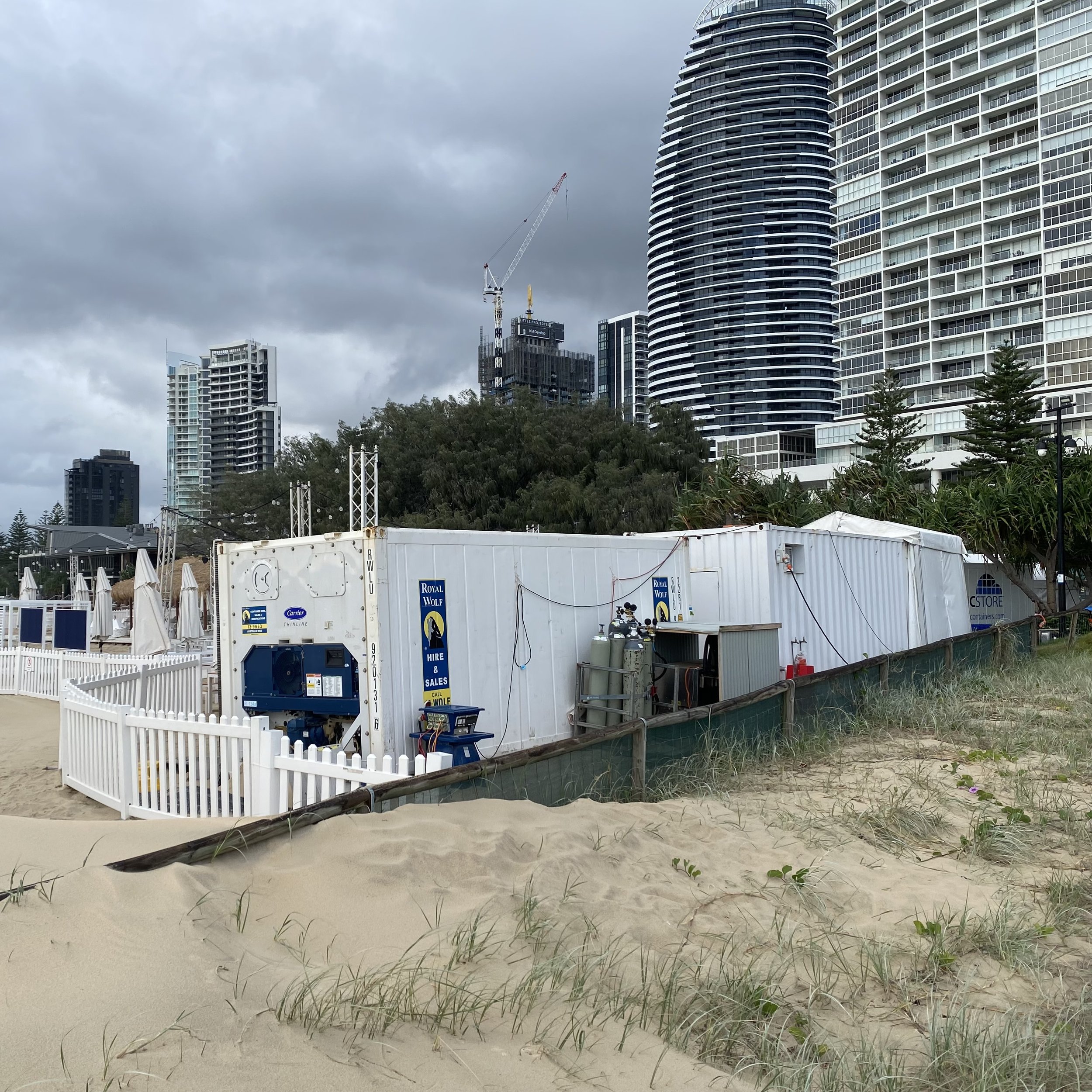
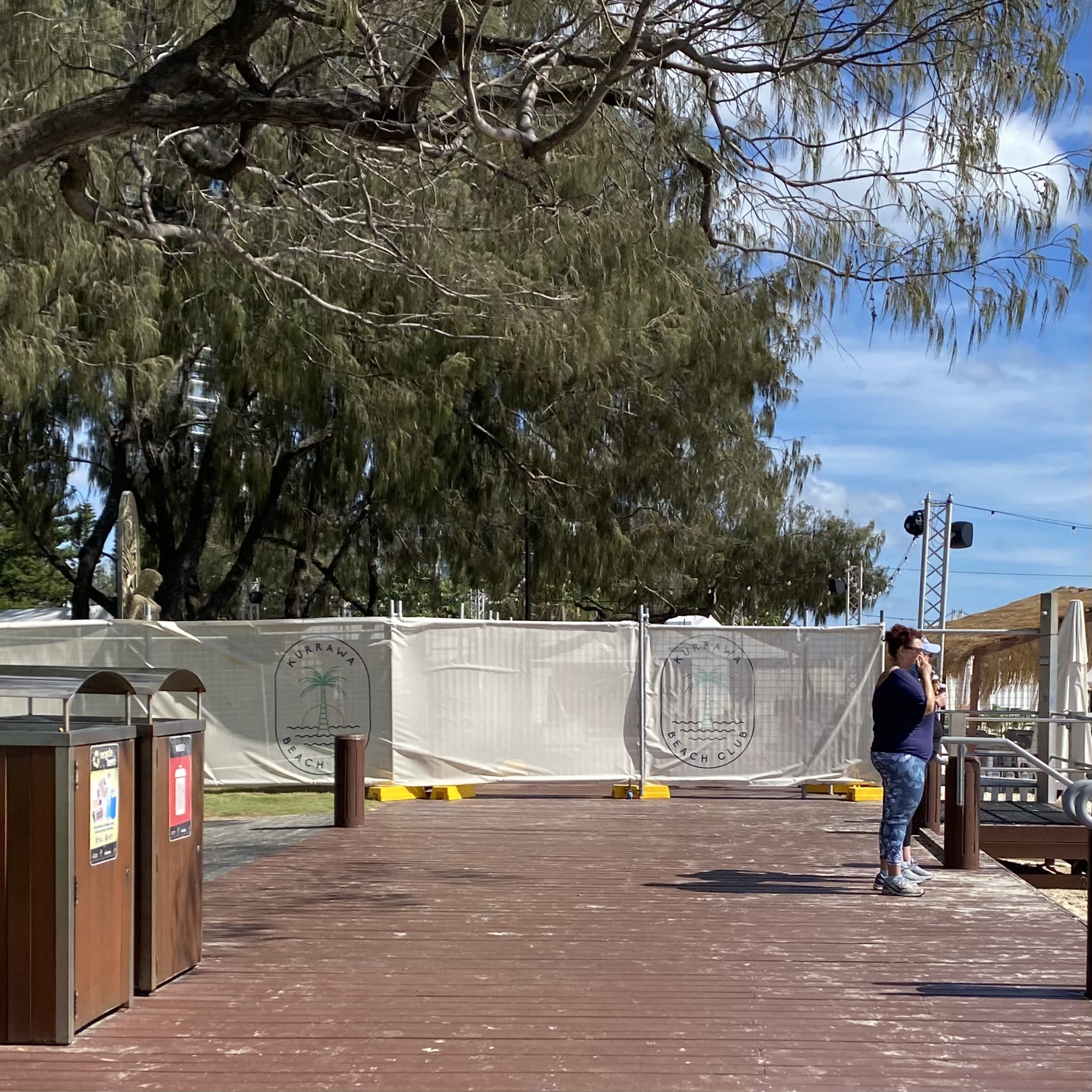
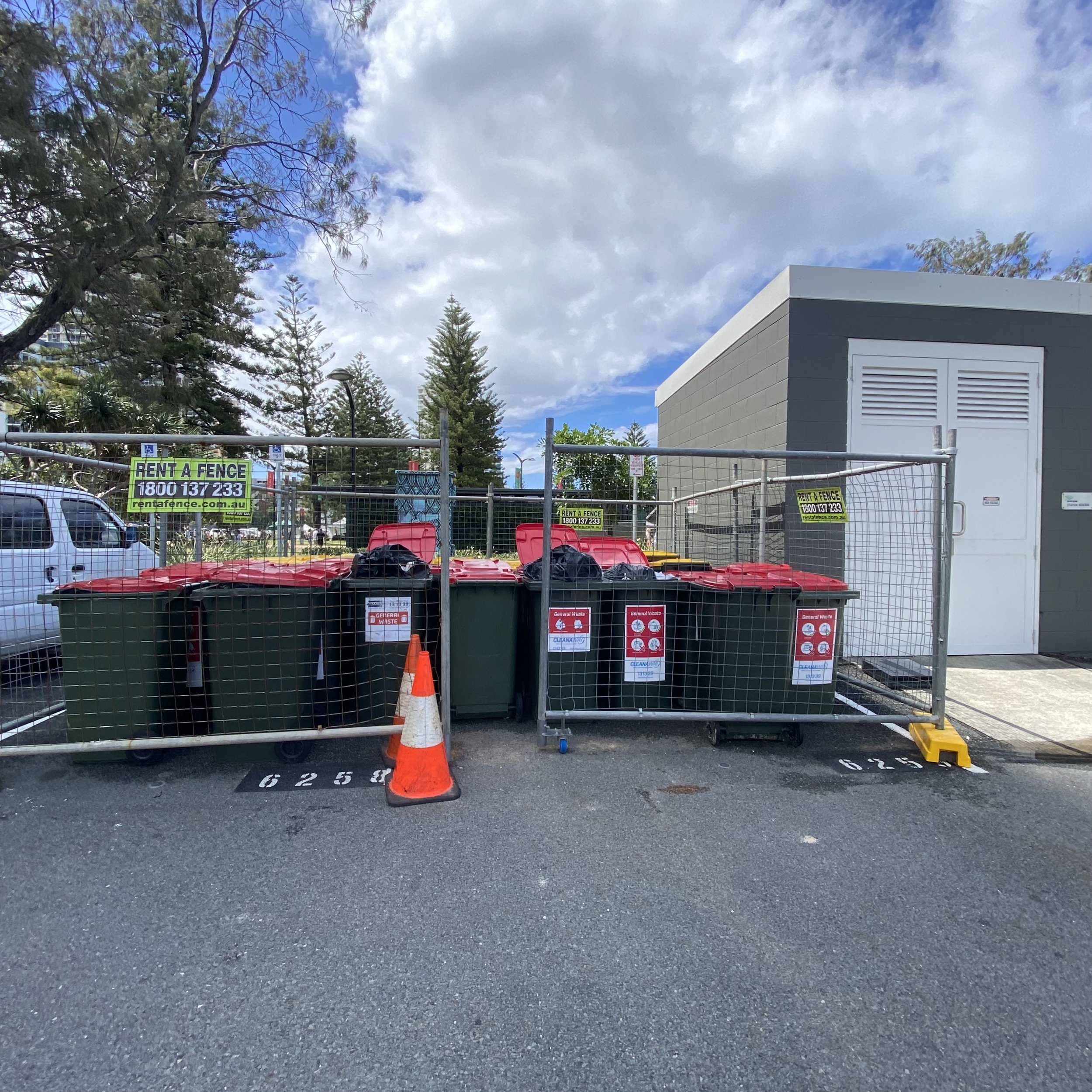
I wasn’t opposed to the trial. I was keen to see how it would manifest, and I was open to persuasion that it could be great for Broadbeach. Kurrawa Beach Club appeared to be well managed. If there were problems with noise, rubbish, car parking and public drunkenness and other nuisances that are typically associated with licensed venues, I didn’t notice them. From afar on the beach the setup looked ok. The warm glowing festoon lights were a far improvement from the white floodlights that normally beam on the beach at Kurrawa. However, from the park and dunes it was an eyesore. The cluster of portable toilets, storage containers, rubbish bins, power generators and the hoardings that shrouded them intruded on a large area of the beach, dunes, boardwalk, volleyball courts and the park.

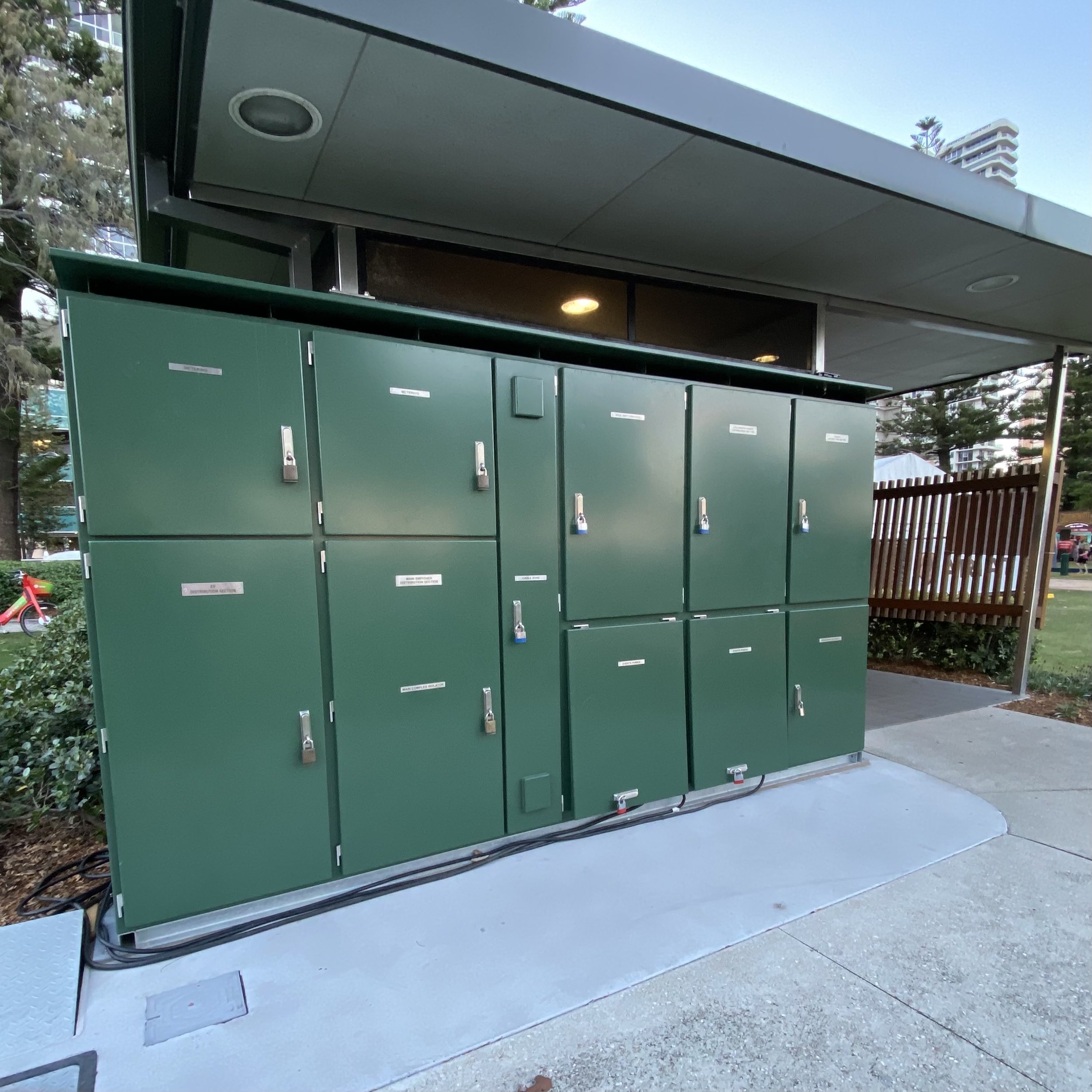
The council reported that the trial attracted 44,820 visitors, even though rain and overcast weather marred 47 of a possible 76 days of trade. I’m dubious about this figure and would like to know how it was calculated. It’s unlikely the council and trial operator will reveal a true balance sheet of costs and revenue – with staffing and security, capital set-up and maintenance, power and water, cleaning and waste disposal, the council’s installation of substantial electrical power board, and multiple spaces in the nearby public car park that were cordoned off for exclusive use by the club. If I were to venture to guess, the trial returned a financial loss.

A close look at Kurrawa Beach Club’s Instagram account reveals a general sense of the less-than-anticipated popularity of the place. By comparison to similar style venues of Burleigh Pavilion and Cali Beach Club with more than 50K followers and thousands of hash tagged posts, it’s evident that Kurrawa Beach Club failed to capture the market.

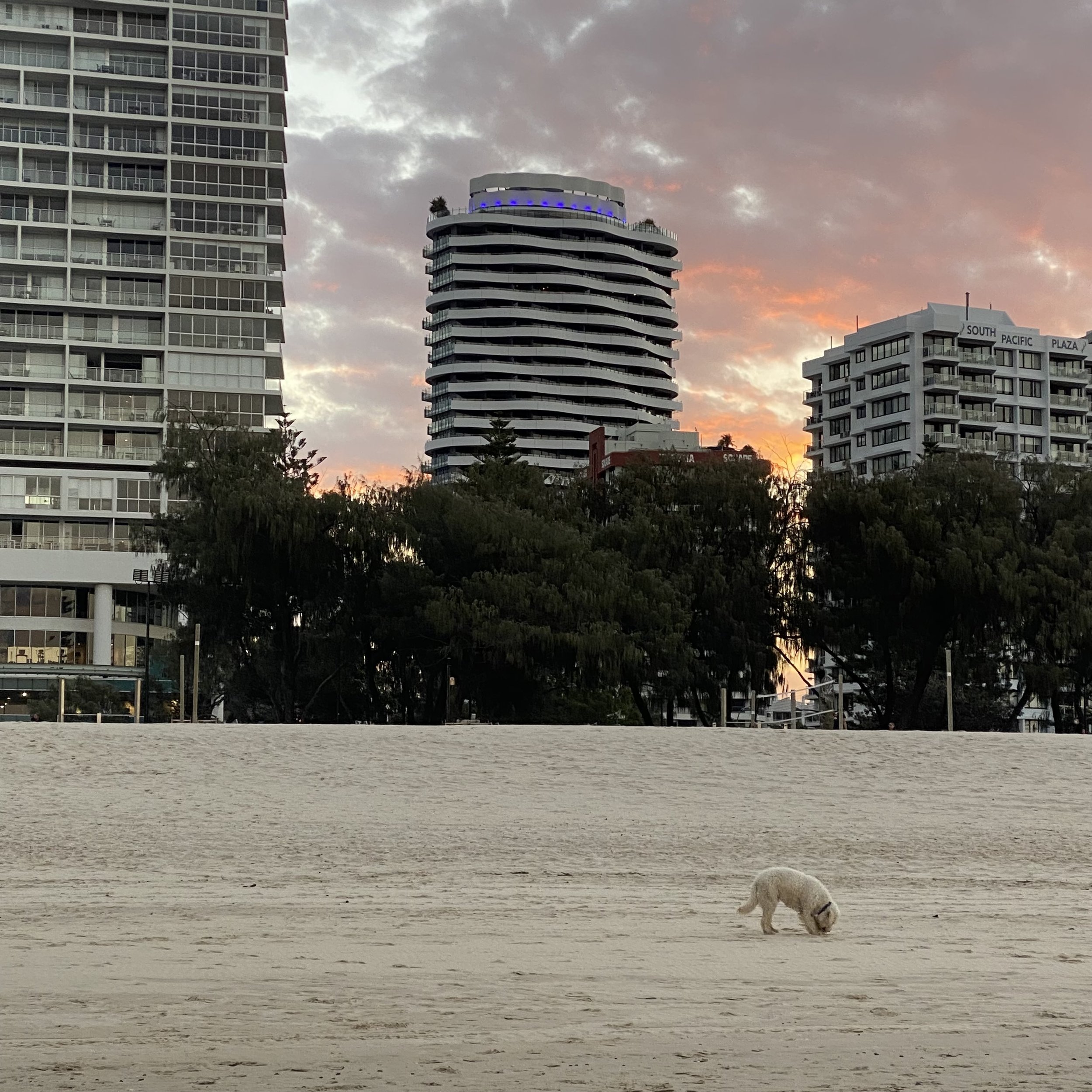
Photos taken at random times during operating hours of Kurrawa Beach Club, Dec 21 - Mar 22

Certainly, some people enjoyed Kurrawa Beach Club and would like it to return, but from conversations during the trial period with residents and visitors around Kurrawa, my sense is that most people were not impressed. They welcome pop-up bars and dining for events and festivals but establishment of a semi-permanent beach club for six months of every year would be a stretch too far. I wish I had a dollar for every time someone said “let’s not kill the goose that laid the golden egg.” Our magnificent beaches are what the Gold Coast is most famous for. Most people would prefer that they remain free of commercial intrusions.

That’s not to say that there aren’t other commercial opportunities to provide services and supplies to beach-goers, which could be implemented immediately with little financial risk or public objection:

  • The council could facilitate orders from local cafes and restaurants by providing designated delivery/collection points;

  • The council could offer permits for a limited number of cold drink/ice cream carts; and

  • SLSC’s could run beach equipment hire services for such things as towels, chairs, umbrellas or boogie boards.

At Kurrawa, there’s an obvious business opportunity for a bar in conjunction with, or alongside the Surf Life Saving Club’s Tower 28 Café, and the same applies to many of the clubhouses from Main Beach to Rainbow Bay

It’s a mistake to believe that our tourism economy needs permanent or semi-permanent beach bars to expand the appeal of the Gold Coast, or that standalone beach bars will ever be commercially viable. Meanwhile, local residents feel that since Broadbeach was combined into a new Council Division 10 with Surfers Paradise and Main Beach in 2020, the public spaces, in particular the parks of Broadbeach are not receiving a fair share of attention and investment.

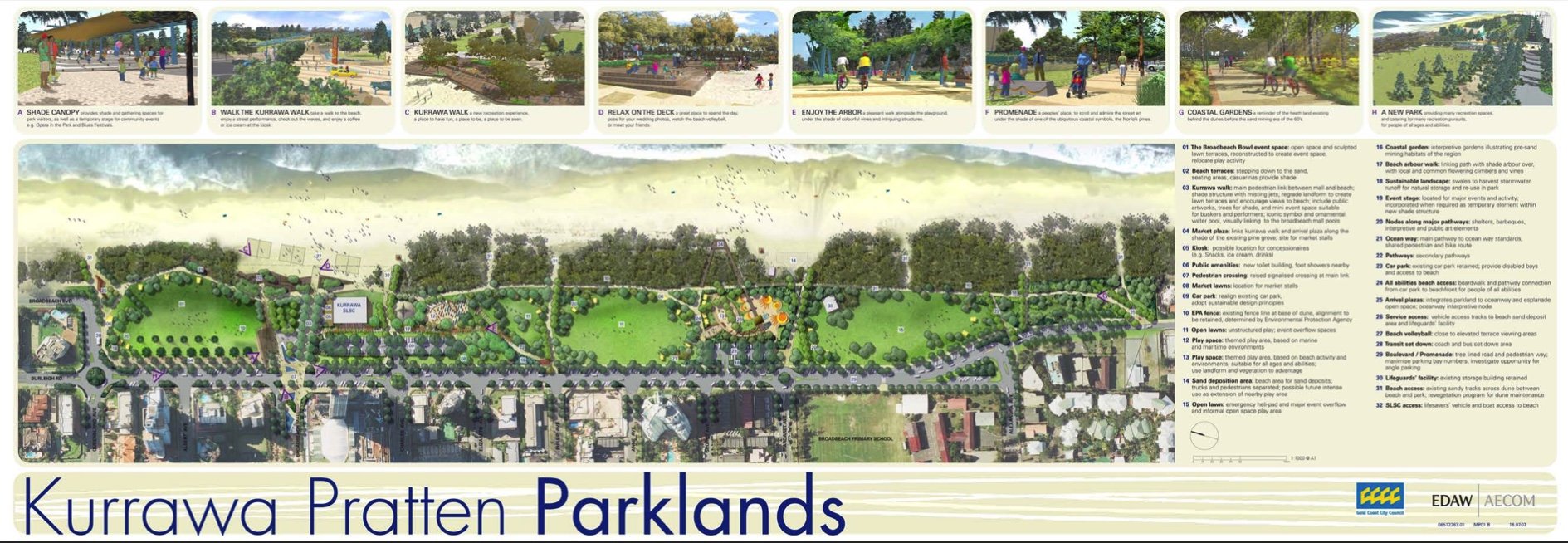
Taking a wider perspective on the matter of beach bars, there are better ways to put the Gold Coast on the world stage as one just a handful of the world’s great ocean beach cities. For a start, the council could take proper care of the existing foreshore. And they could plan for its future with a more ambitious masterplan for Kurrawa Pratten Parklands. Plus, it’s about time that the whole of Australia recognises this amazing quality of the Gold Coast as a beach city and its significance in our national identity. The Gold Coast deserves a Global Surf Museum, at the southern end of the city, overlooking the world famous ‘Superbank’.

Foreshore Maintenance: The foreshore from Kurrawa SLSC south has been neglected for at least 10 years. The dune vegetation overstorey has thinned out, the understorey is infested with weeds, and the beach viewing platforms parallel with Elizabeth and Margaret Avenues that were washed away by storms around 2013 have never been replaced. And night lighting is patchy and poorly designed and specified. These are things that could and should be addressed immediately.

Kurrawa Pratten Parklands Masterplan: Not since 2007, has the landscape design of this significant and prominent foreshore park been reviewed by the council. Nor has the masterplan been followed. Each year, it seems the parklands are incrementally degraded by piecemeal and contingent changes, tree removal, installation of concrete, artificial turf and even random public artworks that bear little resemblance to the masterplan. Structures like toilets, park shelters and even the new Kurrawa SLSC clubhouse have been built within view corridors to the beach. The all-abilities playground was re-positioned without thought about the noise impacts on adjacent resident.

As superdense highrise development proceeds at full speed, Broadbeach is losing its shine – or rather its green. But there are obvious opportunities to offset the heating and hardening effects of tall concrete and glass buildings by supergreening the streets and parks of Broadbeach, starting with the largest and most prominent park along the foreshore. Kurrawa Pratten Parkland deserves the royal treatment. Broadbeach Parklands could be at least as good, and even better than Southport Broadwater Parklands, and the wonderful foreshore parklands in other Queensland coastal cities like Yeppoon, Bagara, Townsville, Cairns.

Global Surf Hub: The Gold Coast can lay claim, alongside Hawaii and California, as a Global Surf Hub. There’s a natural opportunity and longheld ambition amongst many community members, to establish a cluster of surf retail outlets, allied organisations and a home for the amazing collections of Surf World museum at the southern Gold Coast. There’s plenty of enthusiasm, local knowledge and content to make it an international attraction. If the State Government, council and tourism authority collaborate and prioritise some investment from the public purse, this longheld community ambition could be turned into reality.

In the complex business of governing cities, there is no single correct way to do things, and trials can be useful to test the viability of proposals. I observed the Kurrawa Beach Club trial closely and if I were asked to objectively rate it out of 10, I would give it a 3. It’s inconceivable to me how the council has determined that it was successful enough to persist with. If people in decision-making roles boost the local economy, enhance appreciation of our beaches and strengthen the image and cultural identity of the Gold Coast, there are better ways to achieve this.

A CRISIS OF FAITH IN THE GOLD COAST

Thank the Lord for Councillor Glenn Tozer who spoke up this week about the Gold Coast Mayor’s employment of Pastor Sue Baynes as a spiritual adviser for the city. The matter was exposed on 31 March by the Rationalist Society of Australia who asked for clarification about whether he is committed to the Seven Mountains Mandate as advocated by Pastor Baynes in a Youtube video. This is such an aberrant issue that you have to wonder why Cr Tozer is the only councillor to comment? Do the other 13 councillors not see the controversial implications of this appointment? Are they afraid to speak alternative views? Or have they just given up trying?

ABC Gold Coast followed up on 5 April with a story titled “Tom Tate’s spiritual adviser warned of ‘demonic stronghold’ at HOTA” covering the appointment and questioning the intent to exert religious influence over council.

Gold Coast Bulletin was last to report this. Their angle was comical. It took the heat out of the argument and concluded by quoting that Tate said his religious views are personal and do not affect his role as mayor.

Gold Coast Bulletin 7 April 2022, p4

With the Seven Mountains Mandate coming to light in the secular community, curious coincidences coalesce and cause people to question motives, substance and rationale behind all sorts of decisions promulgated by the mayor.

The mandate sets out spheres or pillars of mind-molding influence: Family, Business, Government, Church, Media, Education, Arts/Entertainment.

Family

City of Gold Coast Corporate Plan

There’s plenty of Tate’s rhetoric about families on the public record and we see lots of family imagery like the picture on the cover of the council’s Corporate Plan. Yet there’s not much follow through with social welfare policy and action. Even this most important statutory plan of the council fails to encompass matters like child safety, youth homelessness and housing affordability.

Education

Tate’s strong push for the promotional body ‘Study Gold Coast’ has been remarkable, since promotion of education and training isn’t typically the role and responsibility of local government. I wouldn’t pick a bone with this one because growth of this sector is indeed critical for sustainability of the city, and it’s neither here or there that it’s driven by aims for economic development more than community development. Boosting education and training brings benefits across many areas and aspects of the city.

Media

Since coming to power in 2012, Tate has centralised and taken control over council media and marketing. He also seems to have a stranglehold on local news media and in partnership they wield formidable power over narratives about the city. I have previously written about this as a form of mediacracy. https://www.morethansunshine.net/blogspot/2020/4/3/pervasive-mediacracy

Mediacracy is central to Tate’s Game of Mates that plays out across the city like the board game Monopoly. If we observe closely, we can see shoddy governance, ‘grey favours’, a lack of transparency and blurring of the separation of powers - between councillors, consultants and council staff, church and state etc. This is not only evident in town planning and development matters. It pervades many dimensions and realms - church and church school communities, gambling, horse racing, prostitution, drug protection rackets, boating and aviation, and commercial use of public space, like beach bars. Media has become an effective tool in hijack of the city for private profiteering, but most Gold Coasters don’t observe public affairs closely, allowing the Game of Mates to thrive.

Arts/Entertainment

When Tate became mayor, I was working for the council as manager of the cultural precinct project. My workmates and I were delighted that he supported arts and culture with great gusto. I don’t think it’s unfair to say that he didn’t seem like the kind of guy who appreciated fine arts and architecture. We presumed the encouragement came from Ruth, his wife, and now it seems her good friend, and spiritual adviser, Pastor Sue Baynes, was also a positive influencer.

It’s wonderful for the Gold Coast to finally have a decent Home of The Arts. There is never enough, or too much, investment in the the arts and cultural infrastructure. And the way cultural infrastructure is delivered is fundamental (pardon the pun) to its success. Part of the reason why I walked away from the cultural precinct project after the design competition was influence from the mayor’s office, to drive an arts/entertainment operational model instead of and arts/cultural development model. I think the mayor, some of his HOTA and Major Events Board appointees don’t understand the difference… or recognise that this underlies why the State and Federal Governments overlook the Gold Coast when it comes to cultural funding. This is why ratepayers have paid too much and fully funded the first three stages of HOTA. No other local government in Australia has funded the lion’s share of their primary art gallery. The topic deserves a whole other essay to explain why the Gold Coast deserves more State and Federal funding for the arts.

Hidden demons

ABC Gold Coast’s story revealed a conflict that Pastor Baynes has spoken about regarding hire of the HOTA outdoor stage for religious events. This must place the mayor in a pickle, since he has bent over backwards to facilitate multi-faith events. He has provided council funding and authorised fee waivers for staging events at HOTA and other public places like Broadwater Parklands.

Will her appointment as spiritual adviser exacerbate or resolve this conflict of interest? And what is the purview of her advice?

As a former parliamentary candidate for the Family First Party which was fiercely anti anti-gay marriage, does her influence extend to other events that require a permit to take place on public land?

One might question why the Gold Coast Rainbow Communities Pride Festival Fair Day planned for 26 March in Macintosh Island Park was cancelled under instruction from the council on the eve “due to bad weather’, when the day actually turned out to be perfectly fine and sunny.

Perhaps such conjecture is unfair but there is certainly a lack of transparency and it’s hard to work out what to believe. If there’s a demon anywhere, it’s out of public view, under an opaque veil.

Sometimes, the unspoken things are the most important

The biggest issue for me is something that the Seven Mountains Mandate is silent on - the Gold Coast’s greatest asset - the natural environment.

We see self-proclamations in jest by Tate as the ‘Greenest Mayor in the land’. We also know for a fact that the council’s environmental conservation policy is gossamer thin. There was a climate change strategy 2009-13 which expired and was never renewed. To avoid scrutiny about its environmental performance, the council discontinued monitoring, measuring and publishing annual State of the Environment reports.

Gold Coasters might now question if the Tate’s level of respect and care for the environment is influenced by his spiritual adviser and the religious doctrine. He says “no”, and that his religious views are personal. The general public is unlikely to ever know for sure, but questions will linger...

  • Does the mayor fail to recognise the importance of conserving the environment because it’s omitted from the doctrine?

  • Does the conspicuous absence of environmental policy and action result from deliberate suppression to stay out of the way of the business of development?

  • Does the doctrine influence the mayor’s view of our precious World Heritage mountain rainforests as pots of gold to be exploited with a cableway for mass tourism?

Who’s going to save our city?

It does seem like Mayor Tate has lost the plot. Gold Coast Council doesn’t need a spiritual adviser. It needs a new leader. Someone who can think and act rationally, creatively and fairly, about sustainable development of the city. Someone who is uncompromised by vested interests and self-serving woo-woo doctrine. It’s only two years folks, till we get a chance to elect a new mayor. I have noticed the social media fakes have already started trolling. If I had a faith, I would be praying for a saviour to rise up soon…

Click on the links for more

Crikey How the Seven Mountains is influencing Australian politics

Rationalist Society Call for Gold Coast Mayor Tom Tate to clarify if he supports the Seven Mountains Mandate

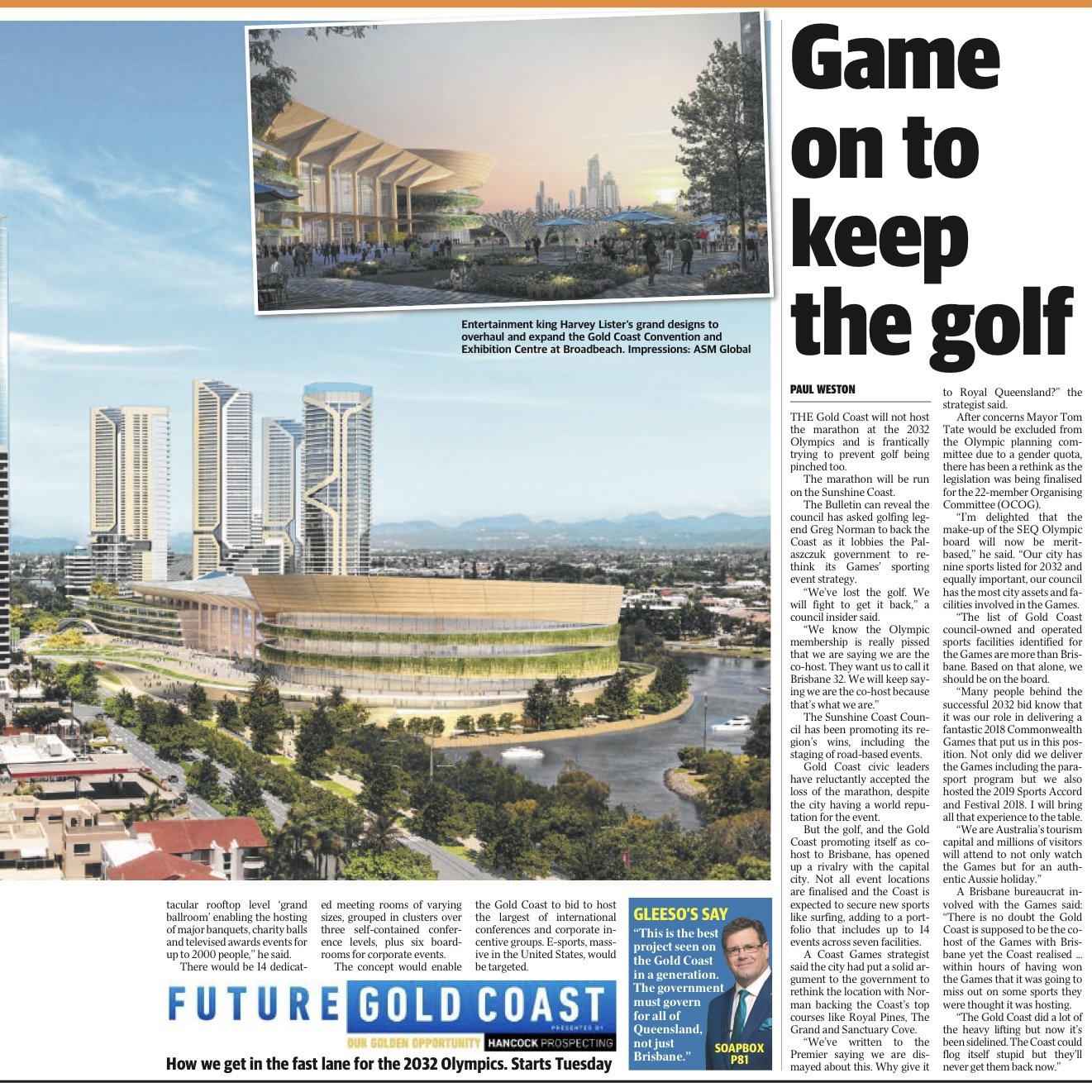
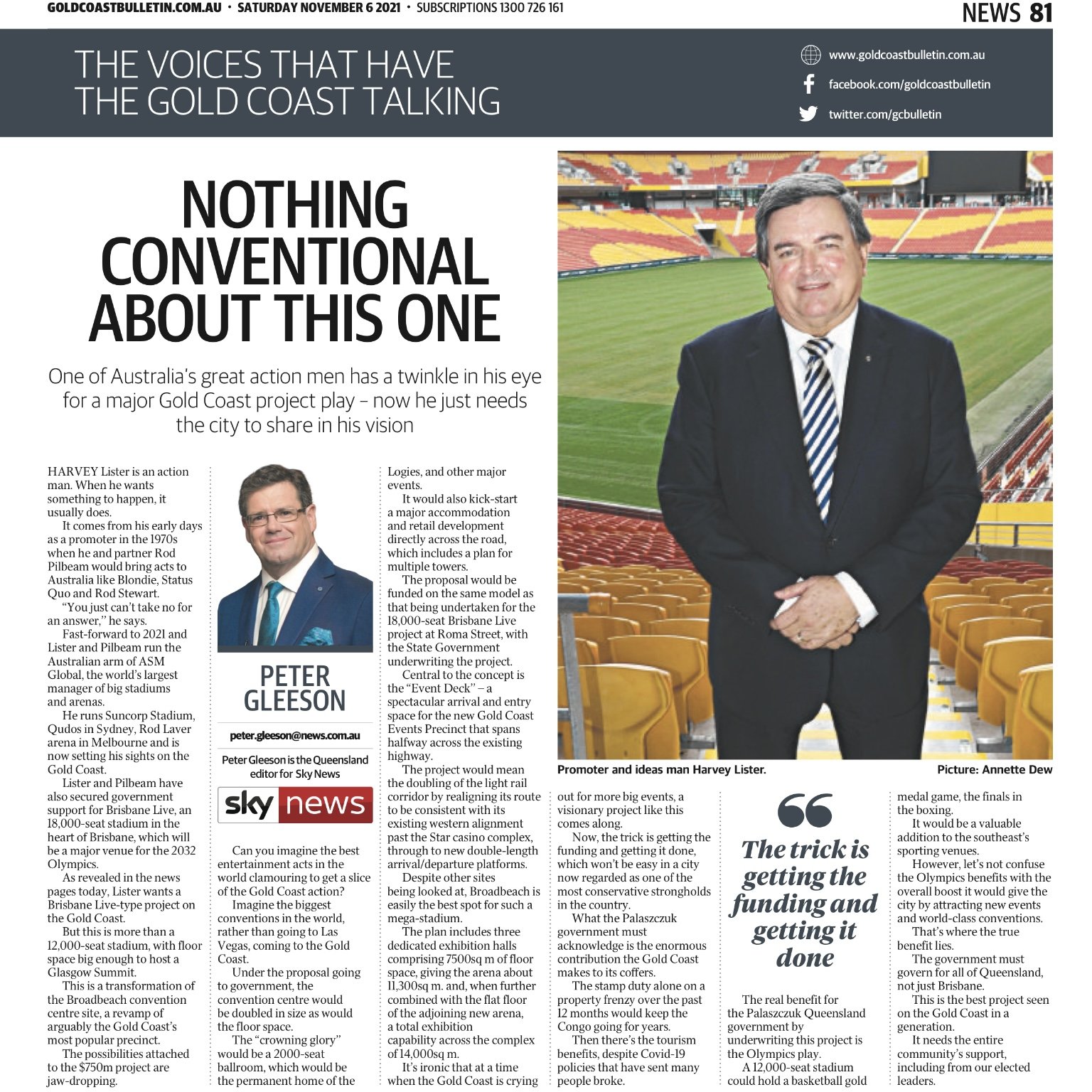
EXPAND THE CONVENTION CENTRE AT BROADBEACH!

It’s a no-brainer, but it needs local political support.

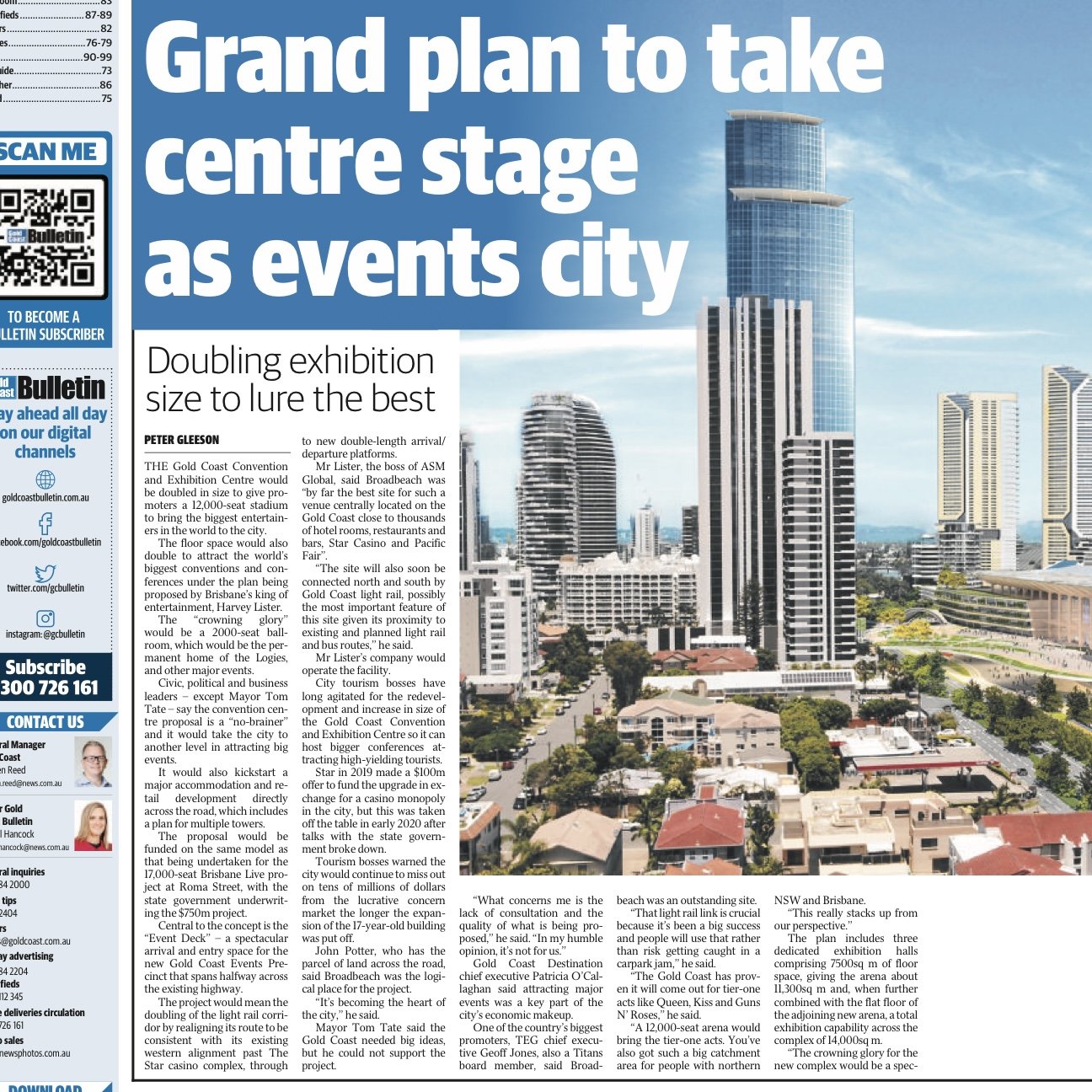
Major expansion of the Exhibition and Convention Centre at Broadbeach, reported in today’s Bulletin, could be a real boost for the Gold Coast economy. It’s certainly superior to Star Casino’s last tentative $100m upgrade offer in 2019. Studies have shown that the business tourism potential is huge and untapped. It seems like a no-brainer that hardly needs discussion. But big ideas like this get bogged down amongst the vested interests and local politics here.

Mayor Tom Tate said the Gold Coast needed big ideas, but he could not support the project. “What concerns me is the lack of consultation and the quality of what is being proposed,’’ he said. “In my humble opinion, it’s not for us.’’ Gold Coast Bulletin 6 November, p4

Here appears to be a case of the pot calling the kettle black. Whenever did Tom Tate have a humble opinion? More likely that this proposal might trump another scheme he has up his sleeve.

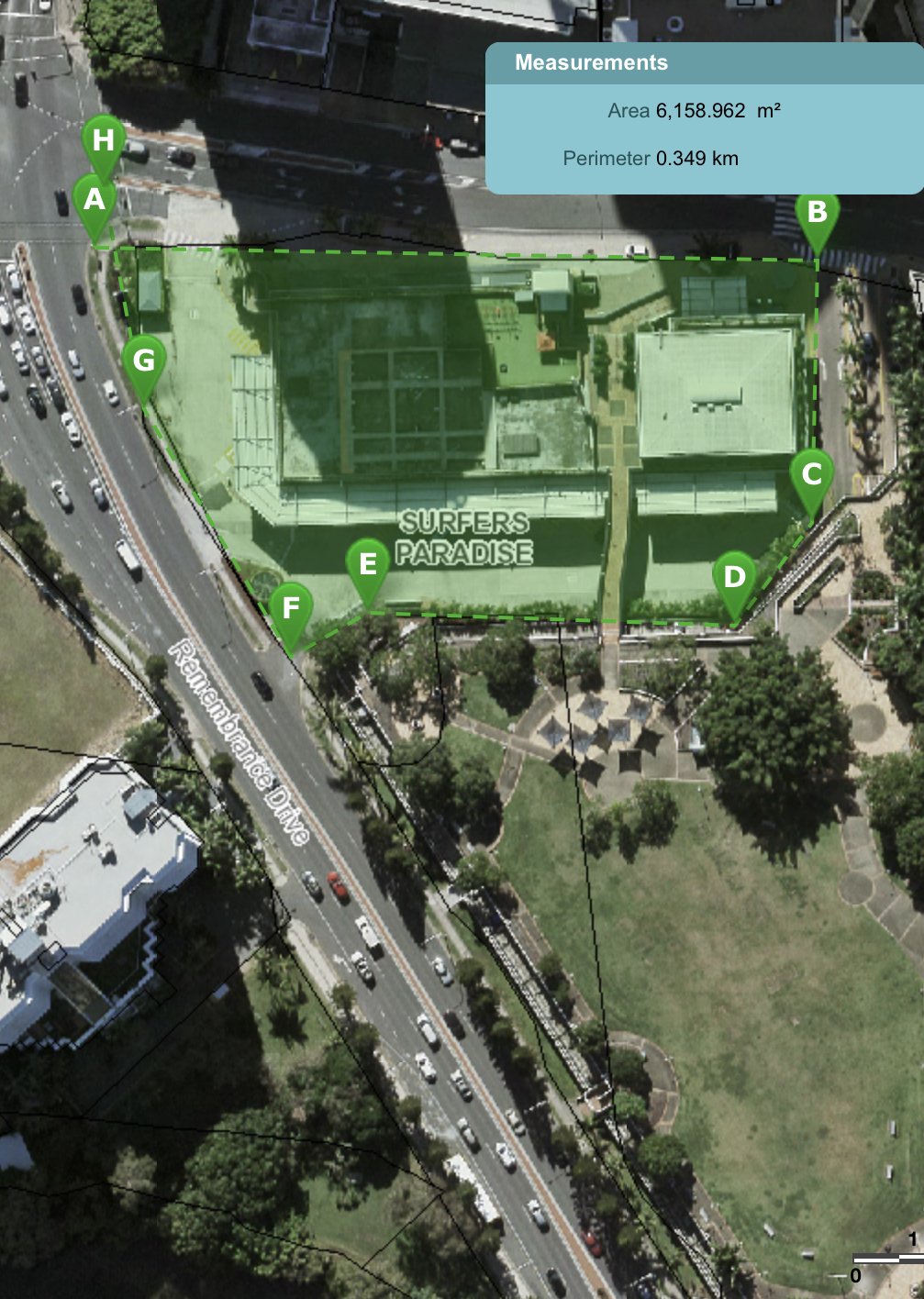
Speaking of which, I had an idea for Surfers Paradise last night. The council’s decision this week to sell Bruce Bishop car park was on my mind. I lived in Surfers Paradise from 1994-2000 and was very familiar with the good and bad aspects of Neal Shannon Park. I was thinking about the many efforts that have been made over decades to activate and make it safer and more appealing for passive users. The festivals, the art projects, the installations. One that stands out in my mind was the giant ferris wheel which sat and twirled perfectly amongst tall buildings around it and gave riders wonderful views over central Surfers, out to sea and across to the hinterland.
2007 proposal for transit centre site by Zaha Hadid Architects

That prompted me to remember the competition for design of a major building on top of the transit centre. I was living away from the Gold Coast at the time, circa 2007, and wasn’t taking a close interest in local development but I recall stunning proposals by Zaha Hadid and several other major architectural firms. I don’t know why nothing eventuated though - perhaps complications around the volumetric subdivision for sale of the air rights above the transit centre? But to get to my point… all of that happened, well before light rail, when there were frequent interstate and intrastate bus services, and retention of the transit centre in Central Surfers was assumed necessary.
That has all changed now, so why not identify an alternative transit hub for buses and tour coaches in Southport, raze the transit centre building and sell off just that portion (approximately 6000sqm of the total 18,000sqm site), or the air rights above it. i.e. retain Bruce Bishop car park, with Neal Shannon Park on top as a public asset. There are wonderful examples around the world for transforming Neal Shannon Park into an amazing, green public oasis. It could be a place for moonlight cinema, markets, schoolies parties and all sorts of public events and passive and active recreation activities.

The transit centre site, or air rights above a portion of it, could be sold encumbrance-free but with conditions to design-in clear vehicle and pedestrian access for public parking in Bruce Bishop. It could integrate with the upgraded and more accessible Neal Shannon Park. If ever there were a site for a huge, tall tower with minimal impact on the beach and/or neighbouring properties, it’s this one - right in the heart of Surfers. Relaxation of car parking and open space requirements for the new tower would be justifiable. 

 Everyone wins. Bruce Bishop Public car park retained. Neal Shannon Park upgraded and activated. Underutilised transit centre asset liquidated. Even at the lower end of recent property sales in this area of $10K-$15K/sqm, the council could expect to receive more than $60m.

The funds raised through the sale could be allocated to a variety of strategic improvement initiatives:

  • Upgrade and maintain Bruce Bishop car park

  • Establish a Southport facility for the few remaining bus services

  • Ungrade, maintain and activate Neal Shannon Park

  • Build another greenbridge to Chevron Island

  • Reintroduce shade trees and greenery into Surfers Paradise streetscapes in walk-up streets to this destination

It seems simple and obvious, but maybe I’m missing a piece in the puzzle. Can anyone see flaws in this strategy, apart from potential, hidden, competing political and/or development ambitions?